Ad

National budget: extra money education and research, no unexpected cuts


The minority government still faces a tough task getting the 2027 national budget through the House of Representatives. But the extra funding for education and research has been included.

Image by: Sonja Schravesande
It is not entirely a one-to-one reversal, but the Jetten cabinet wants to undo the previous cabinet’s cuts to education, research and media. Altogether, this amounts to 1.5 billion euros.
Students
This includes reversing a cut affecting international students. Next year, universities and universities of applied sciences will therefore receive an additional 25 million euros, rising to 42.5 million euros in 2029.
However, the cabinet expects the number of students in higher education to eventually fall as a result of population decline, so education funding will be reduced. This is separate from cuts or investments. For universities of applied sciences, this will mean 149 million euros less next year, and for universities 89 million euros less.
That decline is not evenly distributed across the country. The cabinet has therefore already planned a change to education funding for secondary vocational education, supporting education in shrinking regions. Plans for higher education still need to be worked out.
Research
Research and science will also receive more funding again. Almost 216 million euros in additional funding has been earmarked for 2027, spread across various areas.
A substantial portion will go towards research infrastructure, from microscopes to data storage. A budget of 31 million euros has been allocated for this, plus a further 85 million euros for exceptionally expensive projects such as a new supercomputer and the Einstein Telescope.
Research funding organisation NWO will also receive an additional 70 million euros for research, which had previously been cut. Scientists can submit research proposals to the organisation, after which experts decide who receives a grant.
Practice-oriented research at universities of applied sciences can count on an additional 10 million euros next year. This will become 20 million euros in the years after that, and then, at some unspecified point in the future, will rise to 68 million euros a year.
Bottom line
So the amounts may be flying around, but in the end the cabinet is indeed setting aside the millions for education and research that ministers had previously promised.
The budget includes 1.3 billion euros in additional spending. On top of that, the Ministry of Finance still has around 200 million euros available. That money will remain reserved until the Ministry of Education has suitable plans for it.
The universities respond positively. “With this budget, the cabinet is ensuring that students receive a good education and that universities can continue to contribute to the solutions the Netherlands needs”, says Caspar van den Berg, chair of university association UNL.
Executive Board chair Annelien Bredenoord also responds positively in a press release. “The Miljoenennota shows that the cabinet recognises the importance of education, research and innovation for the future of the Netherlands.” However, she warns against taking too narrow a view of research and innovation, now that investments are mainly going towards technology and defence: “At the same time, it remains important to leave room for the full breadth of science and innovation.” She also stresses the importance of long-term policy: “Universities benefit from predictability and long-term investment in order to sustainably strengthen their contribution to society and the economy.”
The universities of applied sciences are also pleased that the cuts are being reversed, but they would like to receive even more money: that would enable them to focus on retraining and further training for working people. This would be important now that the labour market is changing rapidly. The institutions want the cabinet to make this a ‘fully-fledged statutory task’, says Maurice Limmen, chair of the Association of Universities of Applied Sciences.
Talent
The money does not tell the whole story. Universities and universities of applied sciences will, for example, receive additional funding for the cabinet’s ‘talent strategy’, but where will it go? Some sectors will benefit more than others.
“The plans and associated budgets will be developed further in the coming period”, the ministry says in a press release. Employers and civil society organisations will be allowed to have their say.
For the universities’ much-discussed sector plans, for example, the cabinet has reserved 107 million euros from 2028, rising to 132 million euros a year. But they will have to focus on certain areas considered crucial.
Defence
Education and research therefore emerged relatively unscathed from the budget negotiations within the D66, CDA and VVD cabinet. The same is not true of healthcare and social security: they are being cut, while Defence is receiving a great deal of additional funding.
The Dutch Student Union LSVb is unhappy about this. It feels that the cabinet is preparing the public for military service, with large-scale recruitment campaigns for the armed forces. Meanwhile, young people’s financial position is becoming ‘ever more distressing’, according to the union. The LSVb’s message: “Not weapons, but wellbeing.”
“Students deserve an education that is transparent, independent, and democratic”, says LSVb chair Evy Kras. “Only then will they have the information and opportunity to stand up for their rights, rights that we are slowly seeing eroded.”
The Dutch National Student Association ISO, the other national student organisation, is focusing primarily on students’ mental wellbeing, which it says is in a poor state. Chair Allis Richardson: “By failing to invest extra in support for this generation, you are letting them down, with all the possible consequences.”
Read more
-
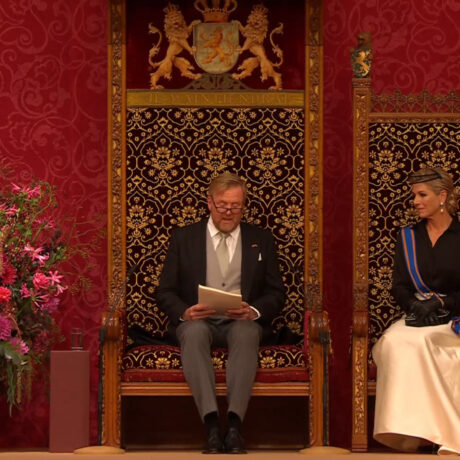
Speech from the Throne: ‘There must be room for international students and knowledge workers’
Gepubliceerd op:-
Nieuws
-
De redactie
-
 Tim Ficheroux
Desk editor
Comments
Ad
Read more in Education
-
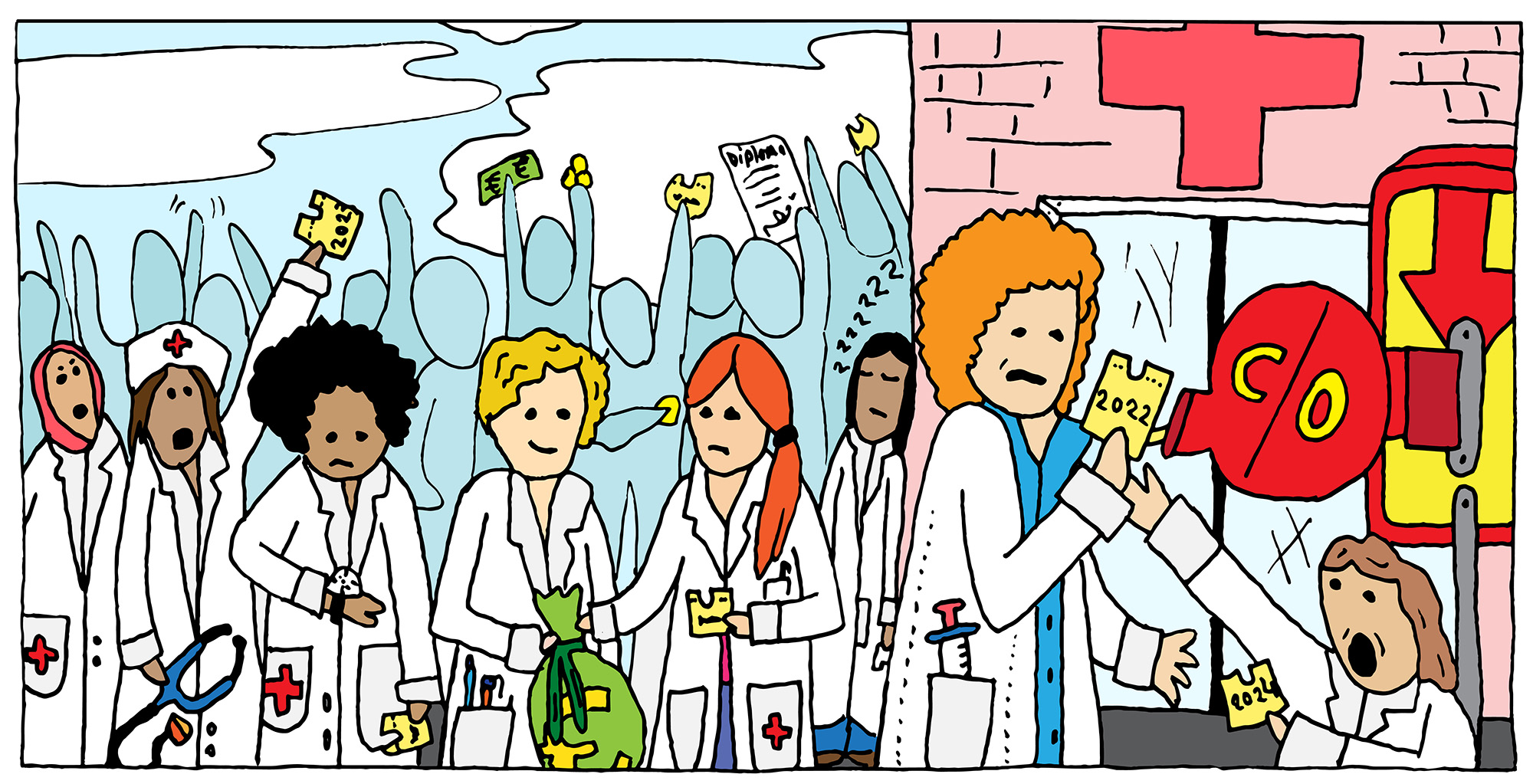
Long waiting times for medical internships also affect other cities
Gepubliceerd op:-
Education
-
-
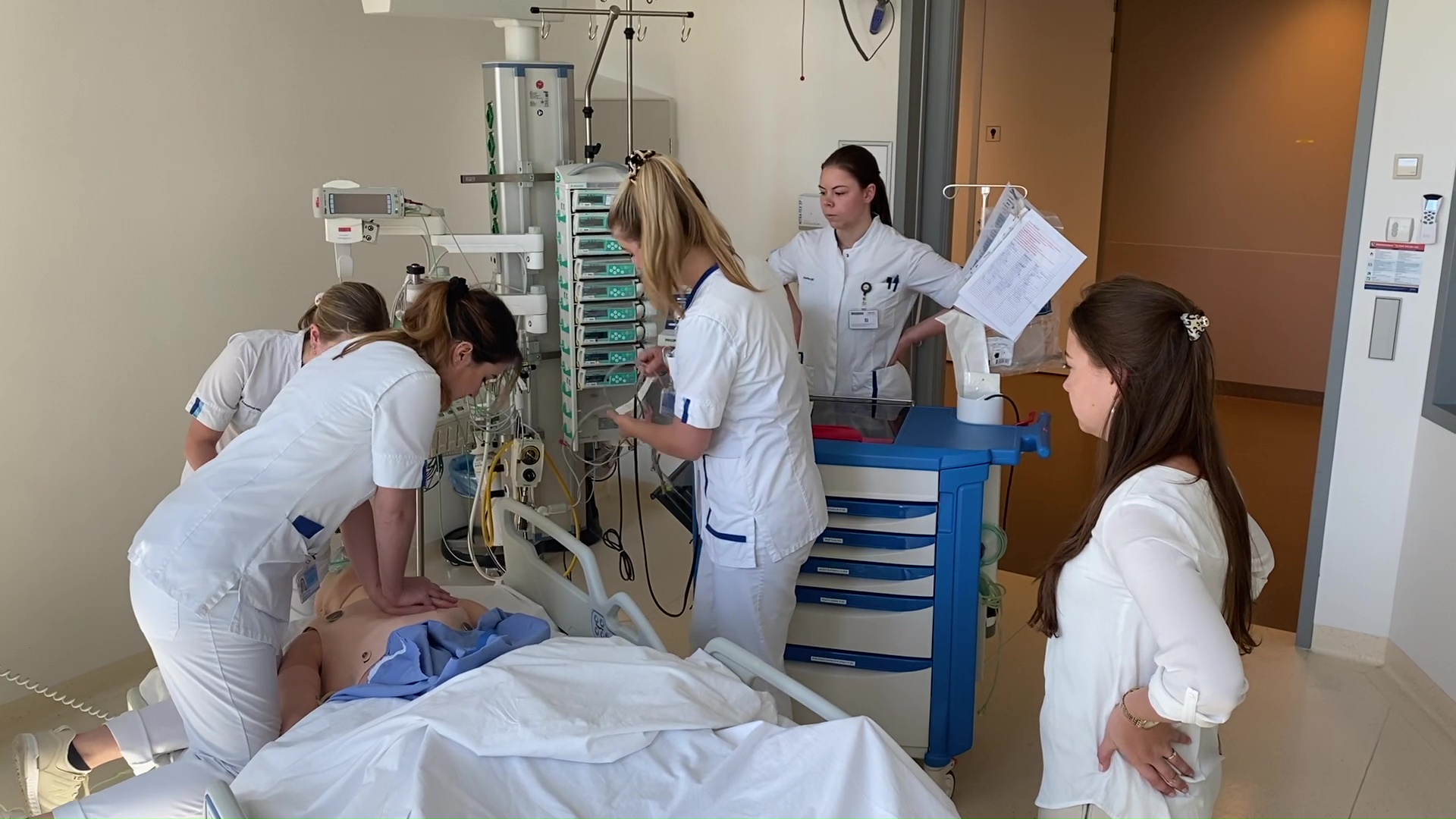
Desperate medical students are offering each other money to start their internships earlier
Gepubliceerd op:-
Education
-

Leave a comment