Ad

Opening of the academic year: ‘Beware of arrogant tech optimism, but also of doom-thinking’
The opening of the academic year focused on resilient societies on Monday afternoon. Executive Board chair Annelien Bredenoord warned against utopian and dystopian views of technological progress.
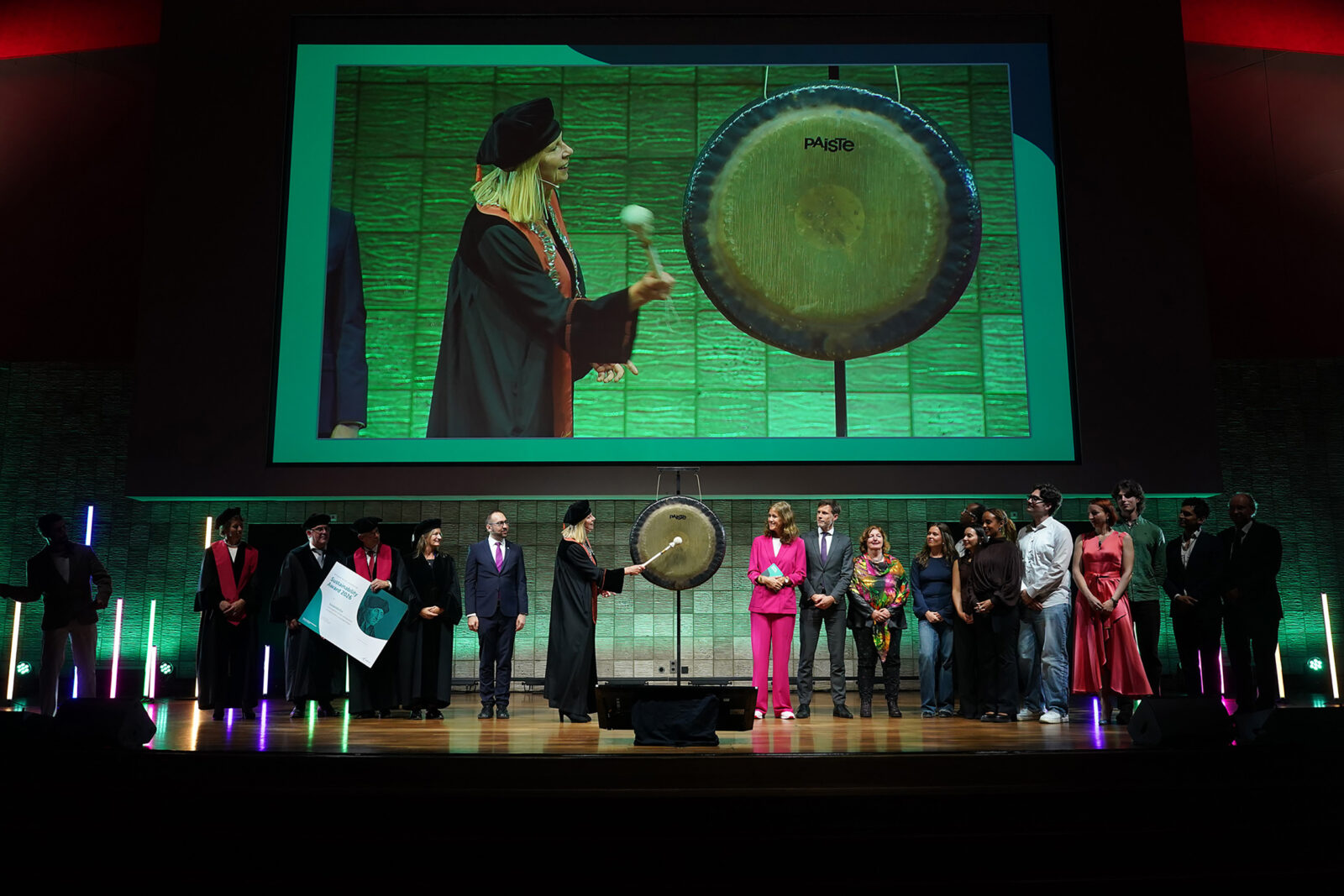
Image by: Arie Kers
In an aula that was three-quarters full, rector magnificus Jantine Schuit opened the academic year at 4.30pm on Monday by striking the gong. In the hour and a half beforehand, visitors had heard different perspectives on a resilient society and what they mean for the university.
Zagreb and the port
Using concrete examples, Zagreb mayor Tomislav Tomašević explained how his city is making public transport more sustainable and protecting itself against natural disasters. Tomašević was one of the speakers because the University of Zagreb is part of UNIC, a European alliance of ten universities in post-industrial cities, of which the EUR is the coordinator.
Yashar Ghiassi-Farrokhfal, associate professor at Rotterdam School of Management, said that the electricity grid is one of the most complex and resilient systems humans have ever created. He also outlined how it is coming under increasing pressure. He sees the port of Rotterdam as a blueprint for the energy transition: “The port is a living lab of energy transition for one of the most radical and ambitious decarbonisation projects in the world.”
Utopia and dystopia
In her speech, Executive Board chair Annelien Bredenoord warned against two extreme views of technological progress: a utopian vision in which technology is seen as the solution to everything, and a dystopian vision in which humans become a kind of machine. “Beware of arrogant technological optimism. But don’t fall into doom-thinking either, as if technology always alienates humans.”
According to Bredenoord, the university has a role to play between that optimism and pessimism. ” How do we help people and societies to adapt and to flourish in times of uncertainty and change?”
She argued for a different way of working: rather than knowledge originating at the university and then being taken out into society, knowledge should begin with questions arising in neighbourhoods and the city, with education responding to those questions.
Awards
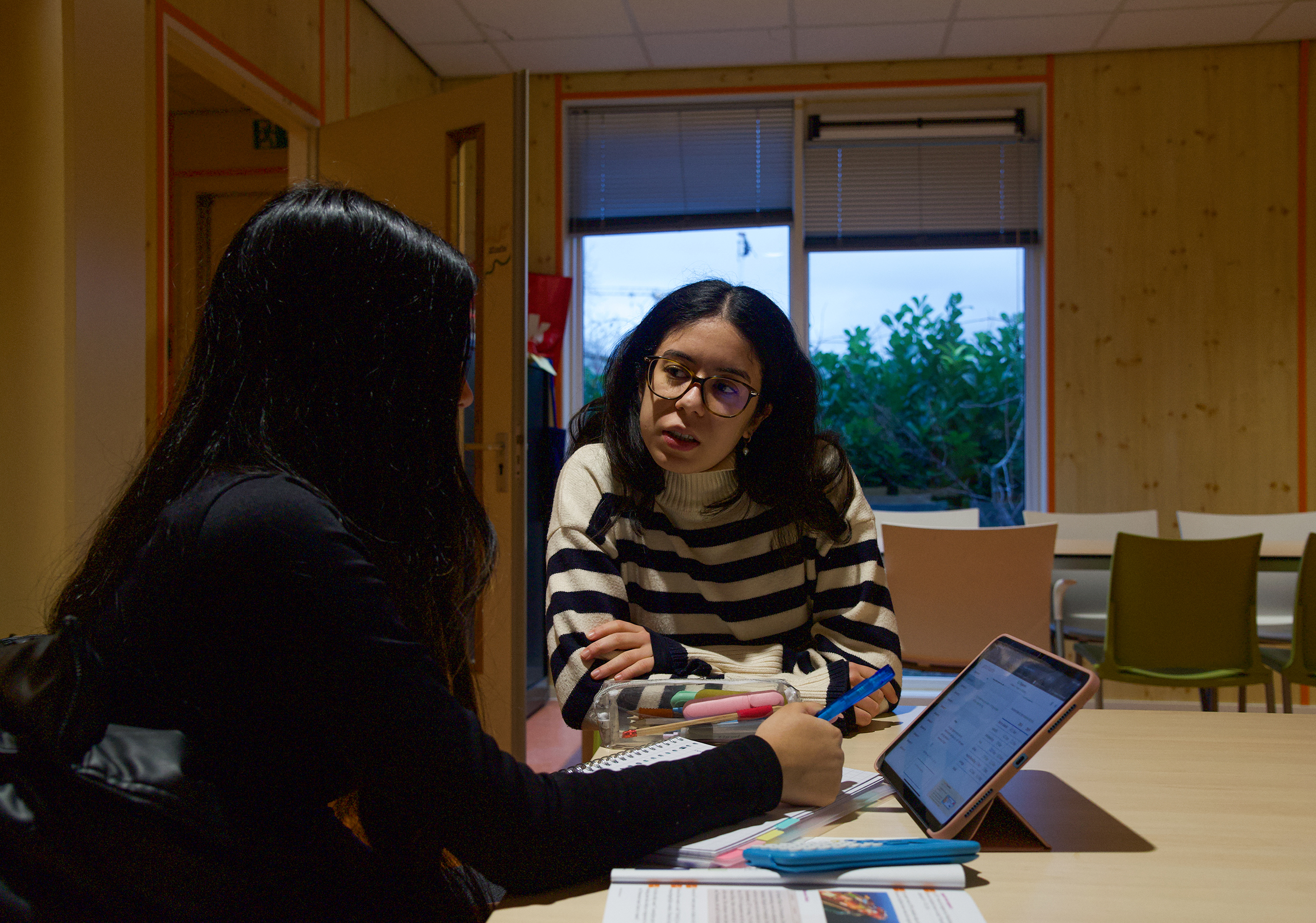
Several university awards were presented between the speeches. Stephanie Habets and Hugo van den Belt received the Rotterdam Thesis Award for outstanding theses relevant to the city. Habets’ thesis examined how young people are approached through social media for criminal activities. Van den Belt’s focused on the Purchase Protection Act and its consequences for the housing market. The Student Societal Impact Award went to Stichting StudieBoost, an organisation that provides tutoring in Rotterdam South.
Een lijst met artikelen
The annual Education Prize went to Ginie Servant-Miklos, director and founder of the Bildung Climate School. The initiative brings together students from vocational education, universities of applied sciences and universities in an interdisciplinary educational programme on the climate crisis and social change.
Liesbeth Enneking, Karen Maas, Martijn Scheltema and Albert Veenstra received the Sustainability Award. The four professors from different faculties are working on a project designed to make sustainability laws and regulations easier for companies and organisations to implement.
De redactie
-
 Tim Ficheroux
Desk editor
Comments
Comments are closed.
Ad
Read more in Science
-

Hate campaigns and political pressure: KNAW wants legal protection for academic freedom
Gepubliceerd op:-
Science
-
-
Why Philip Hans Franses had students look in wallets at a DIY store
Gepubliceerd op:-
Eureka!
-
-
Nobel Prize for research into ‘stabilisation’ of the economy
Gepubliceerd op:-
Science
-