Ad

The academic boycott of Israel is creating a culture of fear
Chris Aalberts warns that the academic boycott of Israel is creating a culture of fear. "Activists no longer even need to take action to get their way."
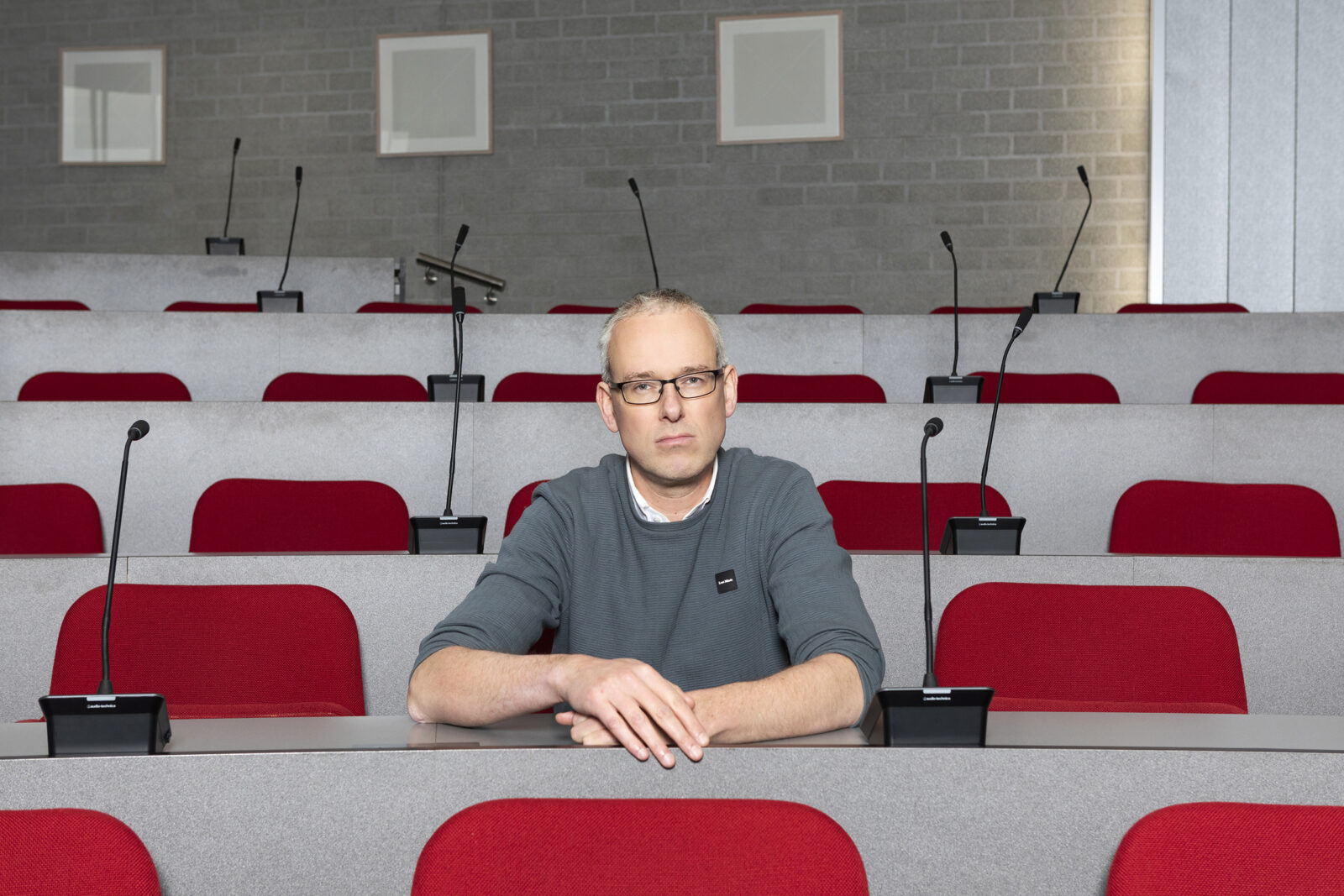
Image by: Geisje van der Linden
During the holidays, I once again read an extensive argument that I must not question the usefulness of the academic boycott of Israeli universities. I will bear that in mind, but I still have a few questions. Where should the limits of such a boycott lie? When does a boycott overshoot its mark? Does such a boycott also have disadvantages? Do we have an opinion on those too?
This brings us to an incident in Utrecht last summer. Tivoli/Vredenburg cancelled the final of a debating tournament in which Utrecht University and the local University College were also involved. The reason: there were Israeli participants who were not taking part in their own capacity, but on behalf of their university. Some people consider the commotion understandable: we have a boycott, after all, don’t we? Yet I thought: what on earth does the situation in Gaza have to do with a debating contest?
In the media, we could read that there had been unrest over the participation of around ten Israeli students, but also over the presence of a former soldier who had served in Gaza and had made a more than inappropriate joke about it online. Activists filed a police complaint and wanted to carry out ‘a citizen’s arrest’. I suspect they have understood little about the rule of law, in which we condemn vigilantism, but I am now also wondering whether that is still taught at Utrecht’s University College. Apparently not.
The Israeli students became afraid that they would be personally sought out on campus, their details were accidentally leaked and one of them was strongly advised to leave the city. In a response, the university described it as ‘deeply troubling‘ that students had felt unsafe. That seems an inappropriate understatement to me, because the implicit message is impossible to miss: this was unpleasant, but a strong condemnation would not be appropriate.
Meanwhile, the Israeli ambassador is complaining about measures that ‘de facto lead to a boycott of every form of cooperation with Israel’ because people are afraid of negative publicity. According to him, there is ‘overcompliance‘. One example is preventing individual speakers from appearing – the most important remaining form of dialogue, and one that has nothing whatsoever to do with what is happening in Gaza. We know what happens in such cases: last year, our sociologists made an unbelievable spectacle of themselves by cancelling a talk by their world-famous colleague Eva Illouz without any reason, after which the Executive Board did not dare publicly condemn this, instead trying to calm things down with empty platitudes.
This brings me to the next question. Suppose a lecturer invites a guest speaker from the pro-Israel organisation CIDI. If even one outsider gets wind of such an invitation, activists will be standing outside the lecture hall shouting, making any substantive exchange impossible. That prospect is intimidating in itself. You hear many people muttering: surely you know what you are bringing upon yourself by inviting such a guest speaker? Activists no longer even need to take action to get their way. What do we think about that?
The Israeli ambassador knows the answer: there is now a culture of fear at Dutch universities. Of course he is biased, but he is right.
Een lijst met artikelen
-
Academic activism is a hobby for academics who do not understand politics
Gepubliceerd op:-
Nieuws
-
De redactie
-
 Chris Aalberts
Columnist
Comments
Comments are closed.
Ad
Read more in Column
-
The sad anniversary of powerless staff and students
Gepubliceerd op:-
Column
-
-

Tea, theory and a healthy dose of procrastination
Gepubliceerd op:-
Column
-
-

The drama of Jason Arday
Gepubliceerd op:-
Column
-