Ad

Why I stopped studying – and why that need not discourage you
Fayline Kollen studied law but decided to quit her degree last year. And she is not the only one, as more than half of law students do not make it to graduation. A shame, people say, but she sees it differently, because she learned valuable lessons about herself.

“But you’re already in your second year, aren’t you?” I’d just told my team leader that I was going to stop studying and therefore want to work more shifts. I nodded. He looked at me as if he saw water burning. “What a waste!”
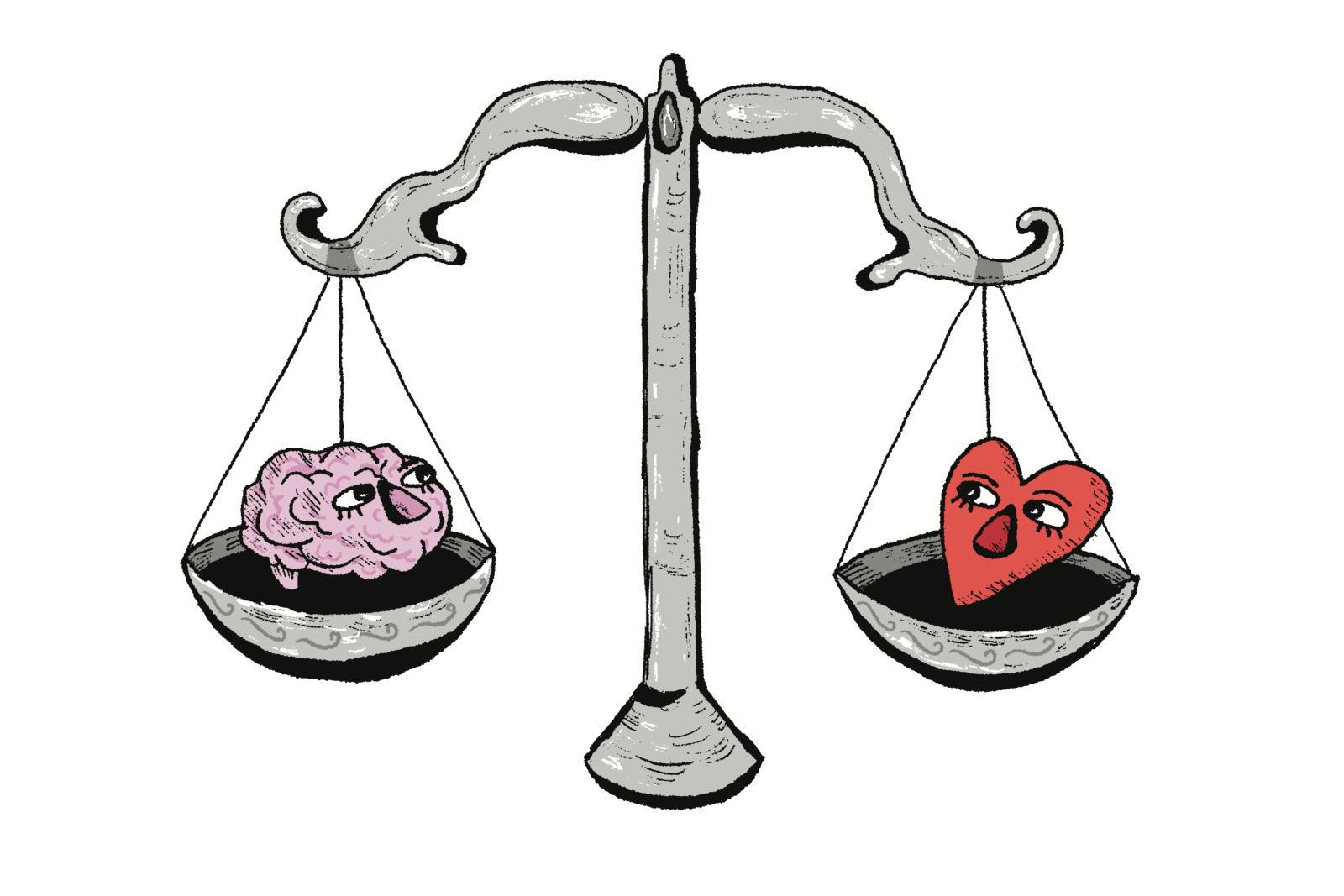
He’s not the only one who thinks it’s a waste. But I’m not the only one to stop studying. According to a report by the ISO, the percentage of students who drop out or choose a different programme fluctuates between 25 and 30 per cent. And 55 per cent of the students on my programme – Law – have not obtained a diploma after four years, with one in five of those 55 per cent choosing a different programme.
Do all those people make a mistake, then? And what about me? Up to the second block of my second year, I had passed all my courses at the first attempt. So is it really not a waste to throw all my hard work out of the window when the third year is so close? When my diploma is practically within reach?
'Is it really not a waste to throw all my hard work out of the window when the third year is so close?'
But perhaps ‘within reach’ is not the right way of putting it. If something is really ‘within reach’, shouldn’t you be able to sit back? Feet on the table, and you can simply grab it. And yet, to progress to the third year, I still have to regularly open my books and drown myself in an endless sea of theory until at least 11pm.
And then there are classes, lectures and exams. The pressure is still so great that sometimes I no longer even know what date it is. Pressure that even caused me to lose sight of an extremely important deadline, with a clear sanction: missing it would exclude me from taking part in Moot Court for the rest of the year.
For those who don’t know, Moot Court is a mock trial. Law students are assigned a role, either lawyer or prosecutor, and must prepare using case files for a fictional court hearing. After three pleading workshops, there is a final hearing, for which they will receive a mark.
My participation in Moot Court ended before it had really begun. It is compulsory to submit a written pleading and argument outline by 11.59pm on the day before a pleading workshop. But with a new system in which I had to take an extra course compared with the previous year, I lost track of everything. So I knew the date of my pleading workshop, but did not realise that the date had already arrived.
I only found out when I heard fellow students talking about their written pleadings and argument outlines during a lecture. By then it was too late; I could no longer submit my own written pleading and argument outline, and so I could no longer take part in Moot Court.
'Why should I put so much effort into completing a bachelor's programme that does not make me happy?'
From then on, things continued to go downhill. I was disappointed – not only in myself, but also in the situation in general. I lost my motivation, which made it increasingly difficult to actually open my books. And that got me thinking: if I notice that it is all becoming too much for me, is it really a waste to close this chapter of my academic career?
I do not think so.
No one can take away what I have learnt in recent years. Of course, without the right qualifications I will never become a lawyer, judge or public prosecutor, but I dare say that I know more about the legal system than the average Dutch person. I know what steps I can take if an employer exceeds the limits of my employment contract, and I know what my rights are if I buy something but it is not delivered.
Yes, in hindsight – a bias that was discussed in my first year during the Law and Economics course – I might have been better off stopping last year. Just before February, so that I would have got my money back and would not have had to work so hard for that binding study advice. But I have also learnt that thinking in terms of biases does not help you grow as a person.
It doesn’t help to think ‘if only I had done things differently’. It helps to think about the present, or to look ahead to the future. And when I look to the future, I do not see myself sitting in a law firm or courtroom. So why should I put so much effort into completing a bachelor’s programme that does not make me happy?
So to everyone who still tells me that stopping is a waste, I say the same thing I said to my team leader: “As long as it makes me feel better, I do not consider it a waste at all.”
Een lijst met artikelen
-
18-year-old student dies after ‘hazing party’ in France
Gepubliceerd op:-
Student life
-
De redactie

Comments
Comments are closed.
Ad
Read more in Opinion
-
The president of the Executive Board hopes scientists will draw energy from hot air
Gepubliceerd op:-
Column
-
-

Notes on your phone
Gepubliceerd op:-
Column
-
-

Looking back without anything weighing on you
Gepubliceerd op:-
Column
-