Ad

‘Most medical influencers do not think they are unqualified’
From vaccine scepticism to influencers claiming that UV radiation is good for the skin: medical misinformation flourishes on social media. Should the government intervene more forcefully against medical nonsense online? Political party CDA is calling for a disclaimer, but according to Martin Buijsen that’s censorship.
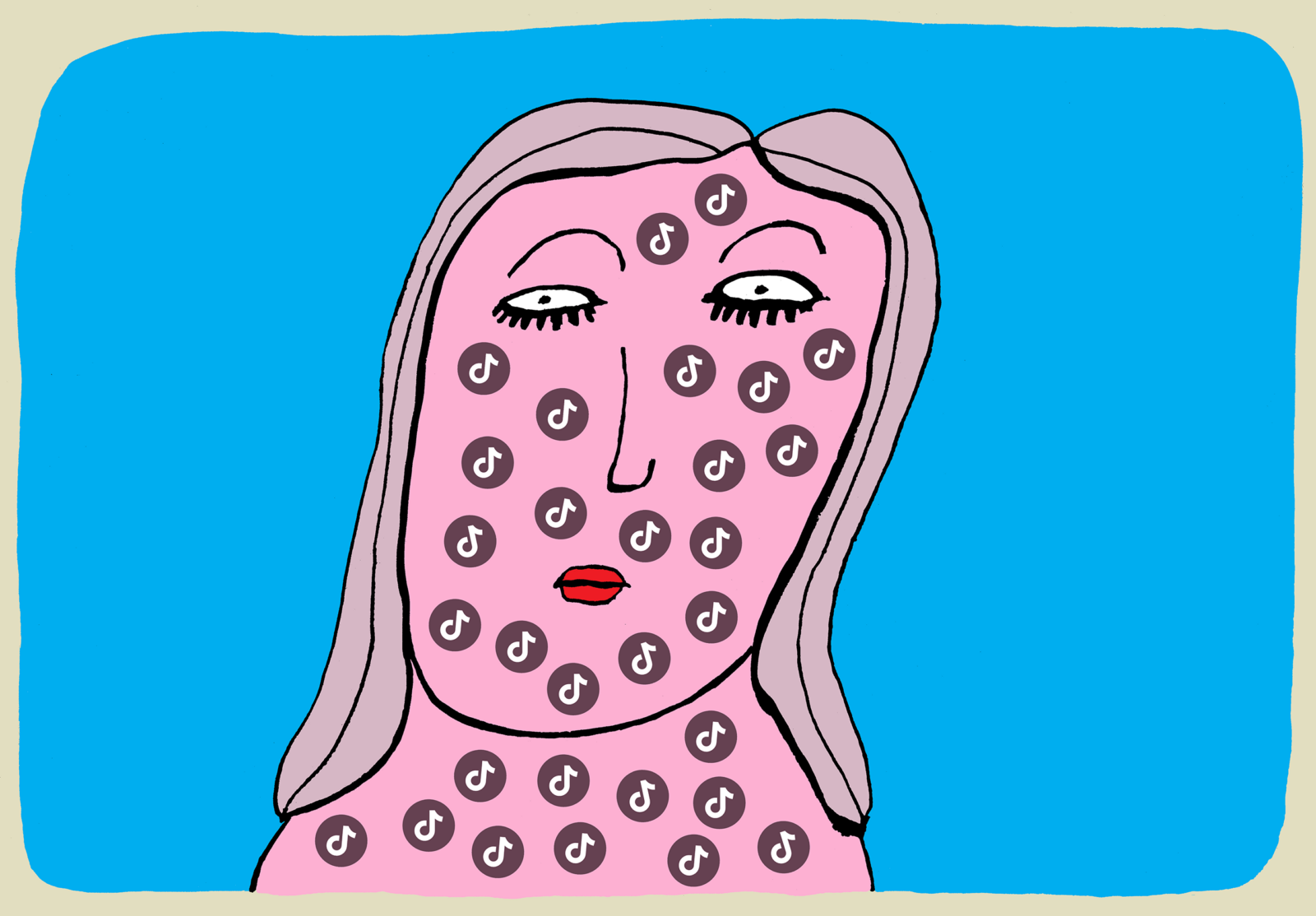
Image by: Bas van der Schot
What kind of false medical claims do you encounter on social media?
“Claims that the sun is ‘natural’, and therefore good for you, and that skin cancer is caused by sunscreen rather than by sun exposure. I find that one of the most remarkable statements I’ve seen. You also see excesses from the conspiracy theories that grew during the Covid pandemic. That vaccines are bad, and that Big Pharma orchestrated the pandemic. It’s this kind of information that can be a major risk to the health of an innocent follower.”
Martin Buijsen is professor of health law at the Erasmus School of Health Policy and Management and the Erasmus School of Law. His research includes the legal aspects of allocating scarce resources in healthcare, the financing of expensive medicines, irregularities in pharmaceutical research and how Dutch healthcare relates to human rights.
Why is this happening so much now?
“The problem with social media is that there is no editorial layer between the author and the audience. In academia and journalism we have various mechanisms, such as peer review and right of reply, to ensure information is accurate. On social media that filter is absent. And social media are driven by algorithms based on your preferences. If you show an interest in wellness, homeopathy or alternative medicine, you are shown more and more of it. That is how you get drawn into a pit of medical nonsense.”
How large is the amount of medical mis- and disinformation on social media?
“That is hard to map. What we do see are the harmful consequences. In the Netherlands we have a vaccination programme based on voluntary participation, unlike many other countries that have mandatory vaccination. For a long time a mandate wasn’t necessary either, because we had roughly the highest vaccination rate in Europe. We are now in decline. As a result we are already seeing an increase in measles outbreaks. European studies show that this is largely caused by mis- and disinformation on social media.”
'We are now in decline. As a result we are already seeing an increase in measles outbreaks'
Doesn’t it also make sense that people who are out of options or get stuck in conventional care search for alternatives online?
“That’s right. In the Netherlands we have legally established free choice of practitioner. That means you can go to the hospital, but also to Michael van Gils or Jomanda if you’re ill. Banning that right is quite something.
“Alternative medicine doesn’t have to prove it’s effective, as long as it doesn’t cause harm. And it’s a criminal offence if an alternative healer keeps patients away from modern medical science. That does happen on social media, in effect. But both offences are hard to enforce. It is very difficult to prove that influencers promoting alternative therapies are keeping their followers away from conventional care.”
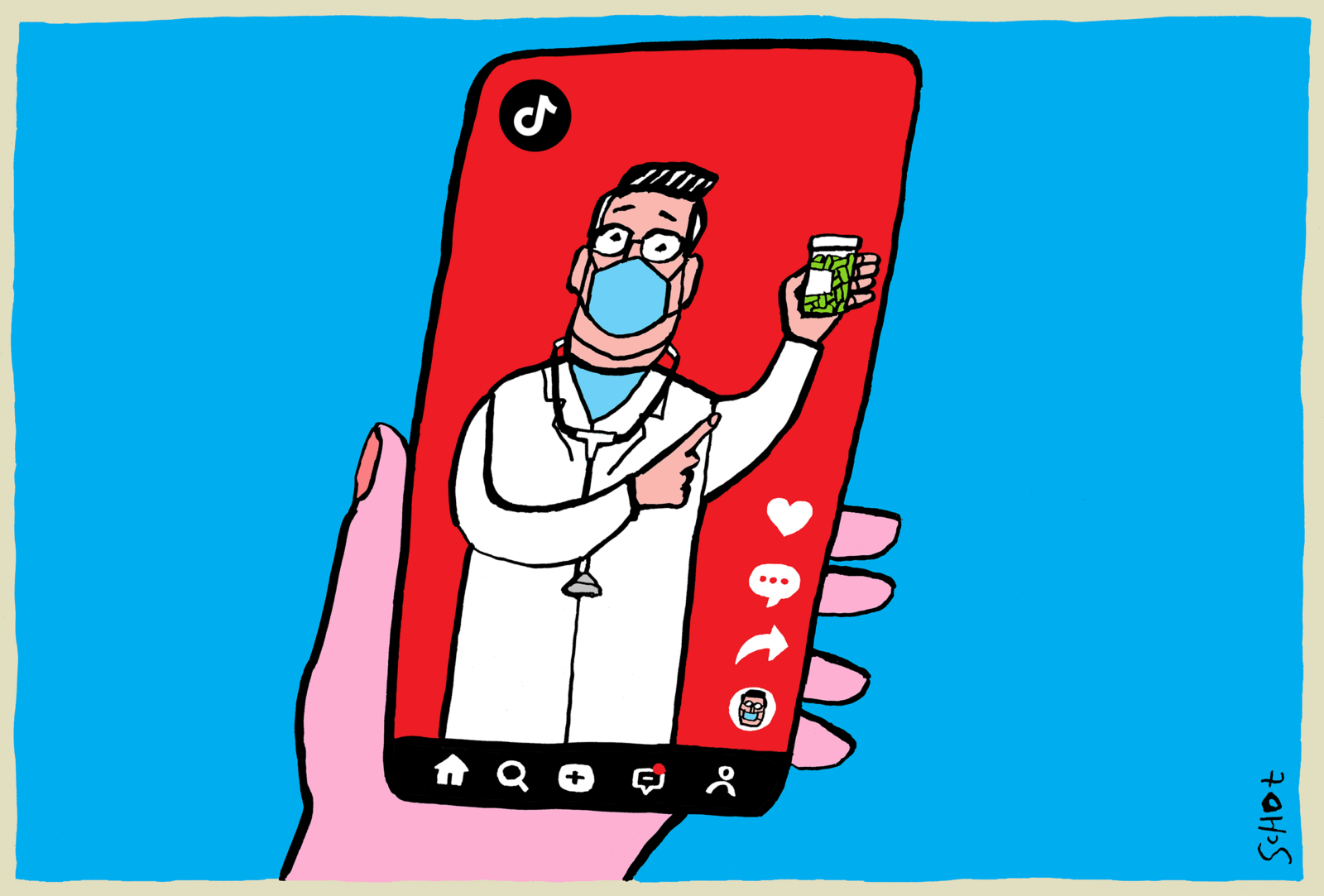
Image by: Bas van der Schot
How do doctors view this?
“Everyone is worried. Some doctors try to actively debunk disinformation on social media. But I think social media simply are not the right place for medical information. Professional associations should be much clearer about that. Good medical information should be available through reliable channels, not via social media.”
Isn’t it so that many people encounter medical information passively, and that actively searching for medical information is a step too far for many users?
“In that respect attention must be paid to social-media literacy. Those platforms can be regulated to some extent. But it’s more useful to have resilient consumers. Social media are still like the Wild West. We should teach children at school that for important decisions, whether medical, financial or legal, you should not trust TikTok or Instagram. That’s not such a difficult message.”
There are laws for advertising. In adverts for, for example, cosmetic products you can’t just make medical claims? Why do those rules not apply online?
“In principle people are free to say what they want – that’s freedom of expression. But when people make statements that are criminal, it should not matter whether you do that offline or online. So we don’t need new rules, but the Public Prosecution Service should take more steps to prosecute offences.
'So we don’t need new rules, but the Public Prosecution Service should take more steps to prosecute offences'
“Moreover, the tricky thing with online advertising is that it’s often a grey area. Radio and TV have separate advertising blocks. Because it’s in a block, you already know that 90 percent of what you’re going to hear is nonsense. That the dentists recommending a toothpaste probably have a commercial interest. With influencers, the distinction between personal experiences and opinions and commercial and other interests is harder to make.”
Is advertising for medicines allowed at all? Could it not be banned like cigarette advertising?
“Advertising is allowed for over-the-counter remedies and dietary supplements. It is not allowed for prescription medicines. But even that happens indirectly. I once contributed to an episode of Kassa. I clicked through advertisements on videos about weight and losing weight. You were linked to a website where you could get in touch with a coach. That is already consumer advertising, and thus a violation of the medicines act.
“You then fill in a brief questionnaire. And then you might be prescribed, for example, Ozempic. That is a medicine that can only be prescribed in very exceptional cases and in specific dosages by specialised doctors. Here it was being prescribed by general practitioners who didn’t know how to prescribe according to the rules. Online prescribing of medicines is an economic crime.
“Finally, users have to sign up for a subscription via the website. You pay between 100 and 300 euros a month, which is not cheap. For as long as it takes, because you have to keep taking that medicine. Users are lured into a trap. And social media are the engine behind the recruitment.”
What do you think of the CDA plan that there should be a disclaimer of lack of expertise with such claims?
“That goes way too far. I consider that censorship. Besides, it won’t work. The person making the claims is supposed to state themselves that they’re not an expert. Do you really think people will do that? Offline people also don’t declare that they are spouting nonsense. Moreover, most influencers don’t see themselves as unqualified. So if they have to declare it themselves, a quality seal or disclaimer will not work.”
What is a solution then?
“I hope professional associations will finally agree on clear norms. Medical information doesn’t belong on social media, and that should also be enforced within the profession. In addition, we must keep investing in reliable alternatives. Thuisarts.nl (homedoctor.nl) is a good example of that.
“Young doctors who are active on social media sometimes respond to me on this. What they are doing is commendable, and their intentions are good. Some of those doctors have many followers. But you have no idea of the amount of disinformation and misinformation you have to contend with. We need to try, together with the profession, to monopolise accurate medical information. We have to promote that, and adhere to it ourselves. Make it clear that if you are looking for sensible medical information, you should not be on social media.”
Read more
-
War in Iran: will the energy transition get a push or a blow?
Gepubliceerd op:-
The Issue
-
De redactie
-
 Manon Dillen
Editor
Comments
Comments are closed.
Ad
Read more in The Issue
-
‘There should be a minimum age for fatbikes’
Gepubliceerd op:-
The Issue
-
-
‘With gadgets like Meta Glasses, we pay to be surveilled’
Gepubliceerd op:-
The Issue
-
-
War in Iran: will the energy transition get a push or a blow?
Gepubliceerd op:-
The Issue
-