Ad

Fantasy and down-to-earth thinking go well together, knows Joost Oude Groeniger
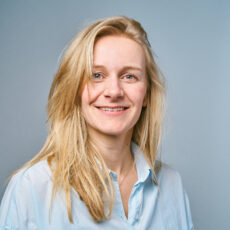
Joost Oude Groeniger would have been named after a character from The Lord of the Rings if his mother had not put a stop to it. It would have been the ultimate start for a fantasy enthusiast, but Joost is called Joost and he is a down-to-earth sociologist with a sharp eye for systems. Five years ago he read the book Thinking in Systems and since then he sees little else but systems.
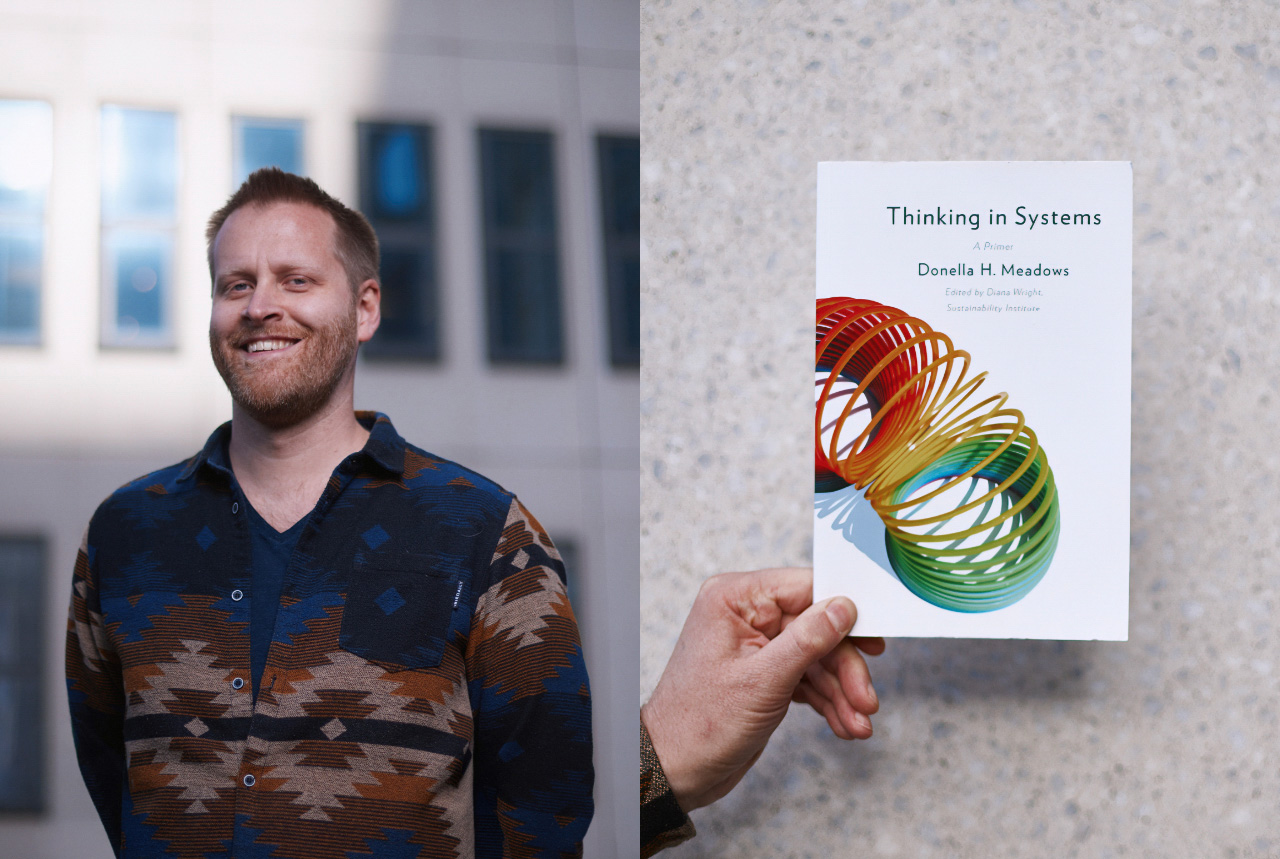
Sociologist Joost Oude Groeniger learned from Thinking in Systems that there is not one cause for one effect.
Image by: Leroy Verbeet
Joost Oude Groeniger owes his first name to his mother. If it had been up to his father, he would probably have been called Sam, after one of the main characters from The Lord of the Rings. His half-brother and half-sister are called Frodo and Eowyn. In this family he was bound to develop a love for fantasy or at least for The Lord of the Rings, but Oude Groeniger remains level-headed about it.
Joost Oude Groeniger is a social epidemiologist and public health scientist. He works at both the Erasmus School of Social and Behavioural Sciences and Erasmus Medical Centre.
The books and the films, including the extended versions, may be ‘a bit of a thing’ in the family; for him it is nothing out of the ordinary. He grew up with them and by secondary school no book or story could really engage him anymore. “I didn’t enjoy it at all. It was a time of a summary here and a report there”, says Oude Groeniger, “as a teenager very little appealed to me, but I did get my diploma.”
Moments of luck
Once at university in Groningen things became more difficult. He started with Law and realised after a year and a half that it was not for him. “That was an individual process. Law is a large programme. In a full lecture hall lecturers do not see which student is struggling.”
Oude Groeniger switched to Sociology and there too the first year was difficult. “I gave up my room and moved back in with my parents. Focus and structure became the priority.” Gradually he began to enjoy his studies. During his master’s something was sparked in him. “I often chose the path of least resistance, but when I look back it seems I followed a logical route. Although I also had many moments of luck, with my thesis supervisor for example. She gave me the push towards academia.”
Systems are complex
Oude Groeniger has since become a sociologist through and through who sees systems and their complexity everywhere. His thesis supervisor may have given him a push, but in Oude Groeniger’s way of thinking there is not one cause for one effect, it is an interplay. That is a lesson he learned from the book Thinking in Systems by Donella Meadows.
The author uses football as an example. There are players, rules, a coach, a pitch and a referee. For change, it makes little sense to ask a specific player to do something differently, as that sets too little in motion. If you want to change something fundamentally, you have to change the rules of the game. That stayed with Oude Groeniger.
Health is a house
Together with colleagues he has received 1.5 million euros in funding to research a healthier food environment. The same applies to health: “There is no point in searching for a holy grail. It does not exist. Many different things need to be addressed at the same time.”
In the coming period Oude Groeniger will focus on citizens’ trust in health policy. That trust, or rather the lack of it, is also his point of criticism regarding the sugar tax that the current cabinet is pursuing. “The sugar tax is sometimes also called a sin tax because you punish people through higher prices when they buy sweets. That creates resistance and can push trust in government even further down among a large group of people if nothing is offered in return.” Oude Groeniger again returns to Thinking in Systems. “Because health is a system. It is also about the house you live in, the schools, the air quality. Simply raising the price of sugar will not make the difference.”
Not intervening
As a scientist, Oude Groeniger is not the one who has to make decisions about where in the system interventions should be made to optimise people’s health. And he is quite content with that. He mainly derives satisfaction from feeding his curiosity. “I research social issues and can spend my entire life studying systems without intervening in any way. Ultimately I mainly want to know how something works. I can live very happily with that.”
Reading habits
Last book read: The Three-Body Problem by Chixin Liu. “It is about how civilisations interact in an immense universe when they cannot trust one another.”
Favourite genre: “Non-fiction used to be my favourite, but at the moment I am more into fiction and fantasy.”
Number of books per year: “Does The Gruffalo count? I mainly read aloud a lot to my two-year-old.”
Main motivation: “Discovering something.”
Read more
-

Why scientists are sometimes like Sherlock Holmes
Gepubliceerd op:-
Page-turners
-
De redactie
-
 Maartje Braam
Editor
Comments
Comments are closed.
Ad
Read more in Page-turners
-
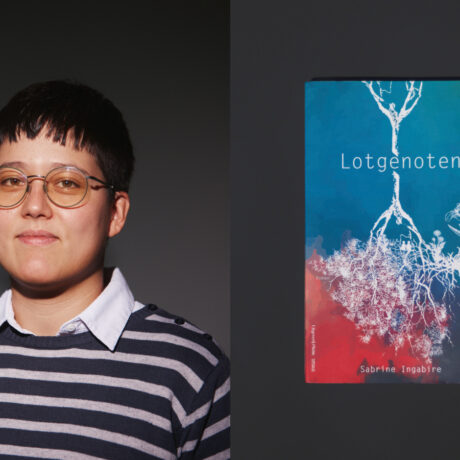
Kindred spirits are closer than you think, Lara Fizaine knows
Gepubliceerd op:-
Page-turners
-
-
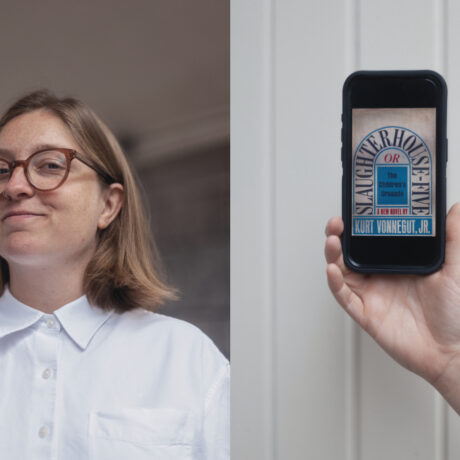
Once you have found what suits you, things fall into place, says Lenya Slierendrecht
Gepubliceerd op:-
Page-turners
-
-
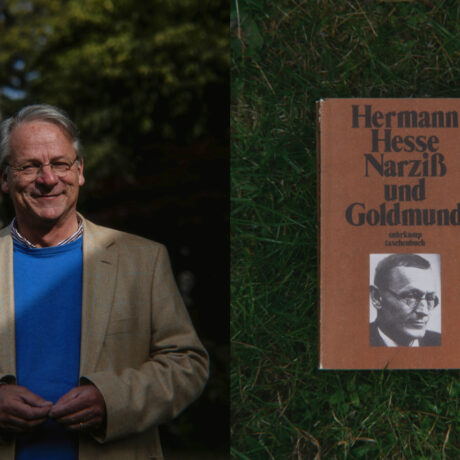
Feeling and thinking must go together, Paul van Geest knows
Gepubliceerd op:-
Page-turners
-