‘Municipalities only start to worry about young people’s problems when safety issues come into play’

The mental health of young people is deteriorating and suicide rates are increasing. In this election period, the question is whether municipalities, which are responsible for youth care, can do anything about this. Youth care researcher Annemiek Harder believes municipalities should make an effort to listen to young people. “I doubt whether anyone at city hall actually knows better what is going on in those families and what young people need.”

The number of suicides among young people has increased, particularly among young women. Mental health among young people is also not doing well. What do you think is going on here?
“Young people are under pressure to perform. And of course, there is social media, where you see all sorts of things passing by, such as harmful content and perfect images. That puts pressure on young people to want to do well too. Then you can get tangled up with yourself.
“But puberty is difficult anyway. It is the period in which you develop your identity and search for who you are and what your position is. That should not be overly problematised. There are also reports from UNICEF showing that young people in the Netherlands are actually very happy. It really depends on the lens you look through. If you look for problems, you will also find them.”
Annemiek Harder is endowed professor of Evidence-based youth care and education at the Erasmus School of Social and Behavioural Sciences. In her research she focuses on the quality and effectiveness of youth care for young people with complex problems in behaviour, emotions and family.
You conduct research at youth care institutions where young people who have been placed out of home are treated. Are the young people who commit suicide usually already known to youth care?
“I do not have exact figures, but the mental problems surrounding suicide are indeed reasons to enter youth care. This concerns so-called internalising problems. Think of anxiety or depression, and suicidal behaviour can also be part of that. On the other hand, there are young people with externalising problems. These mainly involve aggression, anger and boundary-crossing behaviour, such as criminal behaviour. In both groups, problems in the young person’s social environment often also play a role. Suicide within youth care does occur occasionally, but not on a daily basis.”
'It is the period in which you develop your identity, and search for who you are and what your position is'
What can youth care do to prevent suicide, in your view?
“Cooperation between care workers, parents and young people is crucial. A relationship of trust must be built through unbiased contact with young people and their parents. And of course, it is important to listen carefully and check whether you interpret a situation in the same way. It is also important to regularly assess whether, as a care worker, you are still aligned with the young person and the parents about the treatment and what you want to achieve. This greatly increases the chance that parents and young people will speak openly.
“I still see this going wrong at times. From the best intentions of wanting to solve everything immediately, care workers sometimes have the tendency to ask leading questions. And sometimes they have an implicit judgement about the parents, for example why they let a situation get so out of hand, or did not realise earlier that their child was struggling. That is off-putting. If parents or young people feel they are being judged in that way, they will just say things are fine to avoid hassle.”
Are you having suicidal thoughts? Call 113 free of charge and anonymously 24/7, or chat at 113.nl. It is a Dutch crisis telephone number, but you can always ask for someone who speaks English.
Municipalities have been responsible for youth care since 2015. What can they contribute?
“Municipalities often only start to worry about young people’s problems when safety issues come into play, so in cases of aggressive or criminal behaviour. But that is attention from the municipality in a negative sense, which only makes things more complicated for certain families.
“What municipalities should do is listen to young people. In their own context, without immediately problematising the situation. If more intensive youth care is needed, the municipality must ensure good care workers are available. They need to be well paid and valued, so they want to keep working and can sustain it. Care workers providing lighter support are sometimes paid more than those dealing with multiple complex problems. That is really skewed.”
'What municipalities should do is listen to young people'
There is a lot of criticism of the decentralisation of youth care to municipalities. Is that justified?
“The idea behind it was that the municipality is closer to young people and parents than the national government. I doubt whether anyone at city hall actually knows better what is going on in those families and what young people need. Those who should have that knowledge are the care workers who work with young people and parents. Policymakers must ensure that those care workers can do their job properly.
“A problem in this regard is the proliferation of youth care providers and the enormous administrative system built around it. Different municipalities set their own rules and use different ways of contracting providers. That makes it less efficient and harder to focus on what really matters, namely providing good support to young people and parents.
“Moreover, there has been an increase in lighter, ambulatory forms of support for young people. There should be a critical assessment of whether all of that is really necessary. Some parties have stepped in to make money from something that may not even be needed.”

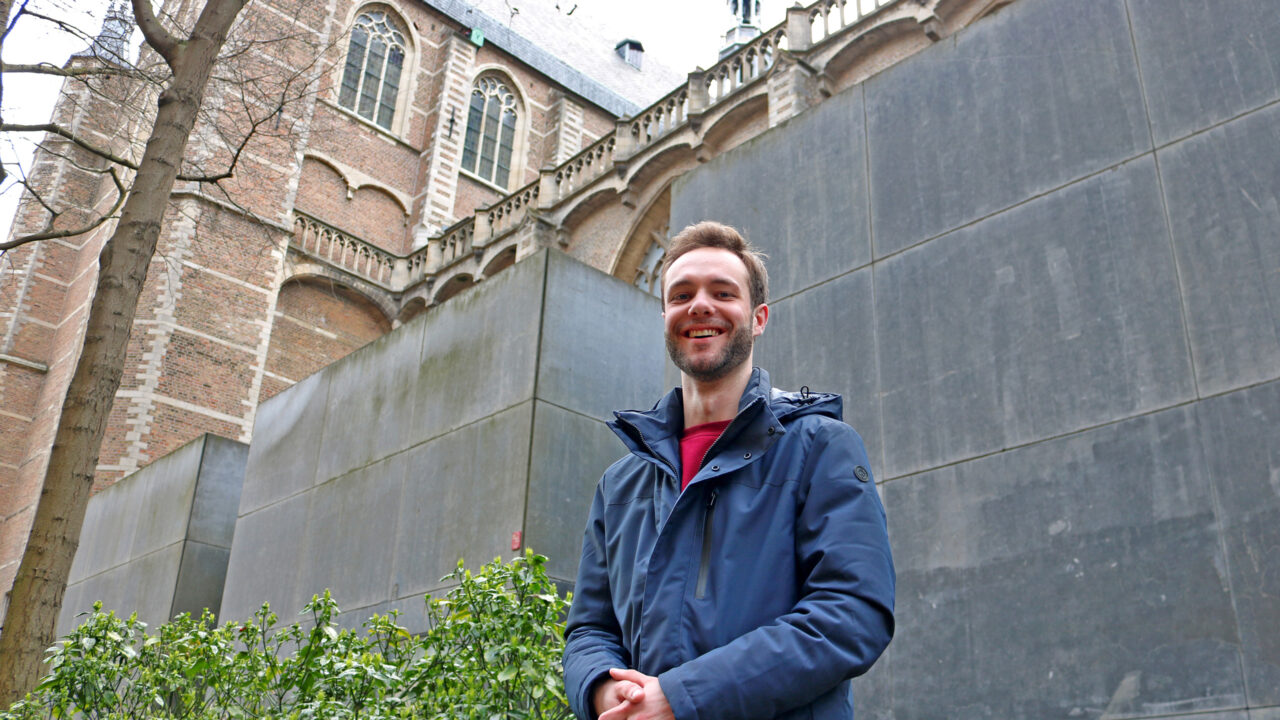
Image by: Bas van der Schot
Can you give an example of that?
“There are care interventions that are widely used in schools, for example for young people with dyslexia. You can really question whether that is a task for care institutions. Once you implement an intervention, it immediately appears to be a very big problem, and it can be stigmatising. Youth care adheres strongly to protocols, while many lighter problems can also be resolved within the young person’s social network, sometimes even better than with an external care worker.
“The problem is that in the current system there is a clear revenue model. Institutions that offer this kind of support for lighter problems are effectively creating the demand for their own services. As a result, dyslexia has become increasingly common in recent years. I wonder how that is possible. If a municipality contracts such providers, it can lead to it being diagnosed more often, while a treatment or intervention may not really have been necessary.”
Is youth care an issue that voters can take into account in the upcoming municipal elections?
“I actually think most voters do not find it a very interesting issue. It concerns a target group that faces many prejudices. ‘Those are problem families, we would rather be rid of them than have them,’ is the idea. Most people will feel little inclination to invest more money in it.
“But it is connected to other major election themes, such as the housing shortage. To reduce suicides, for example, more is needed than just good youth care, such as housing. There is quite a significant group of young people who cannot be treated because they do not have suitable housing. Young people placed out of home are then moved from one place to another, which is harmful.”
Read more

De redactie
-
 Manon Dillen
Editor
Comments
Read more in Campus
-
Student on the ballot: Lili wants to take down slumlords, poverty and the establishment
Gepubliceerd op:-
Politics
-
-

External investigation into cooperation between TU Delft and police
Gepubliceerd op:-
Campus
-


Leave a comment