Psychological support and financial assistance for Iranian students in the Netherlands
Several universities and universities of applied sciences are offering support to their students from Iran. This had already started before the war broke out. In total, the Netherlands has more than 1,200 Iranian students.
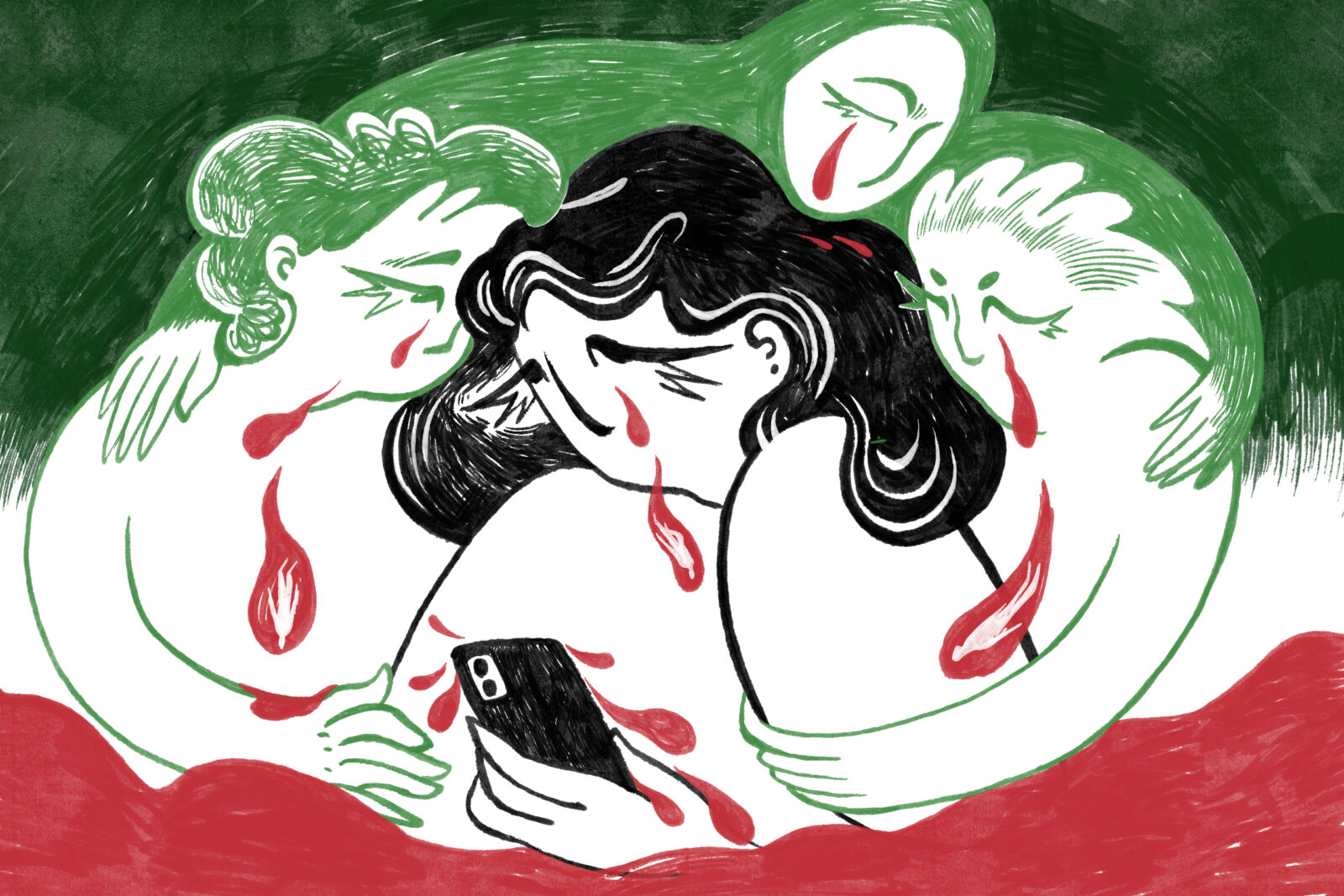
Image by: Ami Rinn
The Erasmus University organised a ‘support meeting’ at the end of January for its students and staff from Iran. The institution points to the (general) emergency fund for students, which Iranians may be able to apply to. Another meeting will take place soon, where specialised psychological support will be present.
During the recent protests, which were violently suppressed, the Iranian regime blocked the internet. This made it difficult, for instance, to transfer money or complete certain formalities online, writes U-Today.
Iranians in the Netherlands are of course also worried about family, friends and peers in their home country. In various places they have recently held gatherings or lit candles. In Utrecht, a commemoration is planned for 19 March.
Emergency fund
The University of Twente and the university of applied sciences Saxion are taking the situation of Iranian students into account in their programmes, regional newspaper Tubantia and university of applied sciences magazine SaxNow write.
For example, the university of applied sciences is considering a ‘limited emergency fund’ for Iranian students. They sometimes face practical problems, which had already begun before the United States and Israel launched their attack on Iran.
TU Delft also says that Iranian students can make use of facilities such as the study adviser and student psychologists, and that financial measures have been taken to support them, according to university magazine Delta.
Increased
The number of Iranian students at Dutch universities and universities of applied sciences has increased sharply. In 2020 there were 354, mainly at universities. In 2024 that number rose to 1,213. The majority study in higher professional education.
Nuffic, the organisation for internationalisation in education, says that the structure of primary and secondary education in Iran changed around 2019. Until then, primary school and secondary school together lasted eleven years, after which pupils could follow one additional year if they wanted to go on to higher education. Since 2019, this additional year has been added as a standard year to secondary school.
“We used to assess the Iranian secondary school diploma as ‘4 years havo’, which means it did not grant access to Dutch higher education”, says a spokesperson for Nuffic. With that extra school year, Iranians reach ‘5 years havo’. As a result, they hold a diploma that in principle grants access to Dutch higher professional education, separate from additional requirements such as English language proficiency or mathematics level.
In addition, overall migration from Iran has also increased: refugees, researchers and others. Some of the Iranian students were therefore already living in the Netherlands before starting their studies here.
Other countries
Higher education is also seeing increasing numbers of students from other countries. In that respect, Iran is no exception. The growth in the number of international students in higher education has now been curbed, but this is mainly because fewer Germans are coming here, the largest group of students from abroad.
Read more
-
Iranian students follow protests closely: ‘It feels like my family is dying again every single day’
Gepubliceerd op:-
Student life
-
De redactie
Comments
Read more in Student life
-
Large-scale student protests at universities in Iran
Gepubliceerd op:-
Student life
-
-
Medical student Daan Kluwer wins 10,000 euros to record his own jazz album
Gepubliceerd op:-
Student life
-
-
Master seeks master in love
Gepubliceerd op:-
Culture
-
Leave a comment