Why scientists are sometimes like Sherlock Holmes

Where do we find answers to our questions? Sherlock Holmes looks for explanations at a crime scene; Andreas Bayerl uses datasets to solve mysteries. Two detectives with the same goal: understanding behaviour.

Image by: Leroy Verbeet
It is one of Sherlock Holmes’s most famous stories, The adventure of the speckled band. A stepfather forces his stepdaughter to sleep in the same bedroom where her sister died in an unexplained way before her wedding. What happened? Sherlock Holmes maps the situation and looks for possible explanations for the sister’s death. There are striking details: the bed is fixed to the floor, a cord hangs above it. There is a ventilation grille and a hissing sound.
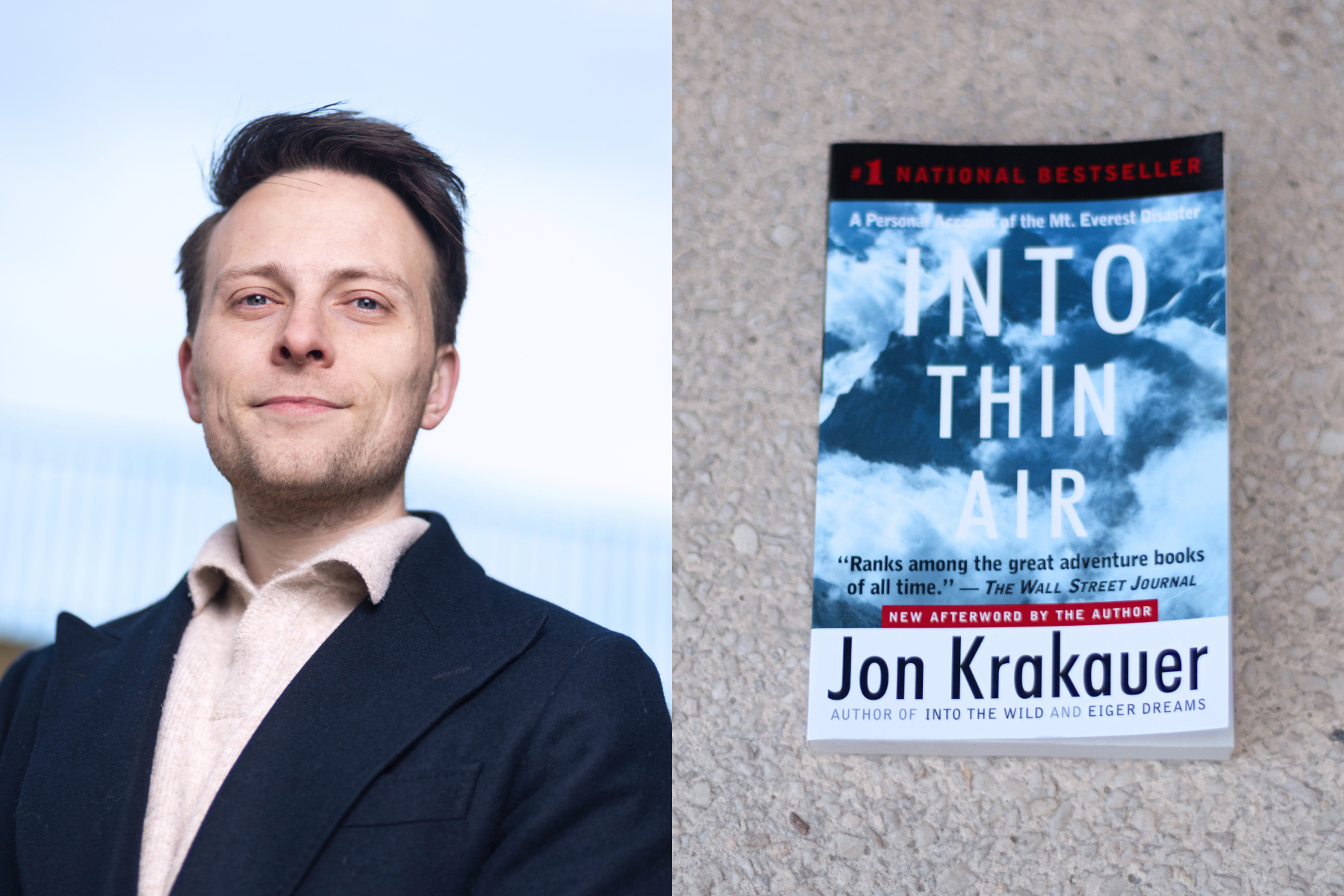
Andreas Bayerl is assistant professor of Marketing at the Erasmus School of Economics. He earned his PhD in quantitative marketing from the University of Mannheim. He studies online reviews and influencer marketing. Bayerl teaches classes on data science and marketing analytics.
Andreas Bayerl listens to the stories of Sherlock Holmes when he cannot sleep or when he is awake at night with his daughter. “Is that embarrassing? The voice of the man who reads the stories is amazing. As soon as I start a story, I really want to know what happened”, Bayerl says about the appeal of Sherlock Holmes. Wanting to know how things are is something he recognises from his own research. “Sherlock Holmes often wants to solve a murder. I want to understand a phenomenon.”
Weekends are negative
During his studies in Mannheim he worked for a platform that collected employee reviews. Companies asked their employees by email or social media platforms to rate their workplace. At one point he noticed that the reviews were more negative in the weekends than on weekdays. That stuck with him. “I put serious work into assembling the datasets from more than forty companies, including Yelp, Amazon and Tripadvisor.” It turned out to be a trend. “While you might expect people to feel better at the weekend, they are more negative in their reviews: the weekend effect.”
Bayerl calls himself a data detective. As soon as a phenomenon such as the weekend effect comes to light, possible explanations start forming in his head. Do people have a different experience at the weekend? In a restaurant perhaps: busier, hurried staff, but products are the same every day. Higher expectations perhaps? Even when people don’t have to work during weekend hours, reviews about their work are more negative at the weekend than on weekdays. “Sherlock Holmes often finds a conclusive explanation. In my research there are always multiple reasons at play at the same time.” An important explanation Bayerl finds is the type of person writing the review. Those who furiously type a response at the weekend have a smaller social network than those who write reviews during the week.
Answers from an unexpected place
Meanwhile Bayerl is also grappling with existential questions: “I’ve thought a lot in recent years about the impact I want to have.” He published a paper on the influence of influencers on purchasing behaviour. The study was published in a leading journal and downloaded and cited many times – “I’m not saying this to show off.” In the research Bayerl showed that relatively small influencers, with around ten thousand followers, prompt a larger share of their followers to buy a product than the big names. “Companies eagerly absorb this kind of research, since it is interesting for their marketing. But is that what I want to contribute?”
The birth of his daughter gave him an answer. “I realised that with my research I aspire to more societal relevance than optimising marketing strategies.” He is now writing a grant application about the role of social media and the spread of information. The results could be useful for lessons about social media in schools. “If anyone knows how easily people can be persuaded on social media, it is marketeers. They can give children tools to move resiliently through all the online influence.”
Reading habits
Number of books per year: “I listen to Sherlock Holmes”
Main motivation: Relaxation during the night with a wakeful baby or before going to sleep
Last read book: The talent advantage by Stefan Stremersch. “He is a professor in my department. I’m not trying to please him, but I thought it was a good book. To some extent I already knew how he thought about things. But it was interesting to read about that and about his experiences.”
Favourite genre: thriller
De redactie
Comments
Read more in Page-turners
-
People sometimes make unpredictable choices, Dominic van Kleef knows
Gepubliceerd op:-
Page-turners
-
-

Lives are full of change, and that’s why Yara Toenders is researching the brain
Gepubliceerd op:-
Page-turners
-
-

Sam van Leeuwen teaches Dutch to newcomers integrating into society
Gepubliceerd op:-
Page-turners
-

Leave a comment