Ad

Why facts are orange and opinions purple on EM’s new website

The new website of Erasmus Magazine offers a clearer distinction between facts and opinions, as readers of good journalism may expect, explains editor-in-chief Wieneke Gunneweg.

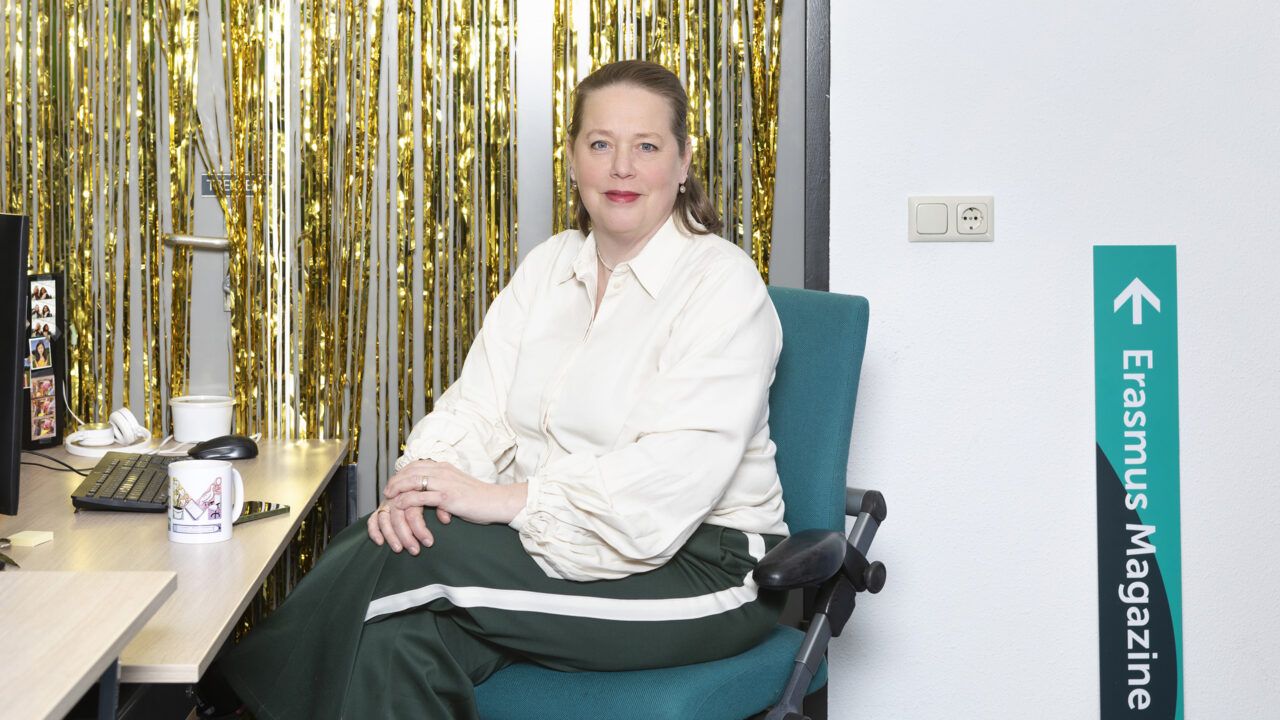
Image by: Geisje van der Linden
Erasmus Magazine has a new website; hopefully, it has not escaped your notice. Creating a new website is quite the process. Alongside all kinds of technical issues, another question comes to the table: how do you present content to your reader? How do you make it visually clear what you, as an editorial team, mean with an article?
Do you distinguish between genres: news reports and interviews? Or between products: video or text? Does the user see the difference, and does the reader even care? These are questions with no single answer, because so many people, so many opinions. The editorial team therefore chose to categorise productions by substantive themes: science, education, student life, and campus.
This still left us with one theme that is not easy to categorise on several fronts: opinion. EM believes it is important to be a platform for discussion and dialogue, for opinions and viewpoints from everyone within the university about everything that affects academia. And that has been quite a lot in recent years.
‘Comment is free, but facts are sacred’
As journalists, we learned that you must keep facts and opinions separate in journalistic productions. The rule is at the top of every code and guideline on journalistic practice and professional ethics: be clear about where the facts end and the opinions begin.
As a journalist, you do this, for example, simply by placing quotation marks around a quote in an interview; that is where someone’s personal story begins, which may be factual but can also contain an opinion and must clearly be attributed to the person who is speaking.
But in genres such as columns, opinion pieces, and letters to the editor, and also this editorial, you do not use quotation marks, and a heading such as ‘opinion’ may not always be sufficient. So how do we now comply with that important basic rule that the British journalist C.P. Scott expressed so beautifully at the beginning of the last century with the statement: ‘Comment is free, but facts are sacred’?
Together with our designers, we chose to make the distinction through the colour of the productions that appear daily on the website: earthy tones (call it orange and beige) for all factual productions, and purple/lilac for everything that can be considered opinionated. In this way, the choice of colour is not only about aesthetics but also about ethics.
Een lijst met artikelen
-

Makeover for Erasmus Magazine: new and more accessible website is live
Gepubliceerd op:-
Campus
-
De redactie
-
 Wieneke Gunneweg
Editor-in-chief
Comments
Comments are closed.
Ad
Read more in Editorial
-

Liminal times
Gepubliceerd op:-
Editorial
-
-
How EM ended up at an awards festival thanks to talent and teamwork
Gepubliceerd op:-
Editorial
-
-
Clashing freedoms keep journalists and academics sharp
Gepubliceerd op:-
Editorial
-