Education Council criticises ‘one-sided’ view of student wellbeing
Stress, performance pressure, financial worries… The wellbeing of young people is under a magnifying glass, and education is offering more and more care and support. But do not forget the power of education itself, says the Education Council.
In a new report on student wellbeing, the Education Council does not seek to play down the problems. Young people do indeed feel performance pressure, some can barely make ends meet, and of course there are concerns about climate change and polarisation.
At the same time, society has become more aware of ADHD, depression, autism and other mental conditions. There is more space to talk about them. This has its advantages, the Education Council notes – although there is a risk that people label themselves and others more easily.
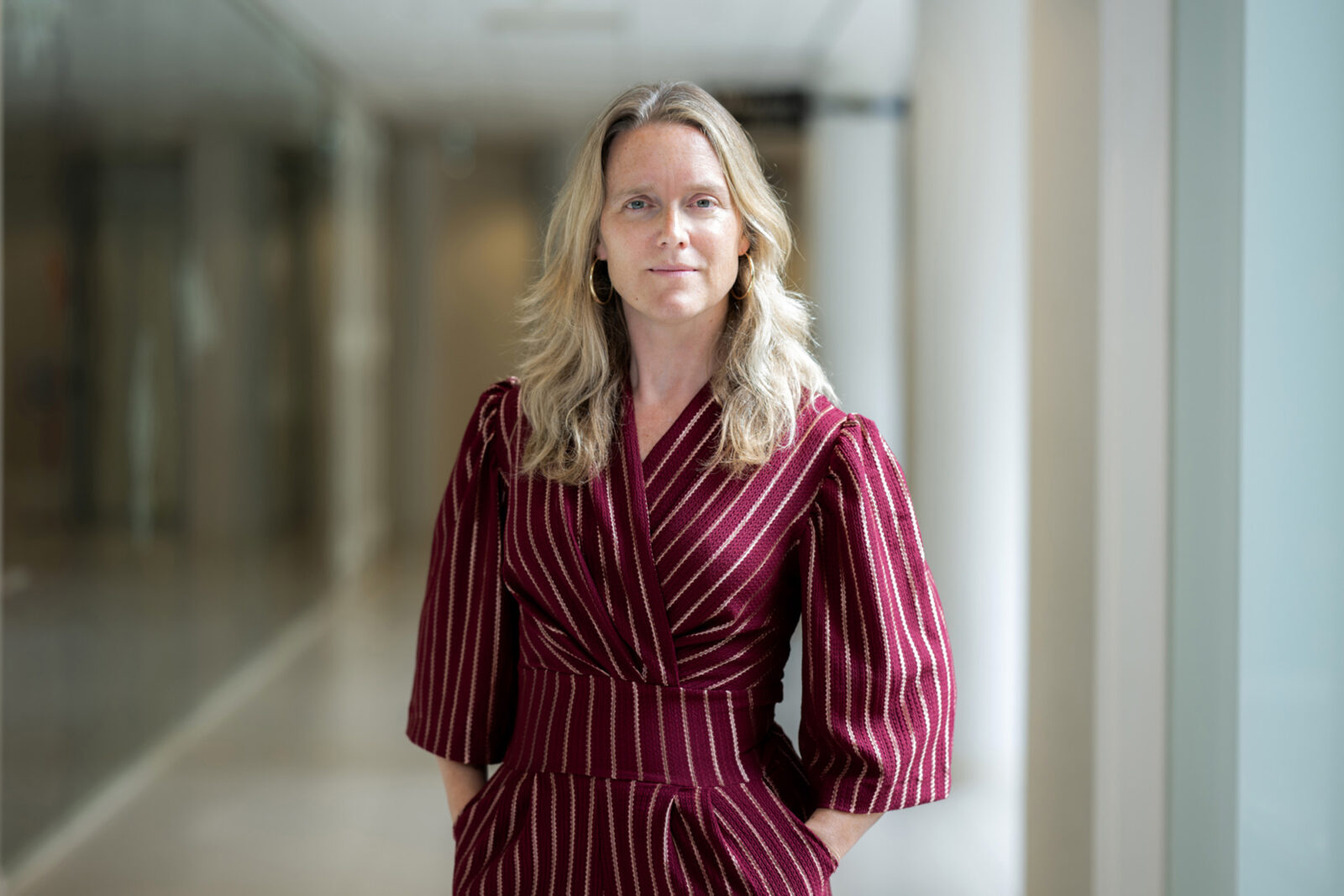
But what can education do with this? The approach to (student) wellbeing is now strongly focused on the individual and on diagnosis, says Louise Elffers, chair of the Education Council. Education often offers special guidance and additional care. But according to the council, wellbeing can also be approached in other ways.
Do you think there is something wrong with student wellbeing?
“Absolutely. We know the figures on mental health problems among students. Teachers themselves also see that the pressure on young people is high. Doubts and insecurities partly belong to this phase of life, but young people are also dealing with societal developments such as financial insecurity and the housing crisis. They often also feel that they have to meet high demands.”
What is wrong with a ‘diagnostic’ view of student wellbeing?
“We are now strongly focused on the question of what guidance and additional care we need to offer the individual student so that they can participate in education. That is the standard perspective. But then you are really looking for the solution outside education, or in addition to it. You can also look at the contribution of education itself to the wellbeing of young people.”
Is the latter better?
“It can differ per case what is appropriate, but we now see that education is stuck in a groove. It is almost a reflex to talk in terms of additional care and guidance. The questionnaires that students fill in about their wellbeing also follow that track of individual diagnosis. We say: be careful to also look at other approaches.”
Which approach, for example?
“The wellbeing of young people is not only a condition for following education, but also an outcome of it. Education is a place to practice, a place where you are given skills to relate to the world around you and to find your place in it. Education can contribute to a sense of meaning in your life. It offers a place to discuss your worries and to build relationships. Moreover, we can pay attention to issues that concern students, such as discrimination or the housing crisis.”
You are an endowed professor of equal opportunities in education. In striving for equal opportunities, do you not also have to look at individual obstacles?
“One person struggles with problems that another does not have; that is evident. You can tackle the individual problem so that all students can start on an equal footing, but that is not the only way to help students. The key question is what contribution education can make to dealing with it.”
Good education sometimes helps better than yet another new scheme?
“It is not the complete answer to all problems – sometimes additional care or a concrete provision is indeed needed – but we are now very much focused on the conditions for learning, while we can also look at the outcomes of learning.”
The report by the Education Council also addresses performance pressure. It is not a bad thing to feel some performance pressure, the council members believe, because education is precisely where you learn to deal with such pressure. On the other hand, that performance pressure should not tip over into chronic stress.
But how do you determine the balance? How do you, for example, view the binding study advice with this report in mind?
“We did not discuss the BSA within the council. Other questions also play a role in the BSA, for example what the costs are and whether it actually leads to more study success. But in the light of our exploration, you should ask: does the BSA only put pressure on students, or does it contribute to the development of our first-year students and help them learn to deal with such pressure? You can have the same discussion, for example, about the spread of assessments.”
You teach at the University of Amsterdam and the Amsterdam University of Applied Sciences. What have you learned from writing this advice?
“My colleagues and I have similar discussions. How far should we go in setting up additional care structures? What is our task as teachers, what can we contribute from our expertise? I teach sociology of education, so I often talk to students about societal developments: what do they see happening, what unease do they feel, what does it mean for their own financial security? I understand that in other subjects this is not always so closely interwoven, but still: in discussions about wellbeing we should not forget the ‘education-specific’ possibilities. In education, young people can learn to interpret the world and find their own path.”
De redactie
Comments
Comments are closed.
Read more in Student life
-
Large-scale student protests at universities in Iran
Gepubliceerd op:-
Student life
-
-
Medical student Daan Kluwer wins 10,000 euros to record his own jazz album
Gepubliceerd op:-
Student life
-
-
Master seeks master in love
Gepubliceerd op:-
Culture
-