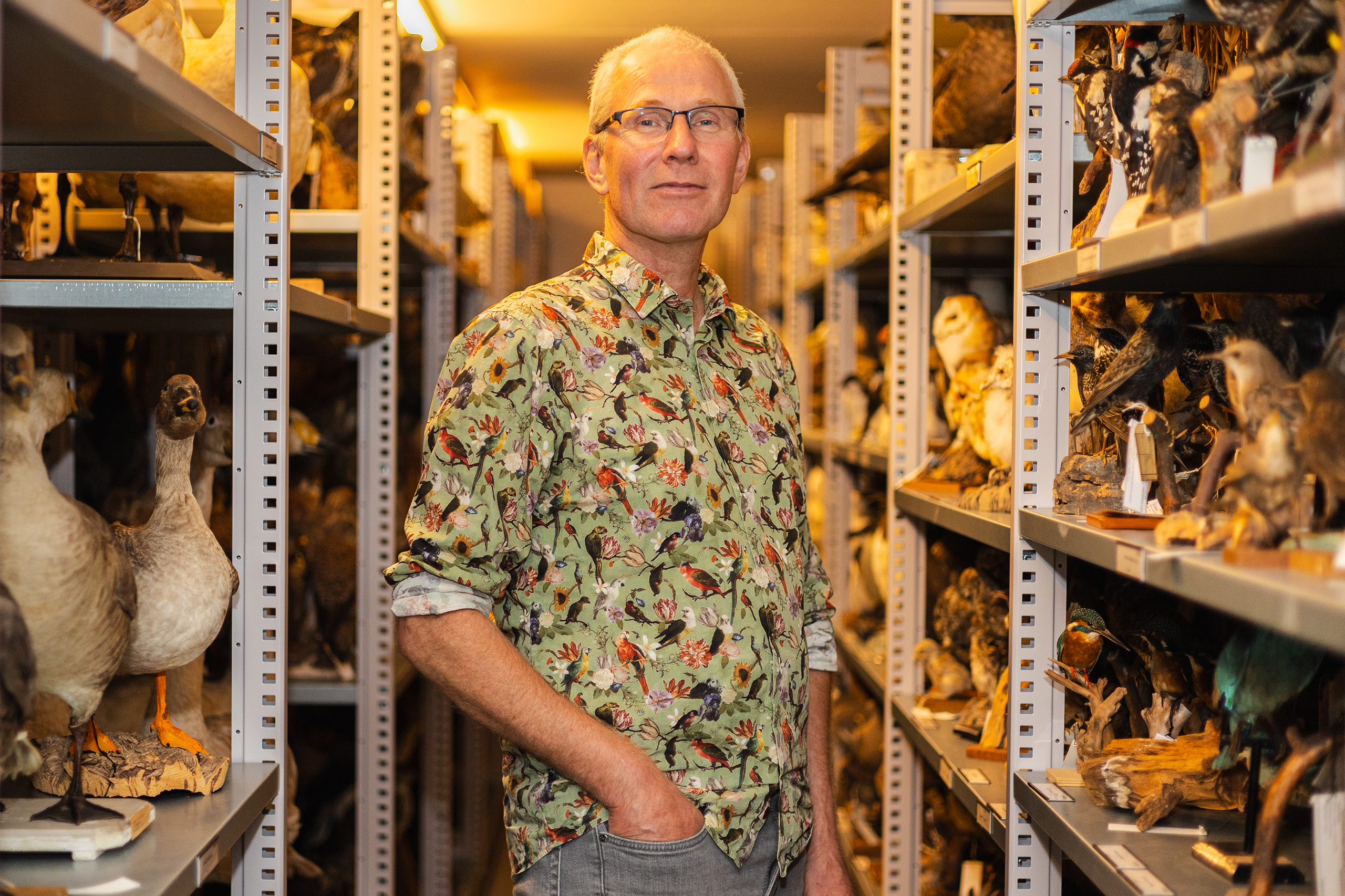
Ellen van Schoten brings cityscapes, half-timbered houses and cathedrals to life
Ellen van Schoten, vice-chair of the Executive Board, has been drawing for almost her entire life. This month, De jongen die zijn stem verloor was released, a book in which she takes readers on a quest through Delft, Wales and England in more than 130 illustrations.

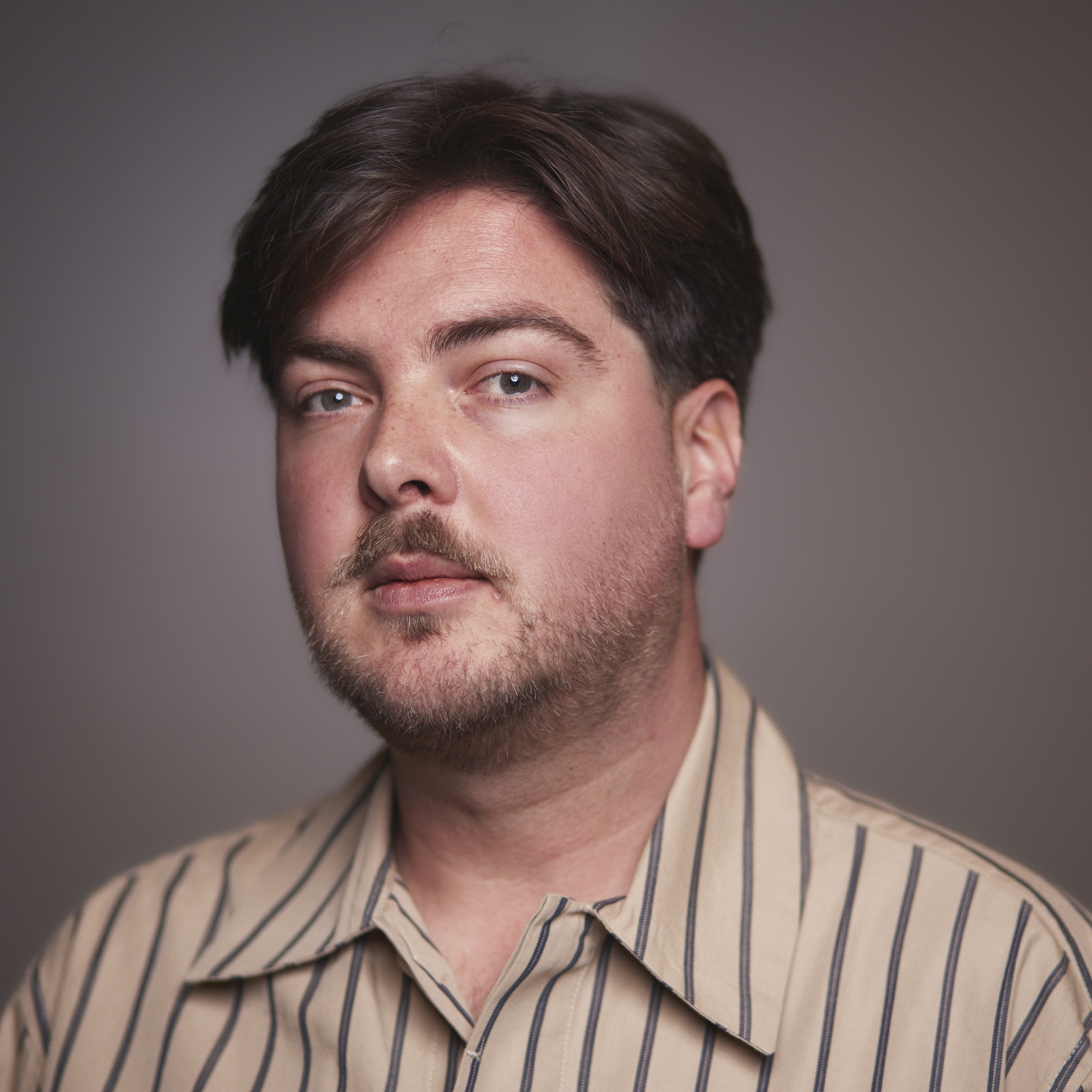
Image by: Pien Düthmann
In the summer of 2024, Ellen van Schoten is sketching in her notebook on the coast of Tynemouth, in Northeast England, where the Tyne flows into the North Sea and the ferry from IJmuiden passes the ruins of a Benedictine priory on its way into Newcastle. Two boys are sitting on a bench. They’re eating ice cream and strike up a conversation with her, intrigued by her drawing of the coastline.
With 6,422 staff and 31,473 students, it’s impossible to know everyone at the university. But what do these people do once they step off campus? In this end-of-year series, EM makes the connection with six remarkable stories about what students and staff do in their spare time.
By that moment, Executive Board vice-chair Van Schoten has been drawing for many years. From the age of 13 to 18 she took classes at the drawing society Debutade in Hoorn, which has been around since 1866. “That gave me a solid technical foundation.” It always remained a hobby though, until that conversation with the two young tourists on the English coast. “They looked at the sketch and started asking all sorts of questions. Do you have a website? Are you on Instagram? Where can we buy your work?”
That encounter got her thinking and led to her decision to take her drawing more seriously and share her work with the world. Now, a year and a half later, her book De jongen die zijn stem verloor (‘ The boy who lost his voice’) is for sale in bookshops, featuring more than 130 of her drawings – in pencil and ink – and a story she wrote herself.
Cityscapes and cathedrals
In the book, 11-year-old Willem sets out to find his voice. Willem loves to sing – often and beautifully – until one day he suddenly can’t sing anymore. His quest takes him from Delft, where Van Schoten has lived since taking up her job in Rotterdam, to England and Wales, passing the cityscapes, half-timbered houses and cathedrals that Van Schoten sketched on location: from the leaning tower of the Oude Jan and the back of the Hugo de Groot statue in Delft, past the monumental Newcastle Castle and York Minster, to the fishing boats off the Welsh coast in Tenby.
The drawings came first, the story followed. She made the drawings on her travels to England – the country she fell in love with at the age of 19. She always draws outdoors: on a café terrace, on a bench, and sometimes even sitting on the ground. A drawing takes her an hour and a half to two hours to complete, and sometimes she makes three or four in a day. “Even in winter, as long as it’s dry.” This Christmas holiday, she’s off to Bath.
Van Schoten’s cityscapes are devoid of people. Occasionally, a drawing will feature a detail hinting at everyday life: a shop sign, a power cable, a protruding antenna or a wonky portable loo. “I want nothing to distract from the subject. My work is realistic and restrained – I like clear lines. In architecture, the strength of the line comes through most powerfully when you maintain that restraint.” The ink drawings of Anton Pieck are a major source of inspiration.
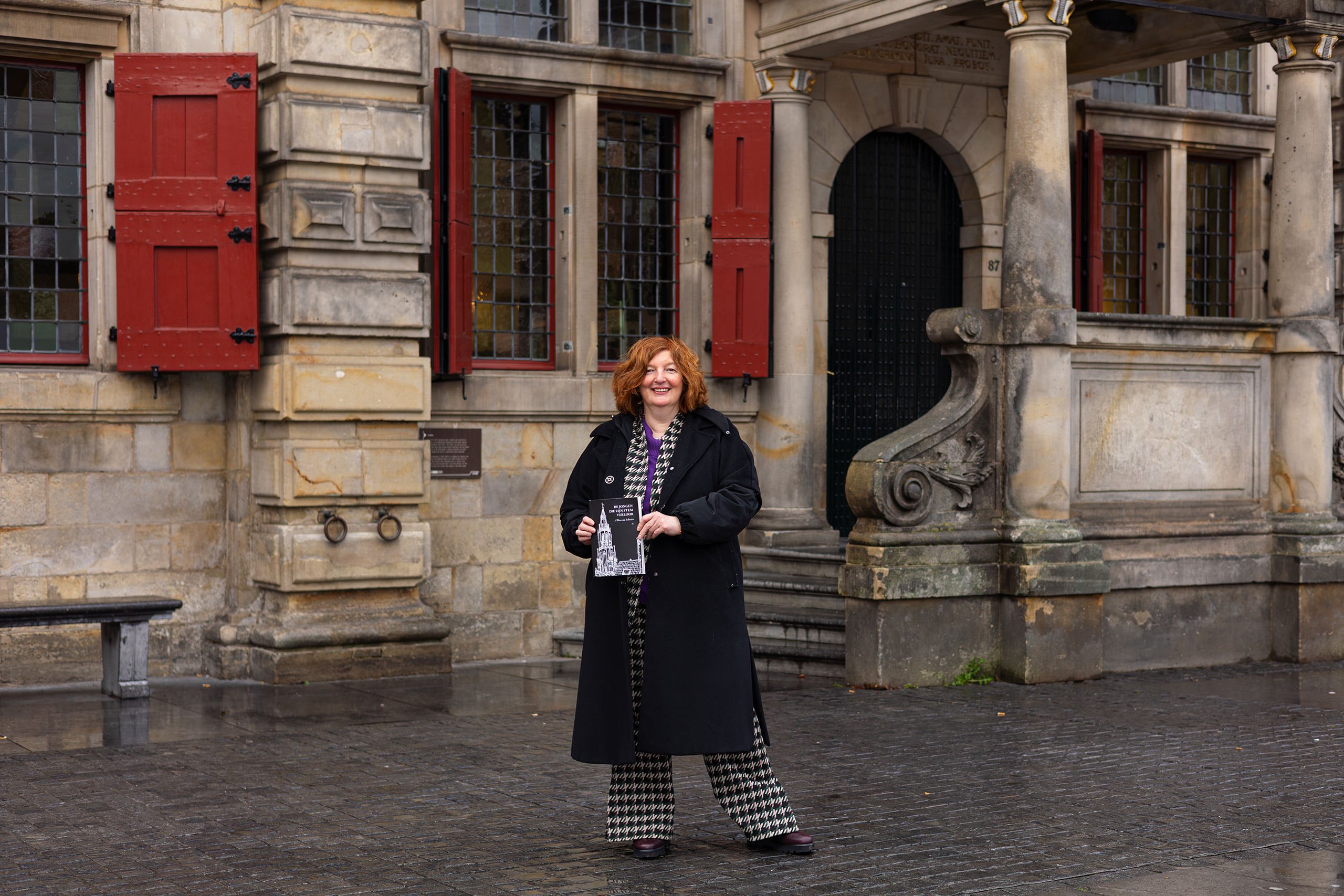
Image by: Pien Düthmann
Architecture is like music
Still, the cityscapes in her drawings are anything but static – no ruler is involved. “I draw by hand, and organic lines bring the buildings to life.” In the story, the buildings seem to sing, as if trying to tell Willem something. She herself doesn’t experience them quite as intensely as her protagonist. “I don’t hear music or anything like that when I walk through a city”, Van Schoten laughs. “But I do experience a great sense of beauty, for example when I walk through the centre of Delft.”
‘I do experience a great sense of beauty, for example when I walk through the centre of Delft’
She sees parallels between architecture and music: “They both have something mathematical – the structure of a musical composition and the design of a building. But good music rises above the structure, just like good architecture.” She refers to a quote by Goethe, who said that music is liquid architecture, and architecture frozen music. “To me, they’re connected. I enjoy the structure of a musical piece just as much as I enjoy beautiful architecture.”
Singing voice
Just as in the story, music is a common thread through Van Schoten’s life. As a child, she sang in church choir De Lichtzangertjes and learned to play the violin. Her mother, who inherited a love of music from the church, was an amateur violinist and encouraged her to take music lessons. “I’m grateful to her for that.” Her father, who passed away when she was ten, was passionate about opera. “I loved listening along when he put on those LPs.” She still plays the violin and has since learned to play the piano as well.
Van Schoten still sings, too. That’s how she ended up in North England’s cathedrals in the summer of 2024. “Every cathedral in England has its own choir, but they take time off in summer. I joined the choirs that fill in during those weeks. We sang the repertoire of an Evensong – an evening church service that’s largely sung.”
The idea for the story in the book came to her while having coffee with her neighbour. “She’s a fan of German literature and told me about a book, Die Zauberinnen by Jean Starobinski, in which singers are described as sorcerers, because they can conjure up all sorts of emotions and transport you to another world with their voice. That got me thinking – what exactly is a singing voice? And I think it’s more than just an instrument that produces sound.”
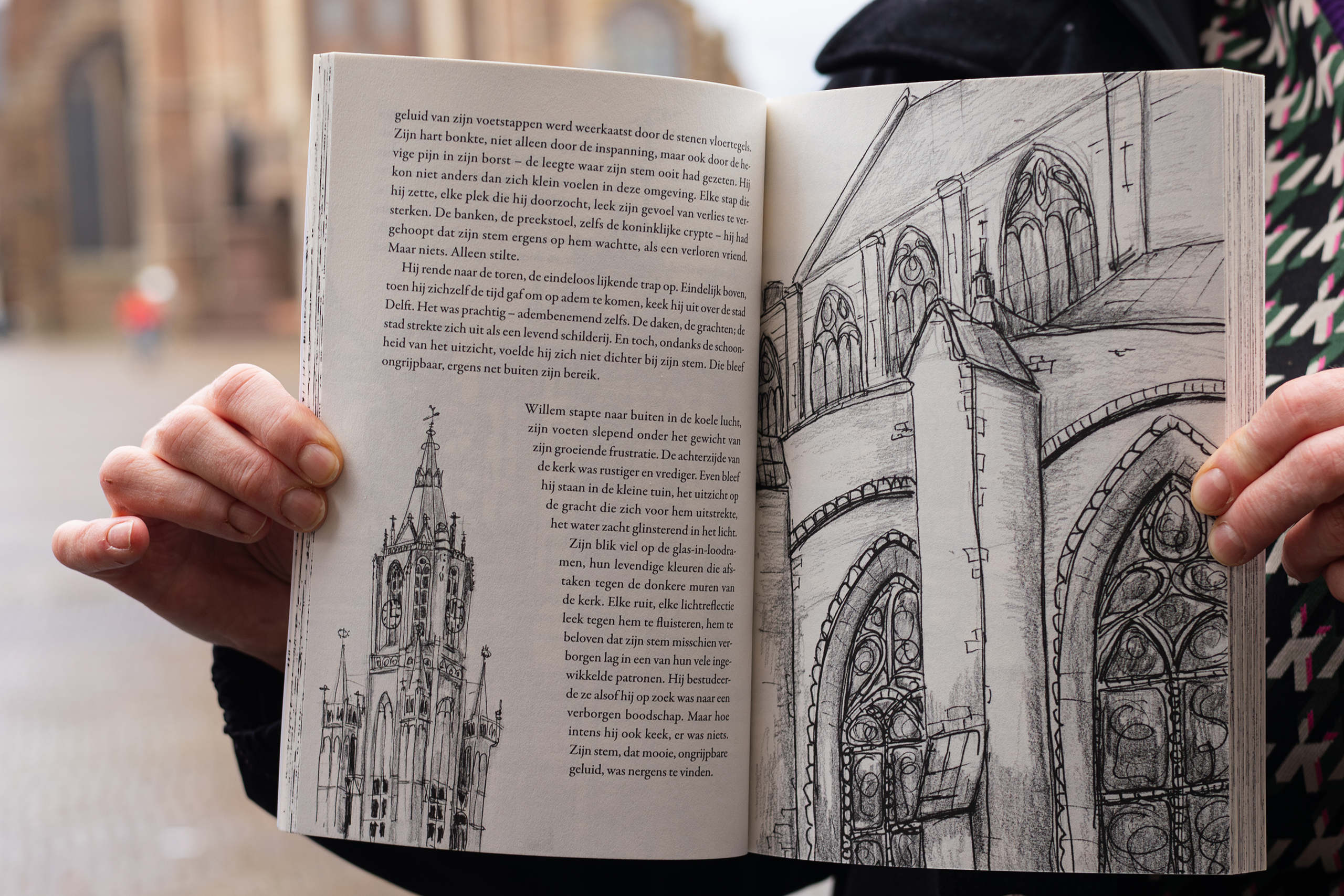
Image by: Pien Düthmann
Anchor
Though the story is written for all ages, it occasionally touches on heavier themes. Willem’s quest for his voice at times feels like an existential search. In the world around him – rowing students, people walking along the canal – Willem sees that life goes on without a voice. For Willem, his voice is an anchor for his identity. “The book is also about loss. I tried to imagine what it’s like to lose something so important. Music matters deeply to me. What if it were suddenly gone?”
Would Van Schoten go on a similar quest herself? “I think I would, because I’d know exactly what I was missing.” Drawing and music are an anchor for her. “Not for my identity, but definitely something that always brings me back to myself.” She appreciates the contrast with her demanding job. “What I like is that in my job I use my head, and this I do with my hands – a different part of the brain. And the nice thing about singing is that it’s very physical, which I enjoy.”
Coming to life
‘I don’t like boring stories or conclusions that feel like a foregone conclusion’
Protagonist Willem is named after Van Schoten’s grandfather. “I never met him, and as far as I know he couldn’t sing.” Still, she tried to make Willem resemble her grandfather. “I only had photos of him in his twenties. But I tried to capture his face – he had this full head of hair in his twenties.”
All the male characters in the book are named after family members. An emeritus professor in the story is called Freek, just like Van Schoten’s father. “I based the drawing on his photo.” Priest Andries, who helps Willem on his journey, is named after Van Schoten’s uncle. “I liked the idea of bringing them back. It’s as if they come to life again – in a very different life from the one they had.”
In the book, Van Schoten takes the reader along on Willem’s journey. Without revealing whether or how Willem finds his voice: “I didn’t want an obvious ending. I don’t like boring stories or conclusions that feel like a foregone conclusion.”
So, there might be a second volume, Van Schoten cautiously admits. “I’d really like that. But it would have to be set in Florence – I’ve made some beautiful drawings there.”
Ellen van Schoten (59) has been vice-chair of the Executive Board since January 2021 and is responsible for the university’s operations. She earned a PhD on the audit and control of financial derivatives at non-financial institutions. Before that, she worked at PwC, the Netherlands Court of Audit and the Dutch Authority for the Financial Markets. She lives in Delft.
She has been drawing since childhood. Since the summer of 2024, she has taken a more professional approach to her art.
De jongen die zijn stem verloor (graphic novel, 176 p. | ISBN: 978-94-91835-62-9 | Price: 24.50 euros | publisher: Studio Kers) has been available in bookshops since 1 December and can also be ordered via her website.
Read more
-
How Krish Raghav turned his frustrations with the housing market into a disorienting game
Gepubliceerd op:-
Staff
-
De redactie
-
 Tim Ficheroux
Desk editor
Latest news
-
EM TV newsflash: Break-in in F building, EUR receives two Vici grants, and student wins 10,000 euros music prize
Gepubliceerd op:Article type: Video-
EM TV
-
-
Meditation room closed in the middle of Ramadan after break-in in F building
Gepubliceerd op:-
Campus
-
Comments
Comments are closed.
Read more in Staff
-

Pay rise for interns, clinical rotations and staff at UMCs
Gepubliceerd op:-
Staff
-
-
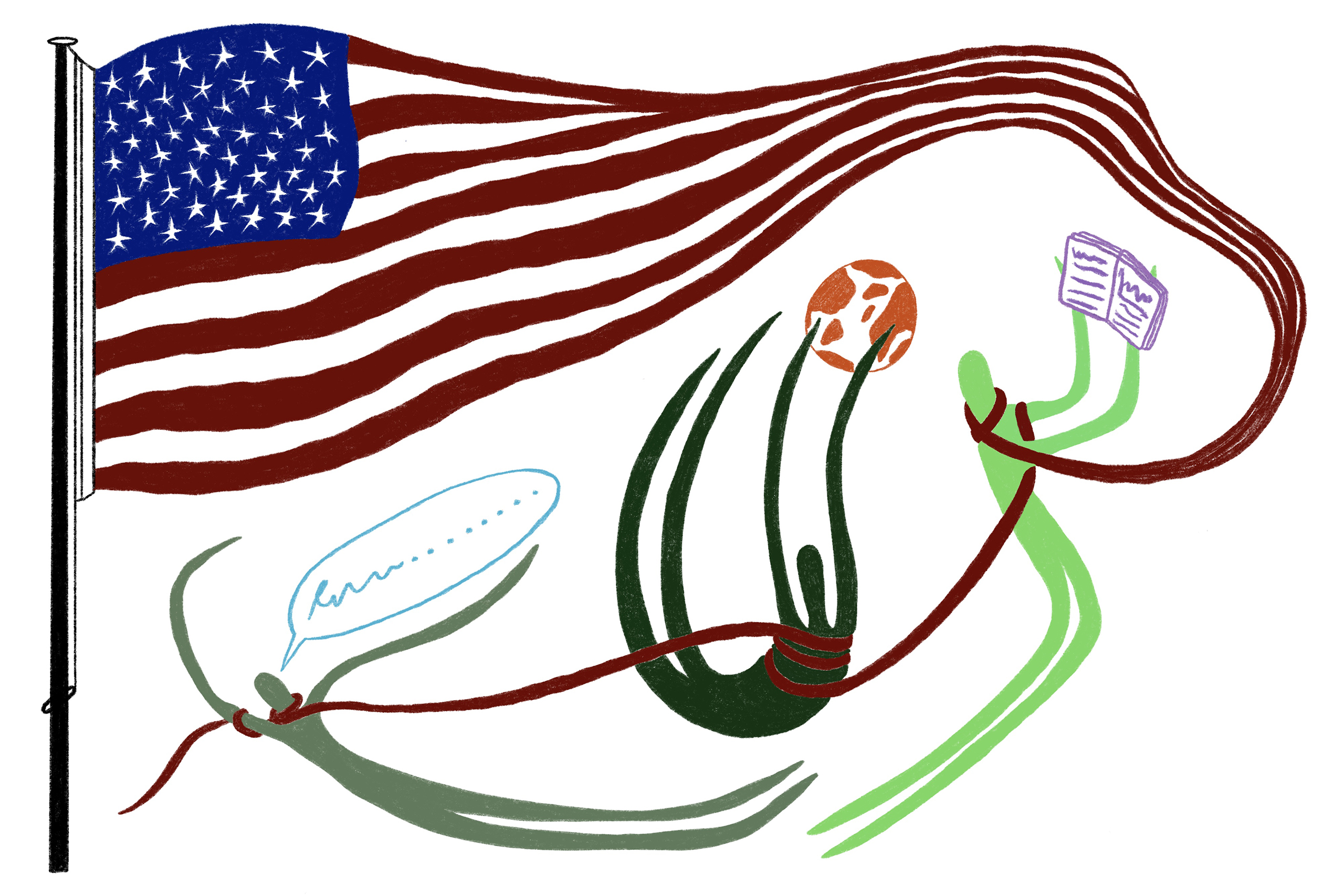
Pension fund ABP dumped US government bonds
Gepubliceerd op:-
Staff
-