Stop the screenification! About life without a smartphone at university
It is minor misery that goes unseen: the troubles of the student without a smartphone. It is becoming increasingly difficult to manage without such a smart phone, especially at the university. As EUR professor and fellow sufferer Willem Schinkel writes in his book of aphonisms: The smartphone is a solution to the problem you have when everyone around you has a smartphone. Every morning, when I want to settle myself in the university library, I am confronted with it.
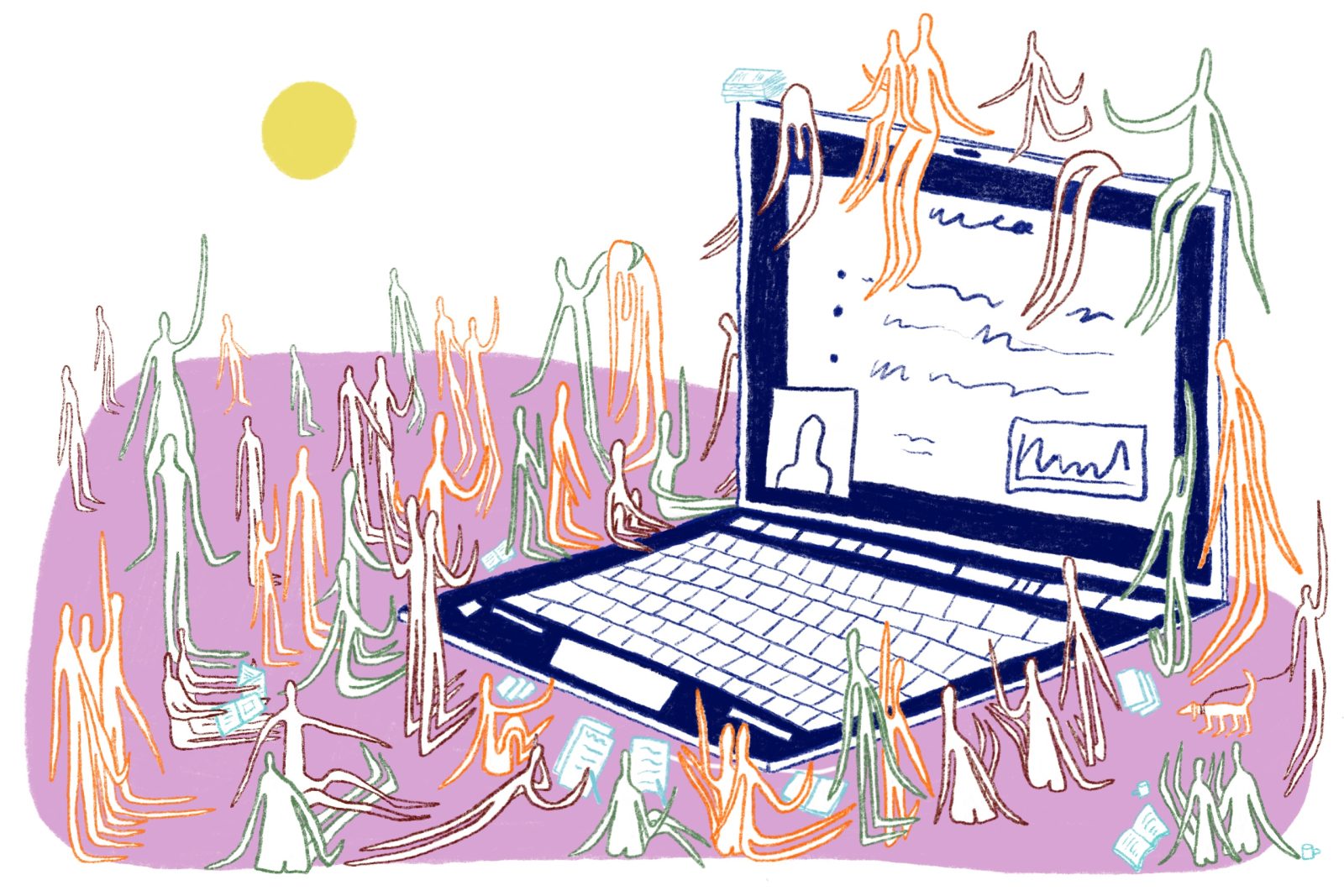
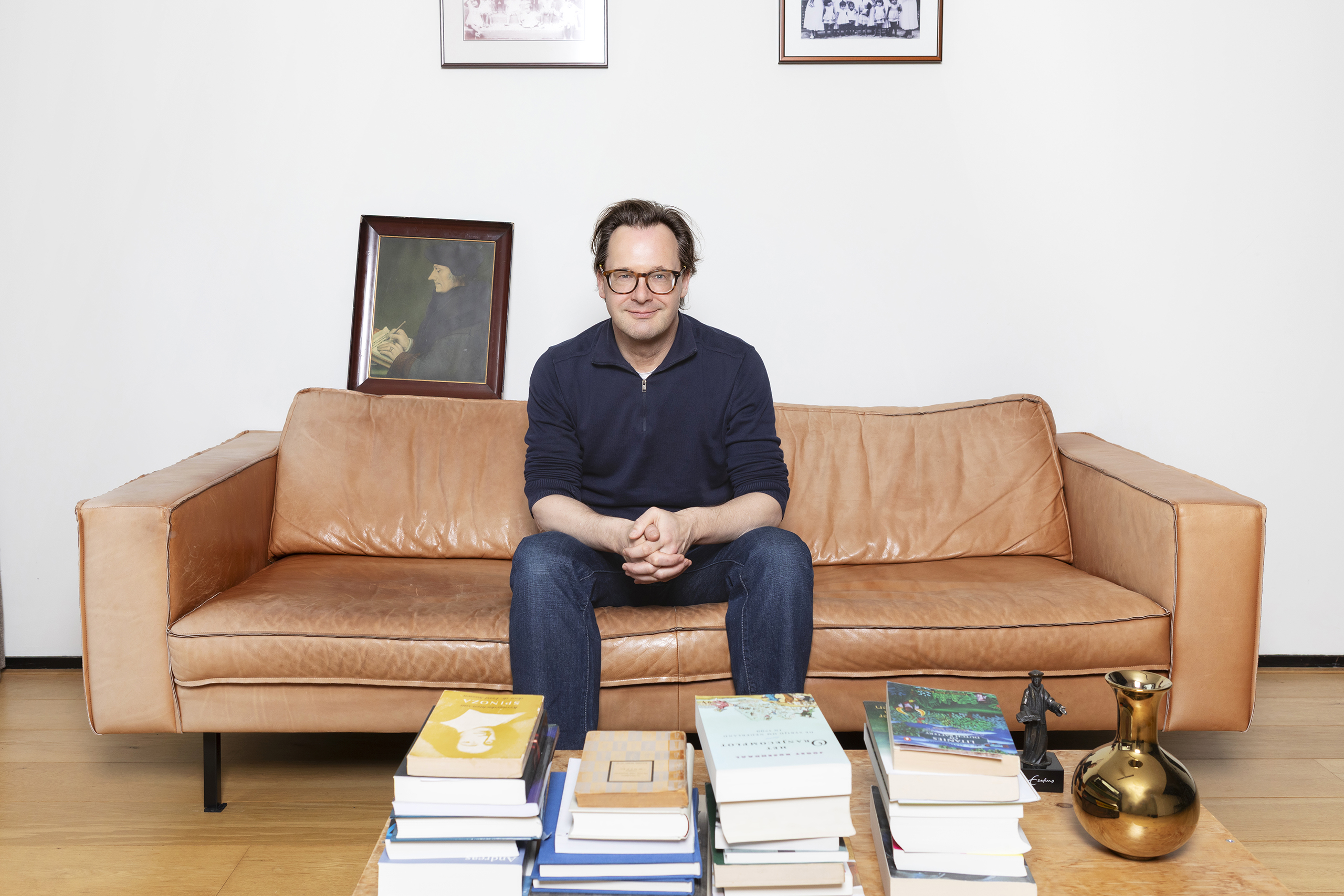
Image by: Sonja Schravesande
Students like me (temporally non-nominal, to put it euphemistically) still remember the pre-covid era in the library. No reservation system, but the old-fashioned ‘first come, first served’ was still the rule. The logic of the swimming pool prevailed, with everyone rushing in the morning to claim a deckchair with their towel. You had cards you could put on your study place, on which you could write when you would be back to reclaim your seat. These days such an analogue method no longer suffices. Anyone wanting to secure a study spot without the risk of being sent away shortly afterwards by a fellow student must first ‘check in’. That must be done by scanning a QR code. And that is precisely impossible for people without a smartphone.
Fortunately, I have found another workaround, namely briefly logging in on a university computer and confirming my reservation via the webpage using the email code.
Such eccentrics can turn to the information desk to ask to be ‘checked in’ there. Because simply stating that you do not own a smartphone is often enough to earn a pitying look, and because I do not like giving people the feeling that they work at an airport, I try to avoid that awkward interaction as much as possible. Fortunately, I have found another workaround, namely briefly logging in on a university computer and confirming my reservation via the webpage using the email code.
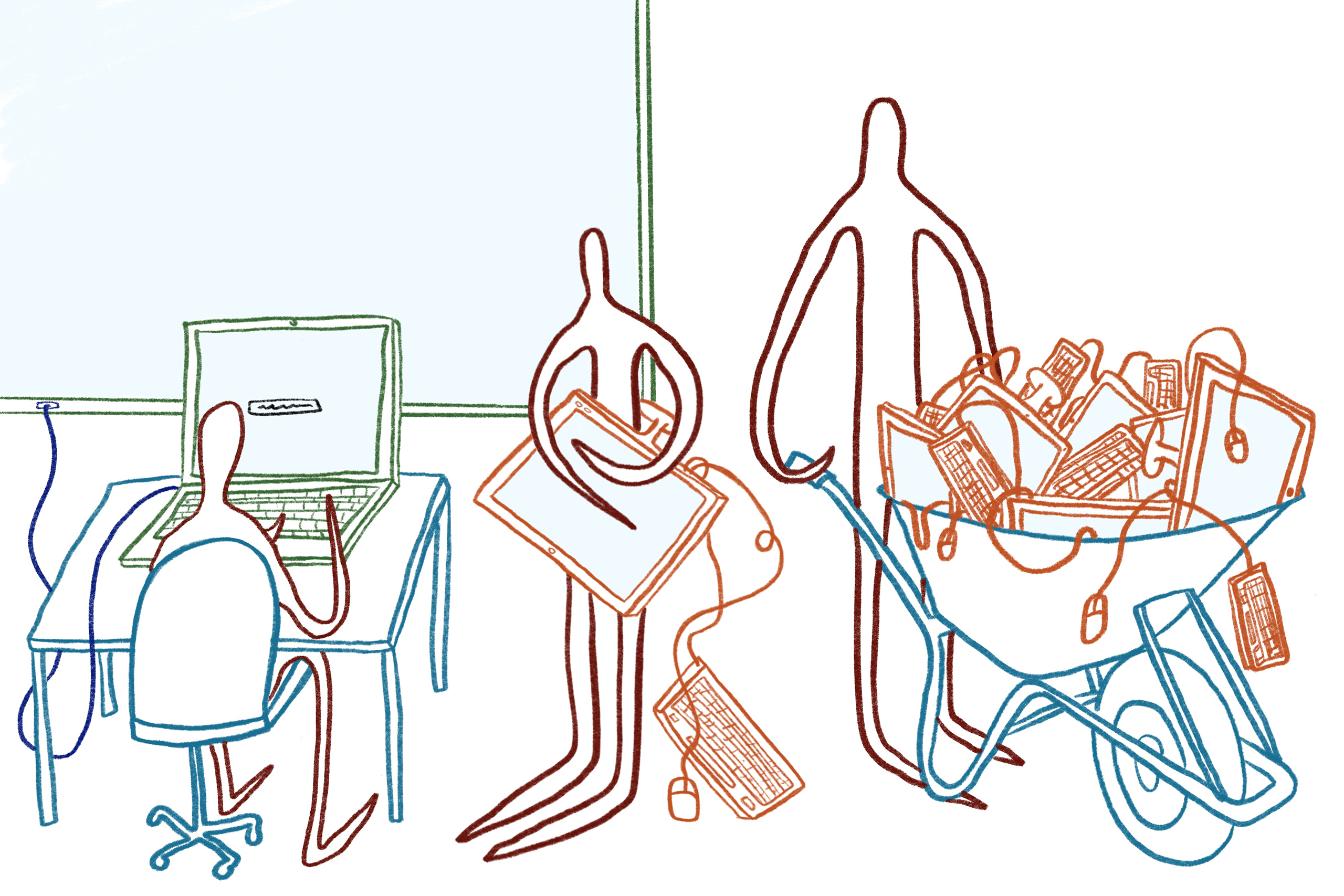
It was therefore quite a surprise when, after the holidays, almost all computers in the library turned out to have disappeared. Strangely enough, all the screens were still there. A staff member told me this was intentional: the computers were hardly used; students wanted a second screen to connect their laptop to. Crestfallen, I looked around. I saw people with headphones sitting behind two or even three different screens. My earlier association with air travel was not so far-fetched, as this now resembled a cockpit more than a study place. Airplane mode took on a whole new meaning.
Lees meer
-
Computers to be removed from all lecture halls, university hopes to save at least 300,000 euros
Gepubliceerd op:-
Campus
-
That the screenification of the university is an issue that goes beyond my personal irritation was demonstrated once again this year by a report by Francesca Albanese, the UN Special Rapporteur for the occupied Palestinian territories. It describes how tech companies such as Microsoft enable Israel’s genocide against the Palestinians. The EUR has made itself dependent on the same private digital infrastructure of Microsoft. My study place is thus connected to an economy of violence.
There is a disappointing lack of criticism of this digital dominance. In the anti-intellectual and depoliticised climate of the EUR, screens flourish and there is an overgrowth of QR codes and apps. This is seen, for example, in the university-wide coercion to use the Multi-Factor Authentication app in order to log in to your (Microsoft) email. This normalises the ownership and use of a smartphone. Here too, students without a smartphone must contort themselves to get around the digital hurdles. Also relevant is that this relies on one’s own phone and responsibility. For staff, this means that they must use their personal equipment for their work – effectively a strategy that not only further undermines the Fordist distinction between work and private life, but also, in a manner typical of neoliberalism, cuts costs by shifting them onto workers.
The university corporation riddled with screens is thus a microcosm of what the French philosopher Gilles Deleuze called the ‘society of control’, a system of codes and information flows in which everything and everyone is under surveillance, with a constant stimulus to further optimisation as its coercive guiding principle. The double meaning of the word ‘monitor’ (a screen, but also someone who checks, who oversees) is grimly expressed here; the so-called digital efficiency is a mechanism of control. Behind the smooth screen lurks naked violence.
Let us hope that resistance to the control devices increases.
This has been best understood by the students of the protest camp for Palestine, who last year painted ‘Free Gaza’ in large letters on the mega-screen on the Plaza (which they renamed Shireen Abu Akleh square) and thus disabled the screen for an extended period. They resisted the screenification and created a period in which we were spared the retinal terror of monitor-marketing bullshit on campus to some degree. Let us hope that resistance to the control devices increases.
Meanwhile, I prefer to remain ‘checked out’. Because a form of studying that is not dependent on Big Tech – now that would truly be smart.
Lees meer
De redactie
Latest news
-

Letschert gives nothing away in first parliamentary debate
Gepubliceerd op:-
Education
-
Politics
-
-

Away with the ‘profkip’, says The Young Academy
Gepubliceerd op:-
Science
-
-

House of Representatives wants basic grant for university master after HBO
Gepubliceerd op:-
Money
-
Politics
-



Comments
Comments are closed.
Read more in Opinion
-
Minister Letschert and the academic tower
Gepubliceerd op:-
Column
-
-
Spinach seed wounds
Gepubliceerd op:-
Column
-
-

Leftover dame blanche
Gepubliceerd op:-
Column
-