Groningen pauses collaboration with Israeli professor–soldier

An Israeli professor is working with two Dutch universities, but also appears to be serving as a soldier in Gaza. The University of Groningen has temporarily suspended the collaboration.
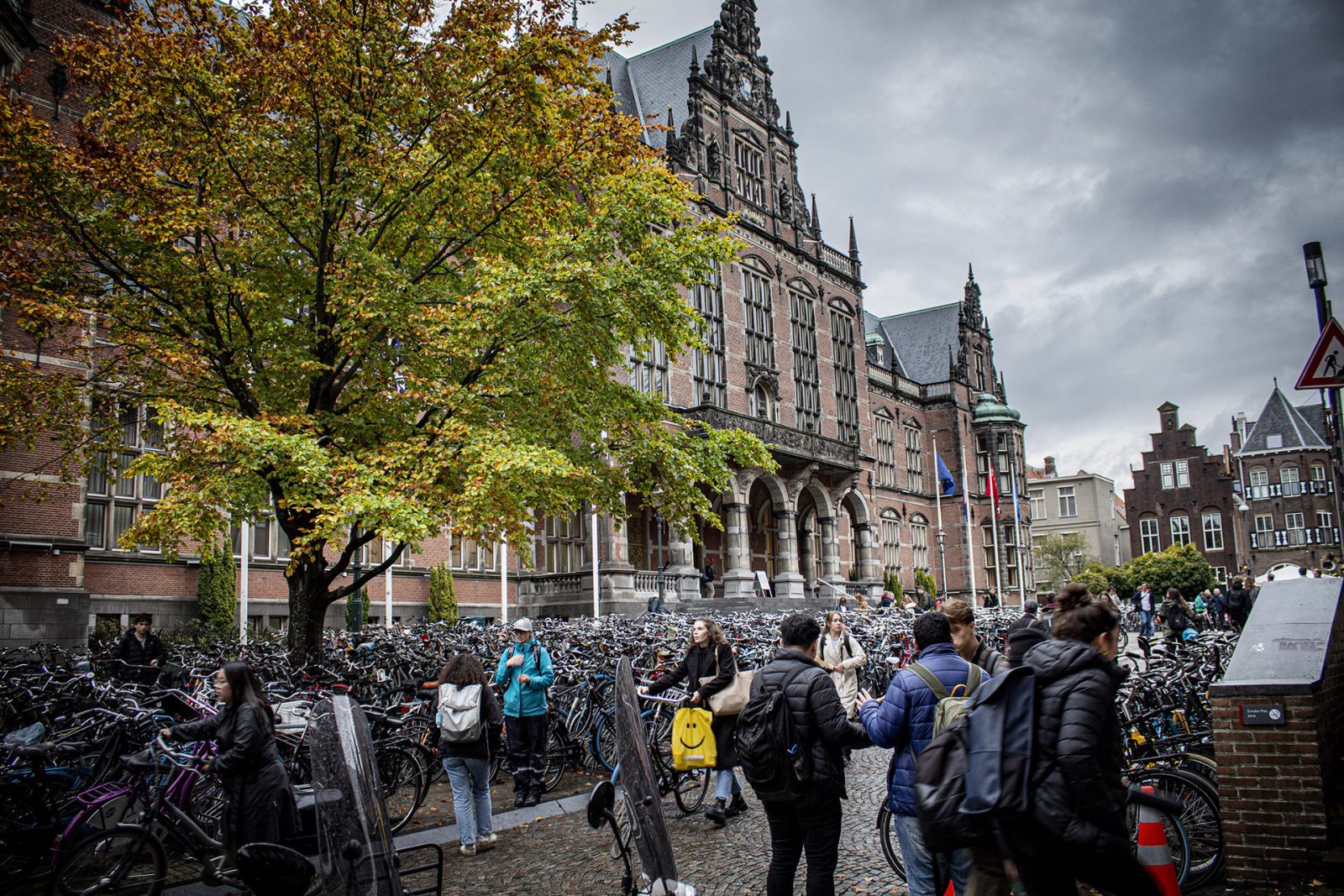
Image by: UKrant
An Israeli professor from Technion is part of a European research consortium together with Dutch scientists from Groningen and Eindhoven. They study, among other things, how new computer chips can mimic human self-awareness.
However, the Israeli professor is also a reservist in the army, something he writes about on social media. He has also posted photos of himself in military uniform, with destroyed buildings in the background.
On Wednesday, journalists from Investico revealed this in the newspaper Trouw. The University of Groningen is now reconsidering the project. The research receives European funding, and one of the conditions for that is that it must not serve any military purpose. All participating universities have signed that agreement.
Lees meer
-

Executive Board adopts Israel advice and freezes collaborations immediately
Gepubliceerd op:-
Safety
-
Reason
The university is now reviewing the project, a spokesperson told UKrant, the news platform of the University of Groningen. “It gives us reason to look into it more closely: is it or is it not being used for military purposes?”
First, the Advisory Committee on Knowledge Security and Sensitive Partnerships will assess the situation, the university said. The main question is therefore not so much about the ties between Israel and Groningen, but whether this involves dual-use research − that is, research with both civilian and military applications.
Controversy
At Eindhoven University of Technology, controversy had already arisen in August over this collaboration with Technion. TU Eindhoven severed its institutional ties with Israeli universities, but allowed this particular project to continue, the university magazine Cursor reported at the time. The university believes that breaking off ties at an ‘institutional’ level does not necessarily have consequences for scientific collaborations.
A spokesperson for TU Eindhoven now says that, in practice, the Israeli professor–reservist will never actually meet anyone from Eindhoven. The project mainly focuses on training PhD candidates, and each university handles that independently. TU/e has since told Cursor that it does not intend to take any additional measures regarding this project.
In late September, Investico reported that Dutch technical universities were collaborating with Israeli institutions on technologies that could be used for military purposes. The report also stated that the universities, through their spin-offs, have financial interests in that research.
De redactie
Latest news
-

Letschert gives nothing away in first parliamentary debate
Gepubliceerd op:-
Education
-
Politics
-
-

Away with the ‘profkip’, says The Young Academy
Gepubliceerd op:-
Science
-
-

House of Representatives wants basic grant for university master after HBO
Gepubliceerd op:-
Money
-
Politics
-



Comments
Comments are closed.
Read more in Science
-
Away with the ‘profkip’, says The Young Academy
Gepubliceerd op:-
Science
-
-

Two Vici grants for researchers ESE and ESPhil
Gepubliceerd op:-
Science
-
-

Participants in dialogue on academic freedom want actions to match words
Gepubliceerd op:-
Science
-