Ad

How fabricated data, fake journals and sham conferences are polluting science
In the race for money and prestige, researchers regularly cross the line. Science journalist Stan van Pelt delved into the world of fraud, bogus articles and fake conferences and wrote a book about it. “Faulty data is a kind of fake news that is polluting the entire body of scientific literature.”

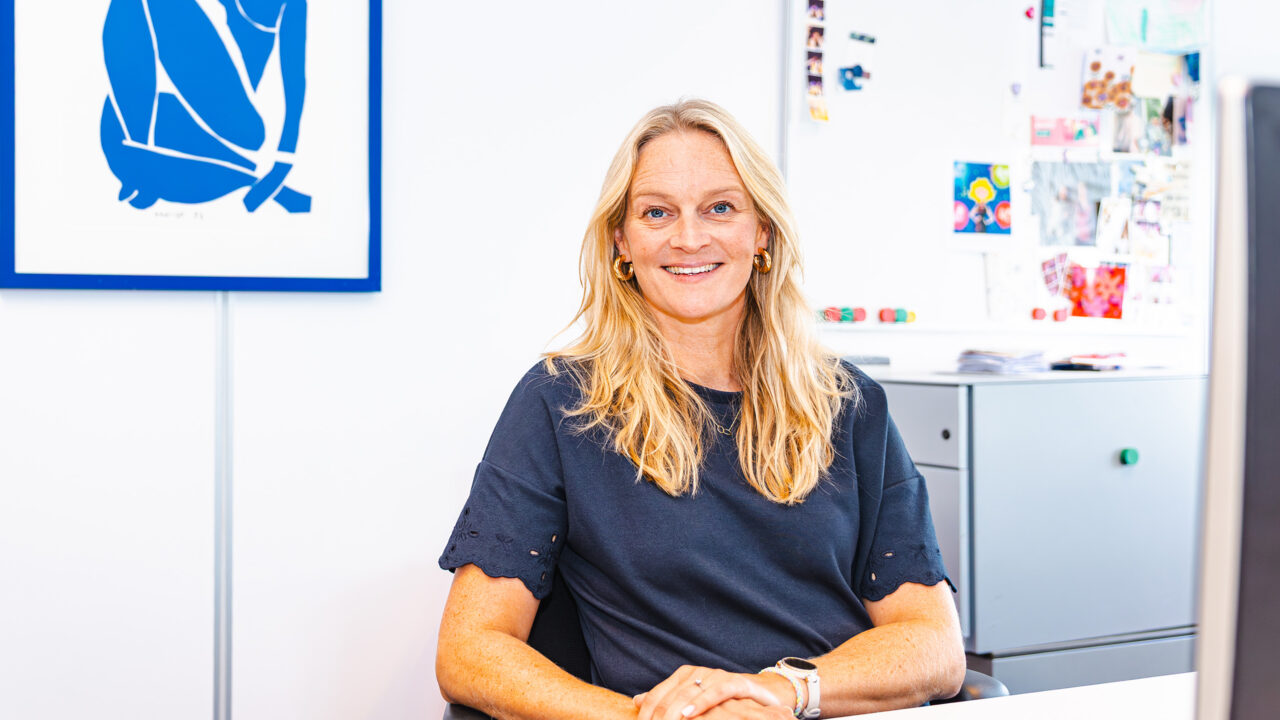
Science journalist Stan van Pelt.
Image by: Johannes Fiebig
If there’s one thing that gets under Stan van Pelt’s skin, it’s the use of sports metaphors in science. Just a few years ago, NWO chair Marcel Levi used one in a column. Science, he said, is ‘top-level sport’. Other researchers talk of the ‘Champions League’. And that’s exactly where things go wrong, Van Pelt argues. “Science isn’t about the individual performance of a researcher – it’s about the team.”
Stan van Pelt (1978) was a researcher from 2002 to 2017. He worked at the Donders Institute in Nijmegen and in Frankfurt, among other places. He then became a science journalist. From 2019 to 2022, he was an editor at the university magazine Vox in Nijmegen. He now works freelance, writing for de Volkskrant, Vox and Erasmus Magazine, among others. In 2023, he published Hack je hersenen, a book about brain research.
There’s a lot wrong in the world of science, as the journalist and former researcher reveals in his new book Sloppy Science, published this week. Many of the carelessness and fraudulent practices he describes can be traced directly back to the competitive atmosphere that has reigned for far too long. Prestigious prizes like the Nobel Prizes and the Dutch Spinoza Prizes are awarded to individuals, not research groups. “The word ‘prize’ says it all”, says Van Pelt. “As if a grant were some kind of award you can win. No, it’s a sum of money to fund your research.”
For his book, Van Pelt examined high-profile fraud cases (think Diederik Stapel), used AI to write a fake article to demonstrate how easily nonsense can be published, and attended a sham conference in Budapest – complete with real professors and bottled water on neatly laid tables. Across more than three hundred pages, he describes how scientists, driven by a hunger for scarce research funding and rare career opportunities, sometimes go off the rails – dragging the entire academic world down with them.
Was science always this troubled?
“Well, nothing is ever completely perfect. That applies to every field. But I do think things have got out of hand over the past 25 years. That was when neoliberalism took hold, and former state-owned companies like the Dutch Railways and the postal service were privatised. Around the same time, the funding system at universities also changed. Where they used to get a fixed amount of money to spend on research as they saw fit, researchers increasingly had to apply for grants from the NWO. They still got funding, but had to submit detailed research proposals in return.”
‘In the past, an academic career was for enthusiasts and diehards. Nowadays, the PhD system has become a monster’
At the same time, you write, the number of PhD candidates at universities exploded.
“Yes, in 2005 there were 7,000 and by 2023 that had almost doubled. In the past, an academic career was for enthusiasts and diehards. Nowadays, the PhD system has become a monster. It’s a pyramid, with very few permanent jobs at the top and an increasingly wide base of young people vying for a position. Only one in every twenty PhD candidates becomes a professor. That gives you an idea of the intense competition. They’re all fighting for jobs and funding. That kind of pressure creates perverse incentives and opens the door to all sorts of problems.”
Dodgy journals
Polishing research results to get an article published isn’t even the biggest problem, according to the author, who spent fifteen years as a researcher himself. Far worse, and more threatening, are the fraudulent journals that have sprung up like mushrooms. So-called ‘editorial boards’ reach out to researchers, asking if they’d like to submit an article. For a hefty fee, of course. But no real editor is involved, and peer review (assessment by fellow experts prior to publication), as is standard in reputable scientific journals, is entirely absent.
So earlier this year, Van Pelt submitted a completely fabricated article, which was accepted without question, even though it explicitly stated that no experiment had ever been conducted. Researchers do everything they can to expand their publication lists, and these fake journals take advantage of that in cunning ways. And hardly anyone is keeping an eye on it all.
Van Pelt calls those paper mills – often based in Iran or China – ‘truly criminal’. These outfits write entire articles, sometimes with the help of AI, to order for scientists who don’t have the time to do it themselves. They often operate in non-Western countries where internal university oversight is poor or nonexistent. And what’s in those articles is often complete nonsense.
Why is that such a serious issue? You could say: let those scientists sort it out among themselves.
“Because fellow researchers often don’t realise the data is fake. Or that an experiment was exaggerated. That there were only ten participants instead of the hundred or thousand the article claims. Yet the results are included in meta-analyses, and in medicine, those analyses inform clinical guidelines. I spoke with Dutch professor of gynaecology Ben Mol at Monash University in Australia. He’s furious about all this and is trying to put a stop to it. He says, ‘Women and babies are dying because we let this happen.’ Faulty data is a kind of fake news that is polluting the entire body of scientific literature.”
‘Why doesn’t science have something like that? Someone who occasionally drops by to ask what your data looks like and how you did your analysis’
How can science become healthy again?
“First, let’s be clear: my book is about the extremes. A lot does go right in science, and there’s a big grey area between someone like Diederik Stapel, who made up entire studies, and someone who follows all the rules to the letter. But I think we need to return, at least partly, to the old funding system: less money should be distributed via the NWO, and more should go directly to the universities. That would remove the reliance on four-year grants, the typical length of a PhD project. Universities could then offer more permanent contracts. Right now, 56 percent of researchers are on temporary contracts, and for PhD candidates it’s virtually 100 percent, even though they do the bulk of the actual research work. If universities could offer more permanent positions, competition would naturally ease, workloads would go down, and the perverse incentive to cheat would fade. At the same time, we need to limit the intake of PhD candidates, because there just aren’t enough positions for them, and society doesn’t have much use for so many highly specialised people.”
In your book, you also propose a inspectorate for science of some kind.
“Yes, I argue for a better control system. We have inspections for all sorts of professions we consider important. Think of the Food and Consumer Product Safety Authority or the Health and Youth Care Inspectorate. Why doesn’t science have something like that? Someone who occasionally drops by to ask what your data looks like and how you did your analysis. If you insist on using the sports analogy: why do cyclists take doping? Because they want to be the best, and intense competition pushes them to cheat. Scientists want to score, too, and they’ll push boundaries. That’s why cycling introduced doping tests: someone can knock on your door any day to check your urine. We don’t need to go that far in science, but it would help if researchers more often thought, ‘Hey, I need to make sure everything’s in order.’”
Don’t all universities already have scientific integrity committees? And there’s the national LOWI.
“Those committees only investigate fraud after someone raises the alarm. Until that point, everyone assumes everything is fine. That’s exactly how Diederik Stapel got away with it for so long. And the rulings of those integrity committees are only advisory. An Executive Board can decide for itself what to do with them. I’d say: make those rulings binding. A researcher found guilty of misconduct could be barred from research for two years, or dismissed in serious cases. Right now, that hardly ever happens.
“But oversight could also be more low-threshold: introduce a four-eyes principle. Before a researcher submits a publication, someone else checks whether all the calculations and analyses are correct. Often, mistakes creep into studies simply because someone isn’t proficient in statistics.”
Trust in science
Van Pelt has also given thought to the – serious – problem of fake publications: reputable scientific journals should take action more quickly when fraud detectors like Ben Mol raise concerns about a particular article. On top of that, the academic world should consider publishing its own journals again. In the past, professional associations had their own publications, but with the rise of commercial publishers like Springer Nature and Elsevier, most of those disappeared. “In Nijmegen, for example, there’s Radboud University Press – they could take on that role. You’re already seeing, in disciplines like linguistics, that researchers are founding their own journals again and stepping away from editorial work for commercial publishers. Those are promising initiatives.”
In Van Pelt’s view, a lot is at stake. Dutch people still have a high level of trust in science. A new report by the Rathenau Institute shows that the public gives science a score of 7.4 – higher than any other institution surveyed, including the judiciary and Parliament. “Science still has a lot of credit, and rightly so. But to maintain that trust, it needs to start taking its dark sides more seriously.”
On 14 October, Radboud Research on Science Alliance is organising an afternoon debate on the problems in science. In addition to Stan van Pelt, Dutch fraud detective Elisabeth Bik will also give a lecture. The event takes place in Nijmegen.
Read more
-
Greater trust in science, but not among everyone
Gepubliceerd op:-
Science
-
De redactie
-
Annemarie Haverkamp
Editor Vox
Latest news
-
In memoriam Rob van der Wal
Gepubliceerd op:-
In memoriam
-
-

Lively trade in tickets for graduation ceremony: ‘Excessive prices are undesirable’
Gepubliceerd op:-
Student life
-
-
University president on powerhouses: ‘If we do nothing, we will hit a wall’
Gepubliceerd op:-
Governance
-
Comments
Comments are closed.
Ad
Read more in Science
-
Did your parents know what your sex life was like when you were eighteen?
Gepubliceerd op:-
Eureka!
-
-
Universities must demonstrate their economic value, says House of Representatives
Gepubliceerd op:-
Politics
-
Science
-
-
Leaving money to a university? Many people do not know it is possible
Gepubliceerd op:-
Science
-