Ad

Why Jamie van der Klaauw doesn’t always finish his books
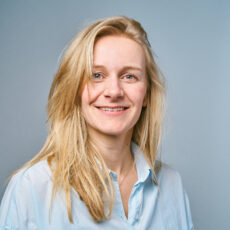
Jamie van der Klaauw freed himself from the idea that he had to read entire books – let alone complete bodies of work – before he could say anything meaningful. Since then, he’s been reading more. He did read Capital’s Grave by Jodi Dean from cover to cover, and it shaped his thinking as a political philosopher.

Image by: Leroy Verbeet
By his own admission, Jamie van der Klaauw is ‘a violent reader; not someone who passively absorbs a book, but someone who reads inquisitively and selectively’. Often, he only reads parts of a book. That’s unusual in philosophy. As a master’s student, he once heard a professor say that philosophers don’t read books, they read oeuvres. “While I didn’t even read whole books”, he says now, with a near shrug. “To read a lot and enjoy it, I had to let go of the idea that you need to know a book from cover to cover.” In philosophy the norms might be different and his view may strike some as provocative, but he repeats it once more: “It’s not a problem if you don’t finish a book.” And, as he now knows: “Many philosophers don’t either.”
Jamie van der Klaauw studied Public Administration and also completed a degree in Philosophy. He now coordinates the bachelor’s programme Philosophy of a Specific Discipline for students taking philosophy as a second degree at EUR. He is also an assistant professor. Last November, he obtained his PhD on the subject of political representation.
As a student, Van der Klaauw also believed it was important to know all of a thinker’s theories and ideas before putting his own on paper. He let go of that belief during his PhD. Now, he’s content with what he has read so far, however associative those choices may be. “It’s liberating to accept that I don’t always have to say things that align with the big names in philosophy. Philosophy is an ongoing conversation, it’s work in progress and it’s never finished.”
Van der Klaauw walks around with a head full of loose ends – ideas he read somewhere but hasn’t yet turned into a coherent theory, or vice versa: theories that don’t quite fit the ideas he’s written down so far. “It’s about learning to pace yourself, to leave space for future papers whose message I don’t even know yet.” He’s at the start of his career – he obtained his PhD last November. In twenty or thirty years, he might be able to say he’s read oeuvres, that a common thread can be found, but until then, he won’t impose limits on himself.
New encounter, new perspective
That mindset allows a single encounter to trigger a whole new line of thought. Van der Klaauw once saw a presentation by American political philosopher Jodi Dean, in which she analysed the end of the capitalist system. She wrote Capital’s Grave about it – the book he read from start to finish and that has since shaped his thinking. The idea is that capitalism has exhausted itself, making way for a new system: neo-feudalism. Platforms like Uber are not markets where price or quality can be negotiated – the platform itself makes the rules, and drivers are subject to them. The author explores ways to counter this emerging neo-feudalism. Van der Klaauw, in turn (philosophy is a conversation!) believes that politics needs to regain control.
“Right now, the economy outweighs politics”, he says. “Multinationals aren’t constrained by national political rules. Companies set the rules. But citizens can’t exercise power through the economy. They can through politics.” It’s crucial that politics regains its authority, he argues. With the upcoming elections in mind, the question is: what can citizens do? “Vote, of course, but much more than that. Participate. Politics isn’t just for politicians or political philosophers. Everyone can do something. Start a conversation, for example.”
Van der Klaauw was having a coffee at Coffee Company when he overheard a civil servant on the phone, discussing the stripped-down diversity policy. The man spoke loudly enough to hear that he was considering leaving his job, as political headwinds in The Hague were obstructing his work. After the call, Van der Klaauw struck up a conversation. He asked questions and gained more insight into the inner workings of politics. “Wherever you are, you can gain a new perspective or have a meaningful interaction. I really believe that”, he says. That might seem like just another loose end, but who knows what political significance such a conversation could have in future.
Reading habits
Main motivation: Curiosity
Last book read: Oedipus, Philosopher by Jean-Joseph Goux
Number of books per year: “Five to ten cover to cover, dozens more in part – sometimes I’ll put a book aside for weeks or months before continuing.”
Favourite genre: Philosophy
Lees meer
-
Elisa de Weerd recognises that gender identity does not yet have a firm foothold in (scientific) literature
Gepubliceerd op:-
Page-turners
-
De redactie
-
 Maartje Braam
Editor
Latest news
-
New code of conduct for science emphasises ‘distinctiveness and autonomy’
Gepubliceerd op:-
Science
-
-

Executive Board regularly uses AI for speeches and LinkedIn posts
Gepubliceerd op:-
Artificial Intelligence
-
Governance
-
-
TU Delft may not favour women in admissions to courses
Gepubliceerd op:-
Education
-
Comments
Comments are closed.
Ad
Read more in Page-turners
-
Kindred spirits are closer than you think, Lara Fizaine knows
Gepubliceerd op:-
Page-turners
-
-
Once you have found what suits you, things fall into place, says Lenya Slierendrecht
Gepubliceerd op:-
Page-turners
-
-
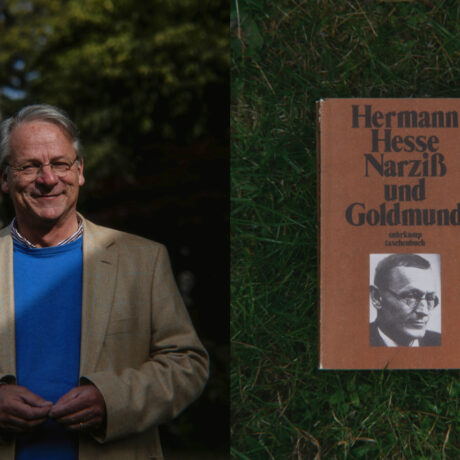
Feeling and thinking must go together, Paul van Geest knows
Gepubliceerd op:-
Page-turners
-