Ad

How Tante Sjaan fought for the position of women at the EUR fifty years ago
Whoever dives into figures, news articles or reports about the position of women at the university repeatedly encounters the analysis that a ´culture change´ is needed. If anyone knows what that means, it is the women of Tante Sjaan, who fifty years ago from Studium Generale fought for their position as women at the university and beyond.
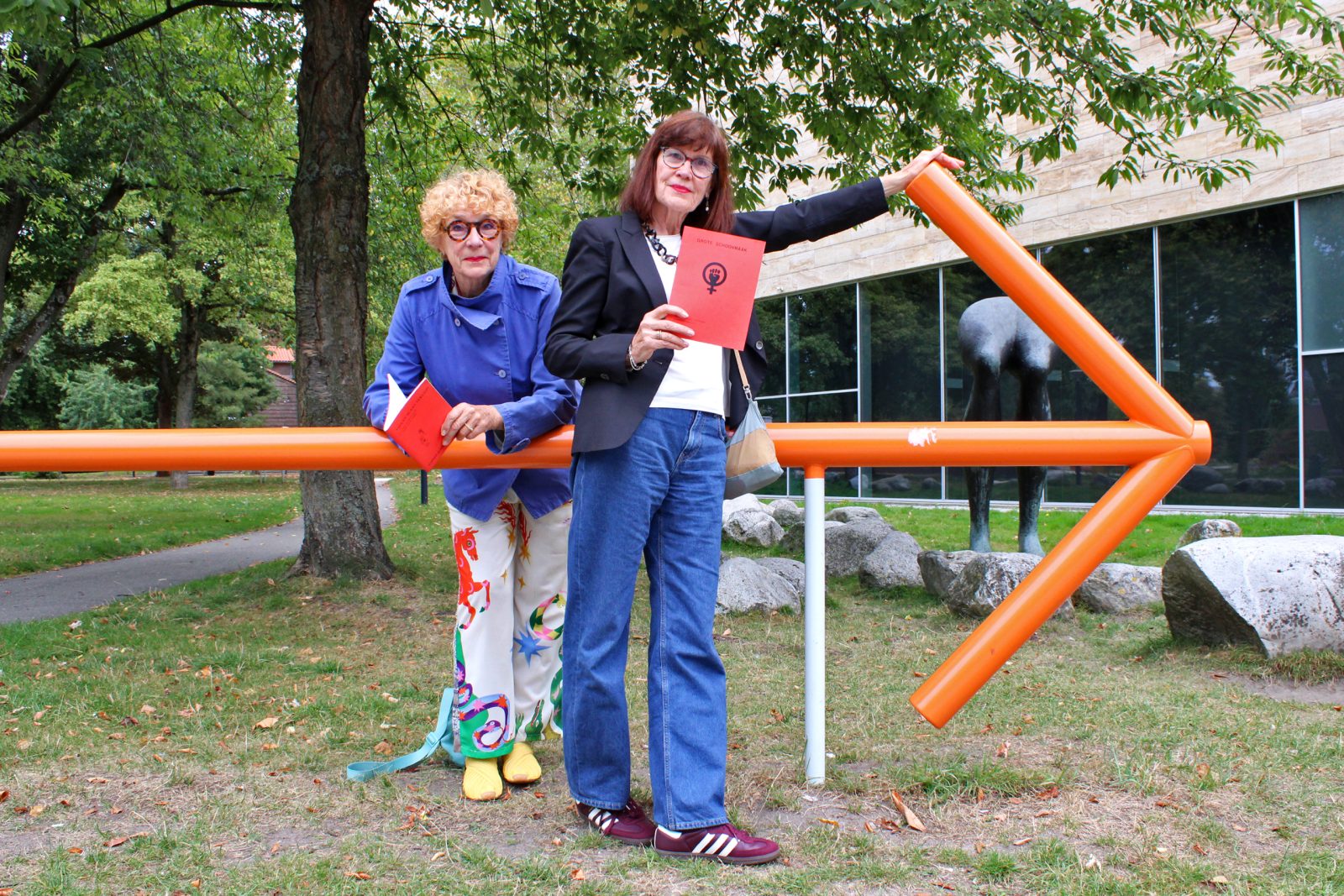
Marianne Ketting (left) and Nelleke Nicolai.
Image by: Esther Dijkstra
‘Tante Sjaan’ (Aunt Sjaan, a typical Rotterdam old-fashioned name) was founded in the International Year of the Woman 1975 and became a household name from Rotterdam to Nairobi. Now that Studium Generale is celebrating its seventieth birthday and it’s the current Rotterdam Year of the Woman, co-founders Marianne Ketting and Nelleke Nicolai look back. “I think we became the instigators of a new way of thinking”, they say.
Marianne Ketting was director of Studium Generale until 1992. After that she became an independent expert in the field of creative thinking and innovation, and an adviser to ministries, healthcare organisations, schools and universities. In 2015, Ketting was appointed Knight of the Order of Orange-Nassau.
Nelleke Nicolai was part of the first cohort of medical students in Rotterdam in 1966. After specialising in psychiatry, she worked for more than fifty years as a psychiatrist, psychoanalyst and psychotherapist. Nicolai is the author of several psychiatric handbooks. In 2021, she was awarded the Freud Medal for her contribution to psychoanalytic thought.
Male abortion panel

The logo of Tante Sjaan.
Image by: Archive Tante Sjaan
A professor who remarked that women after their forties were ‘withered and had lost their function’. An abortion panel at Dijkzigt hospital (predecessor of the Erasmus MC) in which a group of only men decided whether a raped woman qualified for an abortion. Or a nursery for which male employees did not, but women did have to pay. Marianne Ketting (then director of Studium Generale) and Nelleke Nicolai (who began her psychiatry specialisation in 1973) still string together the anecdotes fifty years on with indignation. Ketting: “You cannot imagine those things now. Well, I couldn’t back then either.”
Ketting and Nicolai, both retired, recall their memories with a mixture of pride, pleasure and combativeness. Nicolai: “Through Studium Generale we started talking with a group of female staff and students about what kinds of problems you encountered as a woman in the various faculties. It began with very simple things. Someone in our group for example, who had young children, was very clever, professor-worthy, but could not get to that position because of very poor childcare.” The overt and covert sexism inspired the women to take action. Riding the second wave of feminism, they set up the women’s working group ‘Tante Sjaan’ at Studium Generale in 1975, the International Year of the Woman. Nicolai explains the name: “It just sounded very Rotterdam.”
This year Studium Generale celebrates its seventieth anniversary. On Tuesday 16 September this will be celebrated on campus. Studium Generale organises scientific, social and cultural programmes for students and staff throughout the year.
Painful process
Through Tante Sjaan, practical injustices such as the lack of childcare were challenged, but above all taboos were made discussable. Ketting: “I think we became the instigators of a new way of thinking. We weren’t the only ones, but as part of the feminist movement, Tante Sjaan played an important role.” Between 1975 and 1985 the working group organised about ten symposia, with titles such as Sjaan kleef aan (a wordplay on the Dutch title of fairy tale The Golden Goose, on the image of women and seduction), Sjaan slaat weer toe (‘Sjaan strikes again’, on ambition, professionalisation, career) and Is Tante Sjaan nou nog niet klaar? (‘Isn’t Aunt Sjaan done yet?’, a symposium on changing norms among women and sexuality).
Ketting: “The symposia were not only a catch-up for knowledge that mainly came from the US, but they were mainly about raising awareness of society’s image of women, including of ourselves.” Nicolai: “We still had a lot to discover about our own assumed ideas about what men should do and what women should do – quite a lengthy and painful process.” Ketting continues: “We still had to convince ourselves that we were right. It was a time of discovery, but also of seeking and getting support from each other.”
Thus Tante Sjaan became a base for students and staff of Erasmus University to openly exchange ideas. The public kick-off was on 27 February 1975 with a demonstration on women’s emancipation titled Grote Schoonmaak (‘Spring cleaning’). Soon after came the Blacklist on the position of women at Erasmus University. ‘Warning!’ is says in huge letters on the first page. You are about to read a book that, apart from a few statistics, contains almost nothing but the stories of frustrated women.’
Myths about sexuality
The figures show that women were under-represented in research positions on all faculties and over-represented in administrative roles. From the anecdotes and interviews an image emerges that it was virtually impossible for women to move up. At job interviews women were openly told that preference was given to a man (‘miss, did you think we would train you, as long as we can get a man for every finger of a hand, who must support wife and children?’). Female doctors were asked when the doctor would be coming and women were told by their boss that they should give priority to their male colleague’s career over their own.
The women who are quoted in the Blacklist are not only students and staff, but also female patients at the Erasmus MC. Nicolai explains: “Very little was known then about the female body and there were many myths about sexuality, such as that a woman should only orgasm through penetration, otherwise she is not a real woman. Also the idea that sexual violence could lead to trauma was not known – the word traumatisation did not exist at all.”
‘We still had a lot to discover about our own assumed ideas about what men should do and what women should do’
Women in healthcare
Because sexuality and physicality are so decisive in society’s image of women, these became important themes of the Tante Sjaan symposia, with special attention to the treatment of women in healthcare. Through Tante Sjaan, courses on the female body were given and insights from these returned in symposia, such as Terug naar je lijf. Or how Tante Sjaan was forced to make use of healthcare and was harmed by it, but also in the establishment of an information centre at the gynaecology outpatient clinic in the then Dijkzigt hospital.
The symposia were prepared in working groups of ten to twenty women. For each conference leaflets were stencil-printed, which members distributed across the university and cycled through the city with. The lectures were reported in conference proceedings, which were available in libraries and women’s bookshops throughout the Netherlands. In the conference proceedings Sjaan kleef aan (1983, print run 1,500) it is proudly noted that at that time approximately 10,000 booklets in total had been sold from all Tante Sjaan conferences.
International conferences
Armed with stencils and booklets, the women of Tante Sjaan travelled regularly: they gave lectures at other universities, at the Kijkduin conference (a 1982 congress on violence against women, organised by then state secretary Hedy D’Ancona, ed.), international congresses such as the Medical Women’s International Association, at the UN World Conference on Women in Nairobi in 1985 and – perhaps the highlight – at a summer school on the Greek island of Spetses, where the delegation was invited to breakfast with the then Greek presidential wife and feminist Margaret Chant-Papandreou, and the group helped develop women’s studies in Greece.
Ketting: “We did not want to organise something once that then disappeared, we wanted something that lasted. That is why we made the conference proceedings and thought strategically about which speakers we invited, people who had influence, celebrities. In that way we also partly trained the students to think about women and feminism.”
Wine stain
One such celebrity was Kathleen Barry, an American sociologist and feminist, who in 1981 gave a lecture on sexual slavery of women at the conference Sjaan slaat terug, symposium on sex and violence. For that symposium Sjaan worked with the chief inspector of police, the municipality and ministries – an important step towards awareness of and measures against trafficking in women. Kathleen Barry co-founded the UN Coalition Against Trafficking in Women in the late 1980s. Nicolai, proud: “The power of what we did was that the symposia were an enormous wine stain that spread out.” Both members and speakers went on after their Sjaan time to influential positions – from professor in Utrecht to co-founder of a women’s health centre in Utrecht, but also in neighbourhood councils and basic welfare care. Ketting set up a foundation against trafficking in women and Nicolai started providing women’s support from Sjaan. As chair of the project group Women’s Support – which was supported by the national government – she researched gender-specific issues and new treatments in mental health care.
Creating more awareness did not come without resistance. Tante Sjaan was viewed with sceptical eyes from the university. Ketting: “Studium Generale is for the development of science. This was all science, but a different kind than they were used to. From the university there were aggressive, suspicious, mocking reactions.” Nicolai: “We still had to figure out how to shape the discussion without constantly ending up in a conflict situation. That was not the intention. The intention was to get attention for certain problems and equality.”

Kathleen Barry gave a lecture in 1981 at the Sjaan strikes back conference.
Image by: Archive Tante Sjaan
Het creëren van meer bewustzijn ging niet zonder weerstand. Vanuit de universiteit werd met argusogen naar Tante Sjaan gekeken. Ketting: “Studium Generale is voor de ontwikkeling van de wetenschap. Dit was allemaal wetenschap, maar wel andere dan ze gewend waren. Vanuit de universiteit werd agressief, achterdochtig, lacherig gereageerd.” Nicolai: “We moesten zelf nog uitvogelen hoe we de discussie vorm konden geven zonder de hele tijd in een conflictsituatie terecht te komen. Dat was niet de bedoeling. Het was de bedoeling om aandacht voor bepaalde problematiek en gelijkwaardigheid te krijgen.”
Voices of wood
With the loss of funding in the early 2000s, attention to ‘women’s issues’ has slipped somewhat, but the impact has remained. Nicolai: “A lot of things have been incorporated into our normal life. So what we fought for has now become normal.”
Ketting and Nicolai mainly look back on a period with a great deal of pleasure. Nicolai: “There was an atmosphere of excitement and elation. Of: we can achieve something together, we do not have to keep waiting until something comes from above, we can set it up from below.” And it did not always have to be serious. Nicolai: “We also set up a choir. It was called De houten kelen (‘voices of wood’), because nobody could really sing.” Ketting laughs: “We said: we do not sing nicely, but loudly. You know, that was kind of the atmosphere.”
Read more
-
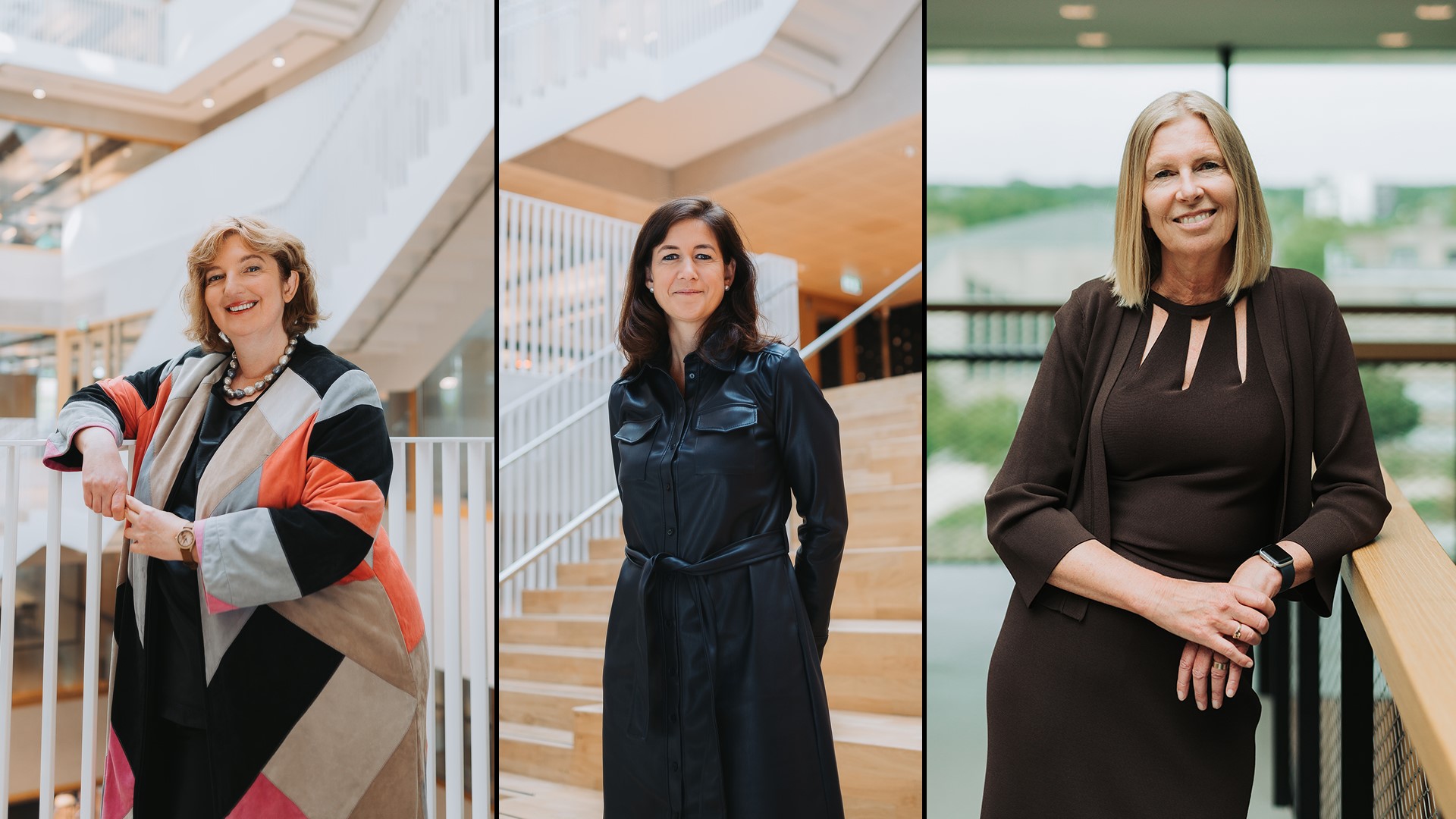
Women: Stronger in education, less represented at the top
Gepubliceerd op:-
Diversity
-
De redactie
Latest news
-
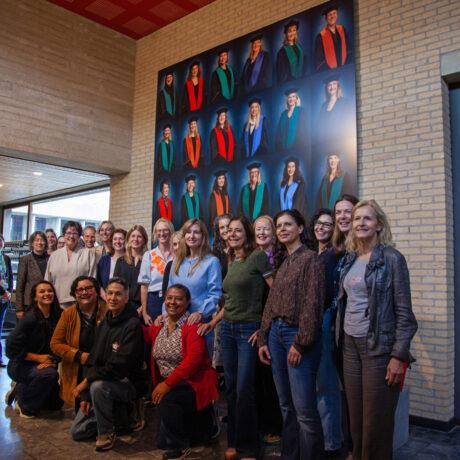
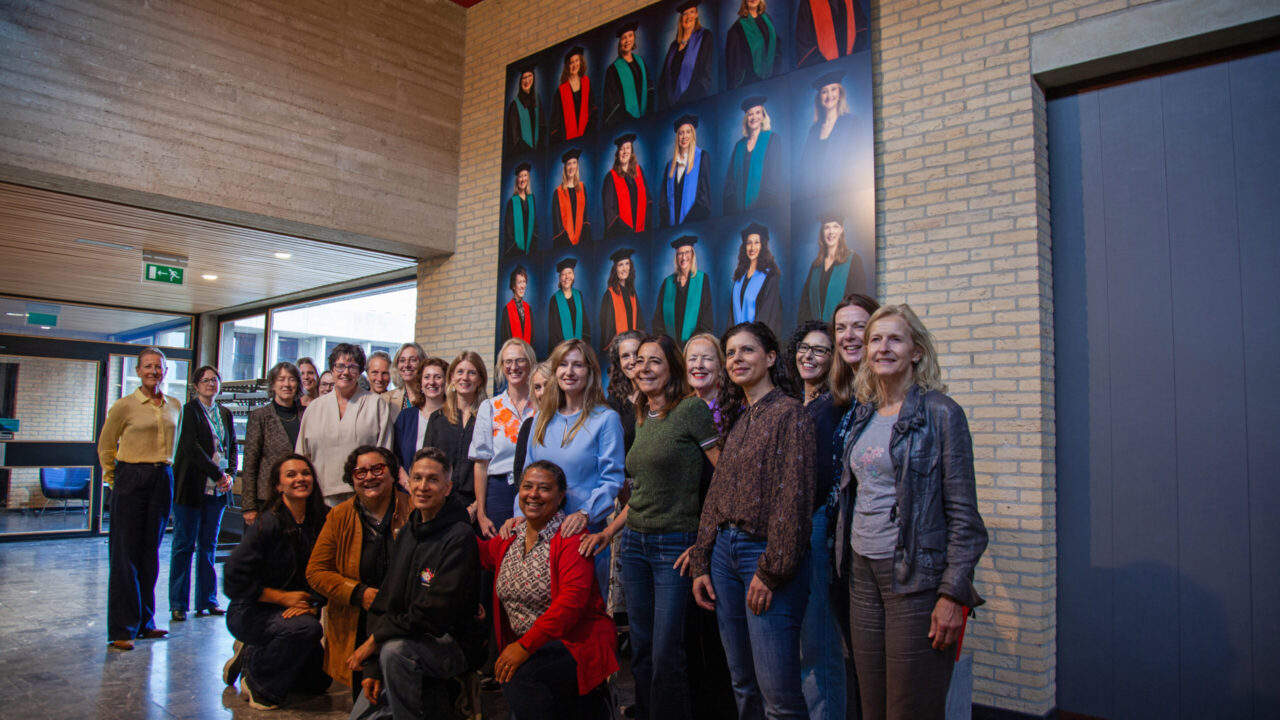
Erasmus Building gallery expanded with 48 portraits of female professors
Gepubliceerd op:-
Diversity
-
-
‘If anyone should be thinking about the effects of AI on society, it is scientists’
Gepubliceerd op:-
Artificial Intelligence
-
Science
-



Comments
Comments are closed.
Ad
Read more in Diversity
-
Erasmus Building gallery expanded with 48 portraits of female professors
Gepubliceerd op:-
Diversity
-
-
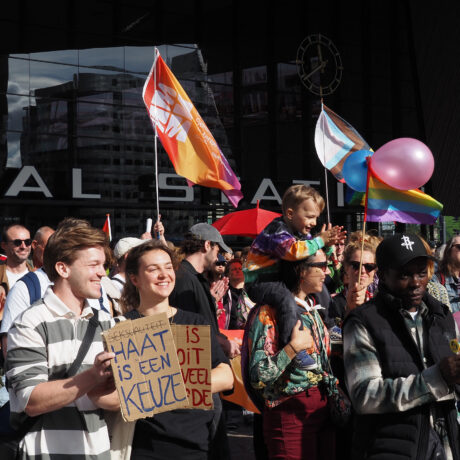
Students and staff join the Pride March: ‘We must stand up for this community’
Gepubliceerd op:-
Diversity
-
-
‘Broederliefde and the kapsalon are the cultural heritage of the future’
Gepubliceerd op:-
Diversity
-
Staff
-