Housing shortage: ‘You can’t simply reverse such a shortfall’

Why is there an enormous housing shortage among students? According to professor Peter Boelhouwer, this is mainly the result of failing government policy. Still, he says: “I am cautiously optimistic.”

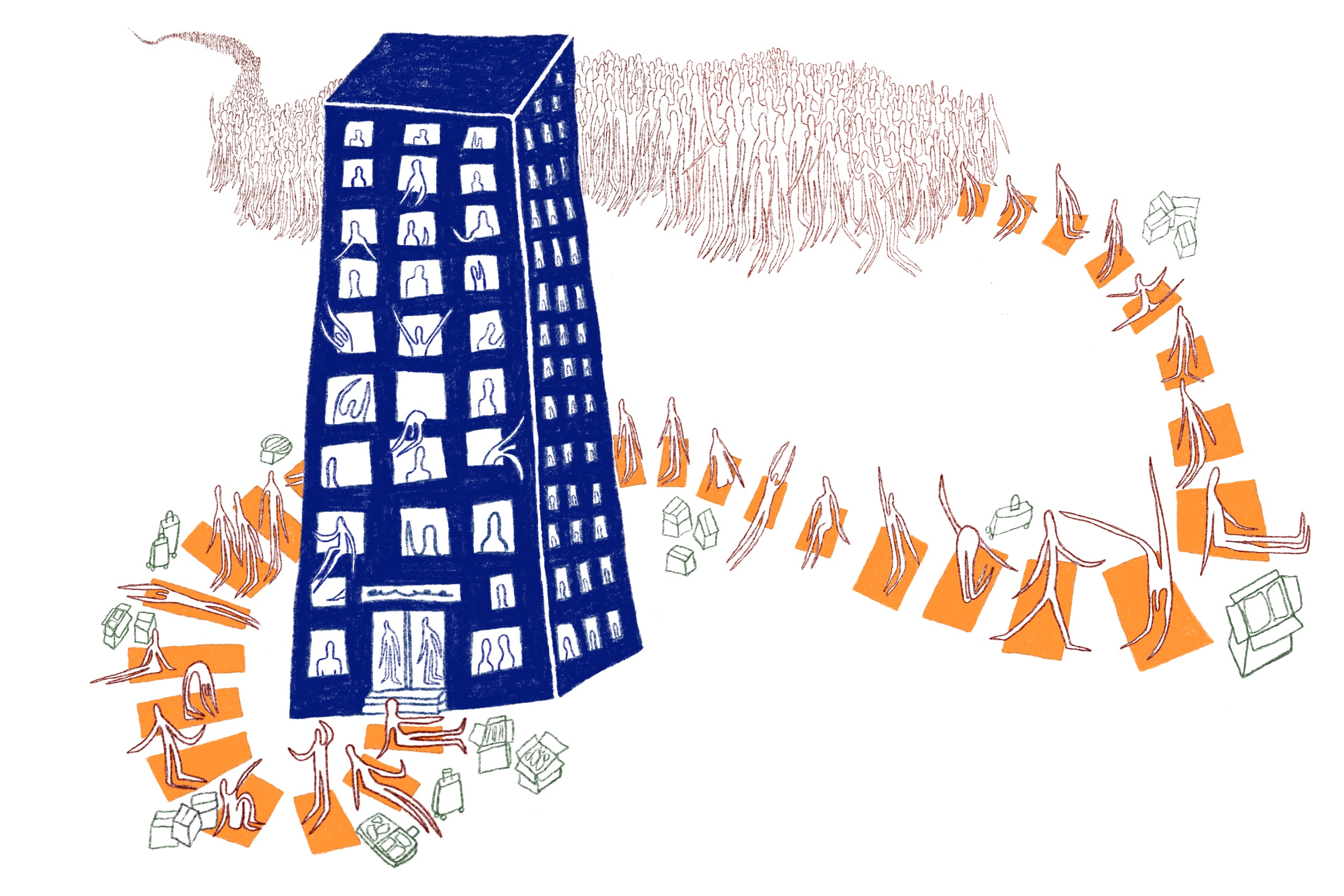
Image by: Josine Henneken
Because of the lack of housing, more and more students are giving up their search for a room, a report this week from the knowledge centre for student housing Kences showed. The shortage of student rooms is currently 21,500 and is set to rise.
With new elections approaching, the housing shortage is high on the agenda: many parties have already published their programmes and tackling the housing crisis is a priority for almost all of them.
Peter Boelhouwer, professor of Housing Systems at TU Delft, says the housing shortage is largely down to the government: “It has made quite a mess of it.”

How so?
“The government has created too many restrictive rules. At the moment you are not allowed to simply take someone in, for example by renting out a room in your house or splitting a property. There was a student in Nijmegen who inherited a house. She wanted to share the property with two friends, but that was not allowed because that would have been three separate households and the municipality did not permit that.
“Also the fact that students renting rooms are not entitled to housing benefit, while those in a studio can be, I regard as a policy mistake by the government. As a result, developers are mainly building studios, which are more expensive and house fewer students. There are two options: either housing benefit for studios is abolished, but that would put students in trouble. Or housing benefit is extended to students who live in rooms. That costs money, but I think that’s the right route.”
If there is such a large shortage, where do all those students live?
“We see a slight rise in homelessness, but that is almost never students. They stay at their parents’ homes for longer or go couch-surfing with a friend. And we see a lot of illegal letting, including among students.”
Can’t we just build more homes?
“Here too the government has created many restrictions. The current system of objection and appeal procedures sometimes delays building projects for years. This costs not only a lot of time but also a lot of money.
“Many new-build homes also have to be ‘affordable’. As a result many foreign investors have pulled out, and Dutch investors have halved in number. New build does not have to be immediately accessible to everyone, though. By building more expensive homes people with more money can move up the housing ladder more easily, which also frees up homes lower down the chain.”
Could the government build homes itself, like roads and hospitals?
“The European Union sets certain rules on state aid and government involvement. The government may invest in services of general economic interest, but there must be very good reasons and these must be approved by the EU. They then assess whether the market truly cannot solve the problem. But the government has imposed so many restrictive rules that the market cannot function at all.
“Meanwhile more and more private landlords are selling their properties because letting has become unattractive due to all the rules and taxes. The government could buy these homes itself and let them, but that would cost a few billion euros on the budget that you could not then spend on other things. That is a political choice you could make.”
How else can we solve the housing shortage?
“Building new homes takes years, so you cannot simply reverse the shortage. Problems with the existing housing stock are easier to solve. We need to remove the restrictions there so that it becomes easier to split properties and rent out rooms.
“Allowing more temporary construction could also offer a solution. These homes are easy and quick to place. But they often provoke much protest from local residents, who fear nuisance, especially from young people or migrant workers. Citizens therefore often work against it themselves: they prefer not to give anything up.
“Universities also do not take enough responsibility for the housing shortage. They recruit many international students without those students having a room. Universities could also invest in student rooms. They are under considerable pressure due to cuts, so it is complicated, but building rooms does not have to be loss-making.
“We may also have to make choices regarding migration. The student population has grown greatly because of international inflow. It is difficult to restrict that, but perhaps we should: we simply do not have the facilities.”
What do you expect from the elections?
“I am cautiously optimistic. Many parties have made the housing shortage a priority. They are also willing to spend extra money on it. But whether that money will actually materialise remains to be seen.”
Lees meer
-
More and more students give up hope of finding a room
Gepubliceerd op:-
Campus
-
De redactie
Latest news
-

Away with the ‘profkip’, says The Young Academy
Gepubliceerd op:-
Science
-
-

House of Representatives wants basic grant for university master after HBO
Gepubliceerd op:-
Money
-
Politics
-
-

Company takes a huge chunk of the student finance of at least 350 internationals
Gepubliceerd op:-
Internationalisation
-


Comments
Comments are closed.
Read more in Housing
-

Loan system kept students living at home with parents
Gepubliceerd op:-
Housing
-
-

Student housing Toepad not scrapped after all, completion expected in 2027
Gepubliceerd op:-
Housing
-
-
Students without municipal registration. ‘I work off the books in a restaurant’
Gepubliceerd op:-
Housing
-