Ad

The Eurekaweek is timed perfectly for the adolescent brain

Professor Eveline Crone sees introductory weeks not only as a sociable start to student life, but also as a crucial moment in young people’s development. “Society has actually – without us realising it – adapted to those biological changes in our brains.”

Eurekaweek participants in 2023.
Image by: Hilde Speet

Eveline Crone.
Image by: Levien Willemse
What was your own introductory week like?
“I started studying at the University of Amsterdam in 1999, where they have the Intreeweek. But after one day of partying I became ill, probably a combination of poor food and one drink too many. So I missed the rest of the week.”
Eveline Crone is professor of Developmental neuroscience in society at the ESSB and lead researcher of the SYNC-lab, which investigates how young people develop into active members of society. Her book Generatie zelfvertrouwen. De ontwikkeling van een gezond zelfbeeld bij jongeren (Generation self-confidence: The development of a healthy self-image in young people) was recently published.
Why is 18 years – the average age of a Eurekaweek participant – such an important phase for the brain?
“Well, if I compare what science knew at the time of my own Intreeweek with what we now know about the brains of 18-year-olds, we’ve learned a tremendous amount. Back then virtually every scientist still thought the brain was fully developed by the age of 12, because by then the brain is roughly the same size as an adult’s. And people thought that all subsequent behaviour was just awkward teenage stuff driven by hormones. Now we know that brains develop for much longer, up to around 25 years. From 10 to 16 there is a major reconstruction taking place, after which the changes are smaller and it’s mainly specialisation.”
‘If you never take risks, you would always live with your parents’
Why does an introductory week suit this age so well?
“There are changes in your brain that make you want to go out. In adolescence you take more risks, so you try out more things: you take health risks, like drinking and vaping, and do dangerous things without immediately thinking about the consequences. Many young people have a positivity bias: they know that drinking is bad and driving fast is dangerous, but they have the feeling: ‘nothing will happen to me’.
“Risk-taking increases between the ages of 10 and 20 and peaks around 18 to 20. After that it declines. I view risk-taking as something positive, because it has all kinds of evolutionary advantages. If you never take risks, you would always live with your parents. Also when you want to make new friends, raise your hand in class or try new sports, you have to take a bit of a risk.”
Do you see risk-taking only as something positive?
“Well, only to a certain extent. All forms of risk-taking that go too far are negative for the person themselves and the people around them, such as causing accidents or going too far along with group activities, like drinking and causing nuisance, just because you feel you won’t belong otherwise. These are the excesses you want to try to prevent, and most young people actually want that too. But a little risk-taking within limits is part of it.”
‘Sometimes inclusion goes a bit too far in the direction that everyone always has to do everything together in the same way’
Some young people don’t feel at home at all with all that drinking and dancing. With the arrival of many international students, for example, students’ norms and preferences have only grown further apart. There are already alternative programmes during the Eurekaweek, but that may isolate a group of participants. How can the university best deal with that?
“It’s not just about other cultures; there are also young people who are highly sensitive or socially shy. They are sometimes forgotten, because they just stay at home in their room. On the one hand you naturally want everyone to mix with everyone. On the other hand I think it’s fine that there are subgroups. So suppose you come from abroad and you have very different norms and values, then the university can also create groups for that to carry out activities together. There’s nothing wrong with that at all.
“Sometimes inclusion goes a bit too far in the direction that everyone always has to do everything together in the same way. But differences may exist too. Because if you have to conform too much to a minority, the majority will at some point form a counter-movement. We already see that a little in reactions to the acceptance of minority groups.
“At school parties you see that there is sometimes a school disco and a quiet room, where pupils want to play chess with headphones on. I think it’s really good if there is also a place where someone can retreat. As long as you also have those shared moments and a shared feeling.”
Read more
-

New ‘Erasmus Professors’ Crone and Buijzen to create impact for five years
Gepubliceerd op:-
Science
-
What makes such an introductory week so suitable for forming friendships and finding your place in society?
“You are forming your identity at this stage of your life. Around 14 you are often in conflict with yourself about who you are or want to be. Around 18 you go through another form of identity development, in which you find it more acceptable not to always be the same. For example, sometimes exuberant and sometimes very calm. So it also helps you to find out who you are in an environment like an introductory week.”
You often end up there among complete strangers, the perfect moment to reinvent yourself completely, I would say?
“Indeed, you can keep trying something new. We often think we have a kind of core identity, with all those self-help books that say you must discover yourself for a better life, but you are not just one person. You are someone different in one situation than in another. I also have my work identity and my home identity. I think everyone recognises being at a party and having all those groups of work and friends mingle and you become a little confused by that. That is not bad at all, that’s perfectly normal.”
It’s useful that we schedule an introductory period precisely when our brains need it.
“Society has actually – without us knowing it – adapted to those biological changes in our brains. For example, it is no coincidence that we send children to school between 6 and 18 years. At that point your brain is optimally developed to take in information. But only now are we discovering exactly how precisely they align.”
Lees meer
-
Shorter Eurekaweek: without Maassilo and international day, with association tour and tickets for hbo students
Gepubliceerd op:-
Eurekaweek
-
De redactie
-
 Elmer Smaling
Deputy editor-in-chief
Latest news
-
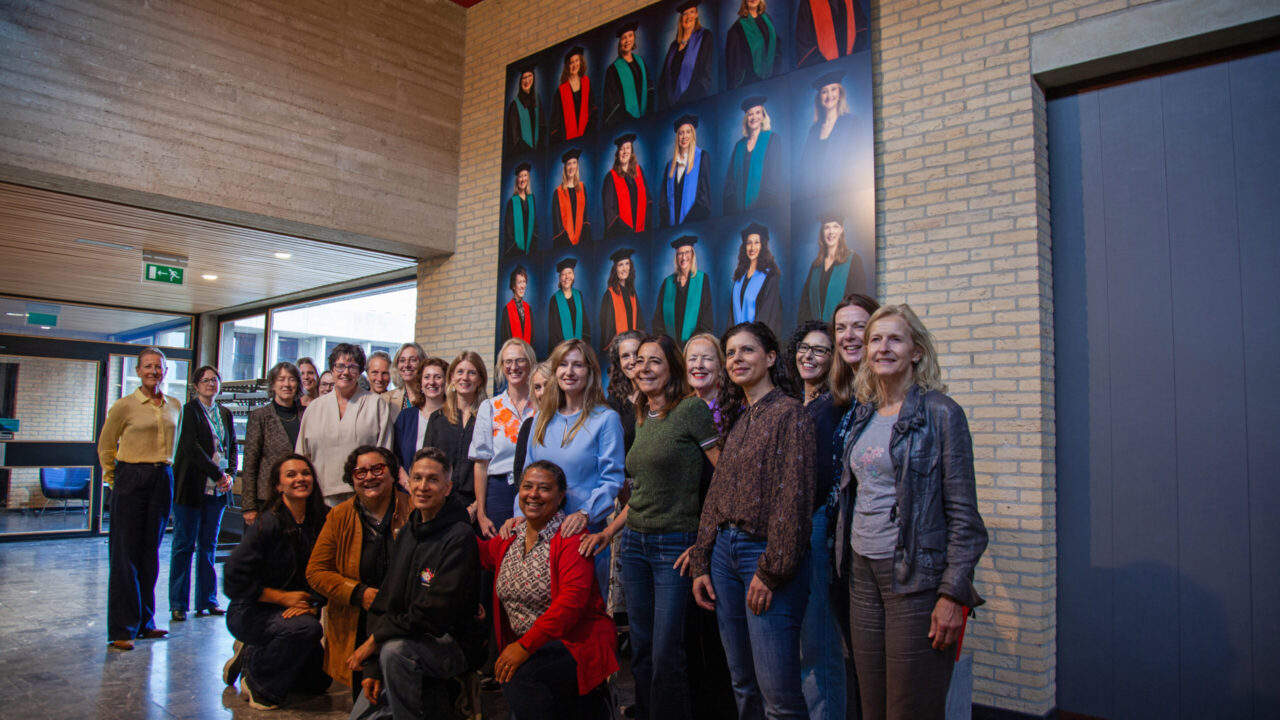
Erasmus Building gallery expanded with 48 portraits of female professors
Gepubliceerd op:-
Diversity
-
-

‘If anyone should be thinking about the effects of AI on society, it is scientists’
Gepubliceerd op:-
Artificial Intelligence
-
Science
-

Comments
Comments are closed.
Ad
Read more in Eurekaweek
-
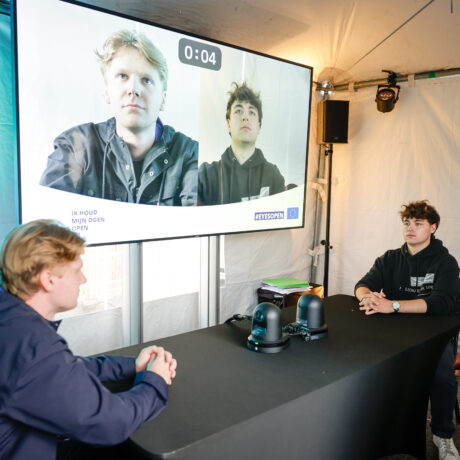
Campaign at the Eurekaweek festival to support crime victims
Gepubliceerd op:-
Eurekaweek
-
-

First-years find new besties during Eurekaweek: ‘I still want to be friends with her in ten years’ time’
Gepubliceerd op:-
Eurekaweek
-
Student life
-
-

Hangovers and hoarse voices at a boozy brunch in the park
Gepubliceerd op:Article type: Video-
EM TV
-
Eurekaweek
-