‘Academic freedom is not just a matter for the university, but for society as a whole’
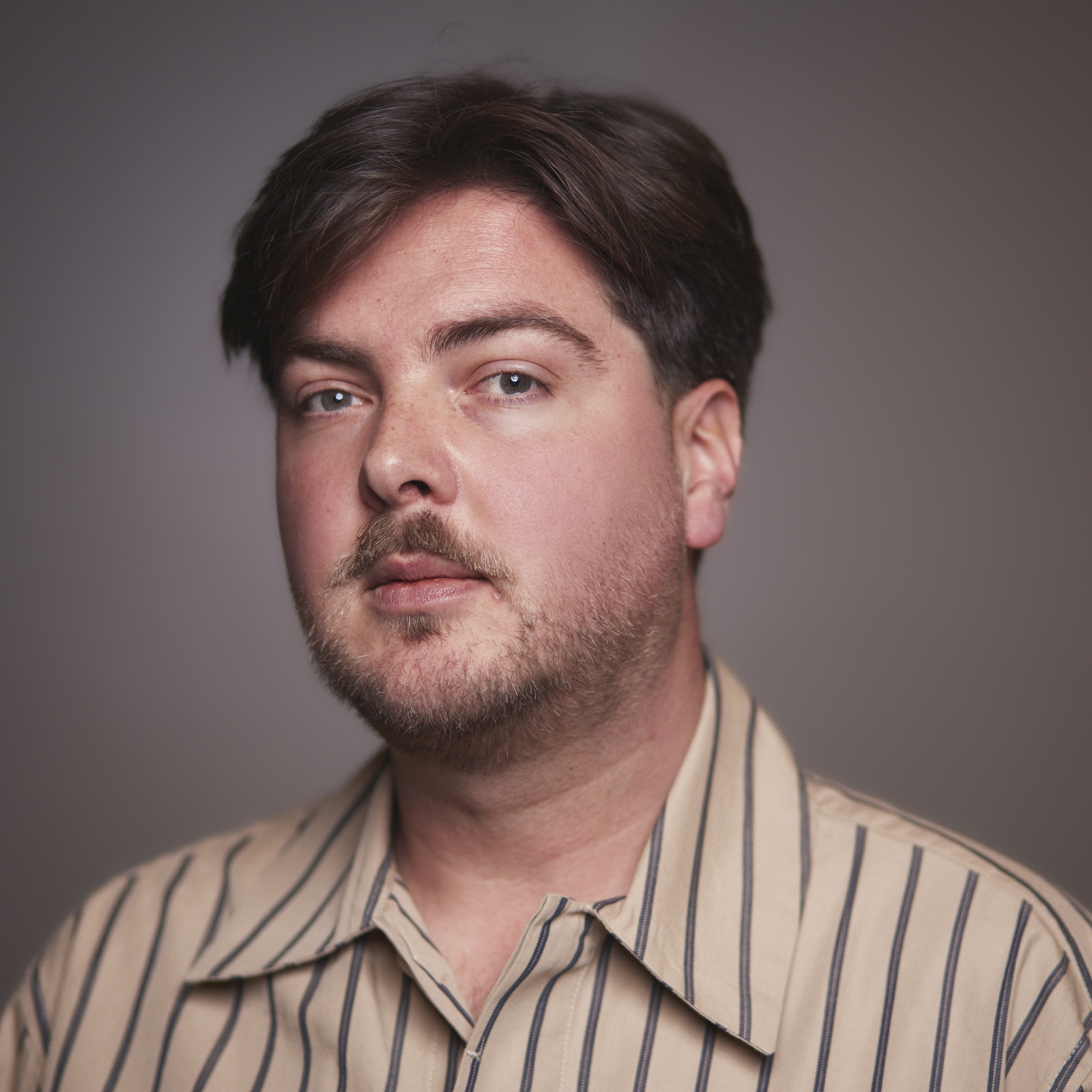
In her first six months as rector magnificus, Jantine Schuit listened to students and staff and worked on the new strategy. And along with the other Dutch rectors, she raised the alarm about academic freedom. “Science, free press and an independent judiciary are the basis of democracy. It really concerns me that those are under pressure.”
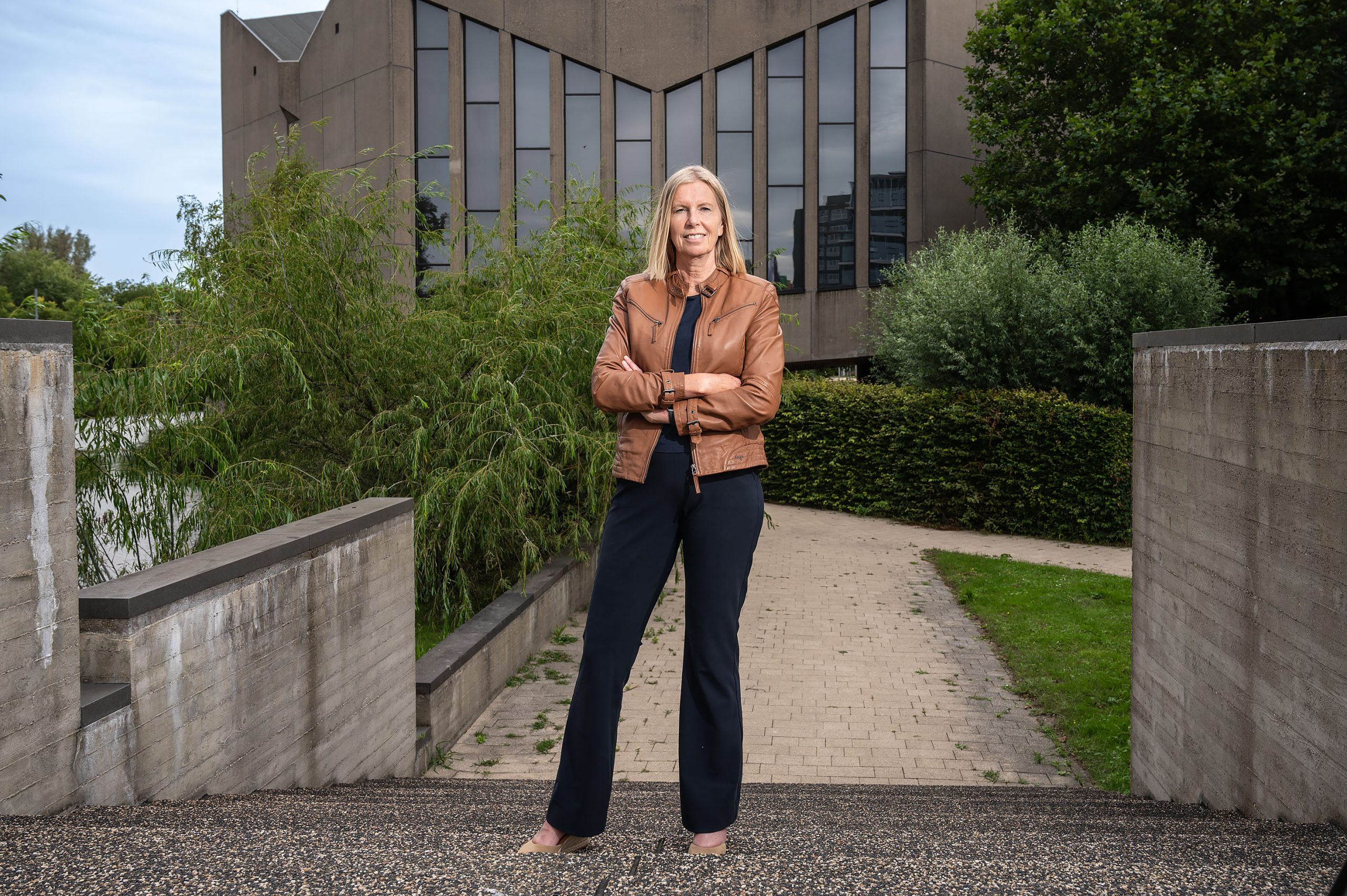
Image by: Pien Düthmann
Jantine Schuit has been rector magnificus of Erasmus University for over six months now. It is a turbulent period: in the US, free science is under attack, pressure on universities to sever ties with Israeli institutions increased through campus protests, and severe budget cuts and other forms of political interference are at play. All reasons for the rectors of Dutch universities to sound the alarm: academic freedom is under pressure here too.
They did so with an open letter in Trouw last month: “The freedom to think and speak is under threat, from outside and from within.” Just before that, the Royal Netherlands Academy of Arts and Sciences (KNAW) also warned that funding and steering of research and teaching, intimidation of scientists, collaboration with third parties and tensions within the academic community were putting pressure on academic freedom.
You are involved in SafeScience, a national hotline to which scientists facing harassment or threats can turn. Are you concerned?
“Yes. Hate, intimidation and outside threats have really increased, especially online. Scientists working on more sensitive topics, for example research into pornography, are occasionally bombarded with online slander. This is not normal. I think it is very serious because that can be painful or intimidating for researchers.
“It’s important to keep asking critical questions and not censor yourself. That is at risk at the moment, though. Harassment can be a reason for scientists to quit. I haven’t experienced that in Rotterdam yet, but we see that happening, in the Netherlands, in Europe.”
The KNAW also warned against political interference in the Netherlands, for example through the Balanced Internationalisation Act. Do you actually see interference in the language of instruction as curtailing academic freedom?
“To be honest, yes. We think the international classroom is important for the quality of education, because you bring students from different backgrounds together and allow for different perspectives. For students, it is also enriching. The discussion is not new and I understand the need to properly explain why you choose English. Maybe it is not an outright curtailment of academic freedom, but if we cannot make the choice ourselves, it is a curtailment of our institutional autonomy.”
A university is also a publicly funded institution. Where is the line between public accountability and political interference?
“We see that line moving not only in the language of instruction, but also in funding. If the ministry says: ‘You get an X amount of money, but you have to spend it on this and that’, you don’t give freedom to the institution to decide for itself what is right. Ultimately, this compromises free and unfettered research. This is also evident from the KNAW report.”
I also read in the letter in Trouw that the rectors consider the campus protests a threat to academic freedom. How exactly?
“I understand you could read it that way, but what we meant is that protests too often degenerate into occupations, intimidation and vandalism. This restricts the freedom of others, who do not feel free to engage in the conversation.”
‘The fact that students remind us of our responsibility fits with the university’s mission: we want to educate critical global citizens who make their opinions heard’
Three Wageningen scientists wrote in response to the letter: rectors could also embrace protests over Gaza, especially now that they are being criminalised in the US. You could also say: We want to be a socially engaged university, so it is good that students remind us of the associated responsibilities.
“Demonstrating is good, it is important to make your voice heard. I myself have demonstrated against nuclear power and against cuts in education and science. The fact that students remind us of our responsibility also fits with the university’s mission: we want to educate critical global citizens who make their opinions heard. I’m glad they are making themselves heard.
“It has to remain respectful. In Rotterdam, fortunately, things often went well, but I have also seen things here of which we really disapprove. A flag saying Death to Israel, for example. Despite immediate intervention by campus security, this slogan has been online on social media. Many Jewish students and staff, and others, found that really intimidating. And while that may not have been the intention of all the protesters, it does have that impact.”
That does not sound like an easy subject for an administrator to tackle.
“It is sometimes difficult. You mostly hear the extremes: the protesters, or the harrowing or fearful stories. You try to deal with that carefully, and support or refer people to help where necessary, for example through Safe@EUR (where students and staff can go with reports or questions about undesirable behaviour, ed.). At the same time, there is also a very large group of people who do not speak out on the issue. Who are also a bit fed up with it from time to time, and we have to manage that too.”
What can you do to defend academic freedom?
“The letter is a starting point, an invitation to dialogue on the importance of academic freedom. And we need to look at what we can do better as a university, how we can better protect our scientists from hatred and intimidation.
“Science, free press and an independent judiciary are the basis of democracy. It really concerns me that those are under pressure. Academic freedom is not just a matter for the university, but for society as a whole. It is up to us to have that conversation at the university, and to make clear what the ordinary Dutch person or Rotterdammer has to gain from academic freedom.”
You wanted to have 100 conversations with 100 people in your first few months. How did that go?
“I think it is important to listen carefully before forming policy. So I invited groups of students and staff and asked some questions: What should we continue to do? Where should we start? What should we stop doing? What struck me is how proud people are to work at Erasmus University. Students are also properly involved in our mission to make positive social impact.”
Do you have answers to those three questions: what should we keep doing, what should we start doing, and what should we stop doing?
“My conversations were so diverse and detailed that I cannot give one answer to that. People find stopping something difficult because they feel responsible for everything they do. And if you want to change something under the new strategy, people are afraid that there will be additional work on top of that.”
How do you avoid giving people extra work?
“Impactful and excellent research are not mutually exclusive. It might be difficult as an individual to do both, although I think impact-driven research can be excellent and vice versa, but you can build teams where people do different things and have different talents. So in the future, we want to put even more effort into recognition and rewards (a programme to provide alternative career paths, so that scientists who are good at teaching or patient care, for example, are judged accordingly, ed.), so that we can look at where people’s talents lie and create more variety in the path they take within the university.”
‘We need to make sure there are not too many barriers to getting people from outside to come in or to do things together’
Can you give a hint about the university’s new strategy?
“The mission remains to create positive societal impact. A next step is to embed that more within the existing organisation. Many initiatives have emerged in recent years through the Erasmus Initiatives and the Convergence with Delft and Erasmus MC. Many of these initiatives started with temporary funding, which we want to connect and secure more so that they have a good business case even without temporary funding.
“We also want to take that a step further, by building open innovation networks. The idea is that you create a kind of ecosystem in which scientists, students, businesses and social partners collaborate on a research or education agenda with issues from society. It is also useful for students to perform work commissioned by a social partner. I would really like it if we can do that together with senior secondary vocational education and higher professional education as well.”
What would this involve?
“We need to make sure there are not too many barriers to getting people from outside to come in or to do things together. In doing so, we need to think carefully beforehand about funding or intellectual property, and how to set up a desk that can provide information. If a social partner thinks: I want to know something about health & tech at the EUR, where can I go? There is no such thing now. Unfortunately, reinventing the wheel is a common occurrence.”
How does that relate to academic freedom? To what extent can you protect autonomy or freedom if you start letting the outside world determine more of what you do?
“It is important that your role remains clear. In such a network, for example, you reflect together on the energy transition. This may well be demand-driven, if, for example, the Port of Rotterdam Authority asks: Help us, how do we take the next step in the energy transition? But how we do that research is really up to us. We are in charge of what data and methods we use, and in principle I think all the knowledge we develop should be publicly accessible. This should be clear beforehand. If you have multiple parties in such a network, I am less worried about that than in a one-to-one relationship with a private party.
“You are ultimately in charge of which questions you do or do not investigate. If questions come up that you find unethical, you are not going to investigate them. This is not ‘your wish is our command’.
“And I don’t want to give the impression that this is all that matters to me. Within the mission of engagement and impact, this is the next phase. But I also think it is important for us as a university to encourage unfettered research and academic freedom.”
Read more
-
New rector: ‘At a time of budget cuts, it’s important that board and deans stick together’
Gepubliceerd op:-
Governance
-
De redactie
-
 Tim Ficheroux
Desk editor
Latest news
-
NOS: Crisis of trust and culture of fear in Erasmus MC intensive care unit
Gepubliceerd op:-
Safety
-
-
Psychological support and financial assistance for Iranian students in the Netherlands
Gepubliceerd op:-
Student life
-
-
EM TV newsflash: Temporary meditation centre in P building, budget cuts in honours programmes, and student jailed for possession of weapons
Gepubliceerd op:Article type: Video-
Campus
-
EM TV
-
Comments
Comments are closed.
Read more in Science
-
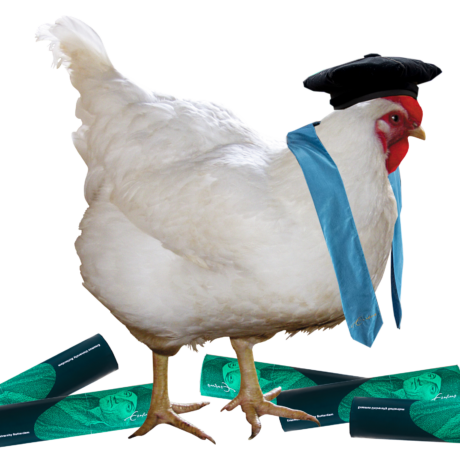
Away with the ‘profkip’, says The Young Academy
Gepubliceerd op:-
Science
-
-

Two Vici grants for researchers ESE and ESPhil
Gepubliceerd op:-
Science
-
-

Participants in dialogue on academic freedom want actions to match words
Gepubliceerd op:-
Science
-