Ad

How an algorithm tames chaos on the railway

You know the situation: one freight train derails near Horst-Sevenum, and you never make it back from Utrecht to Rotterdam. When something goes wrong on the tracks, it can lead to a cascade of problems. How do you prevent such a ripple effect? Endowed professor Dennis Huisman designs smart algorithms to limit chaos and get the railway moving again.
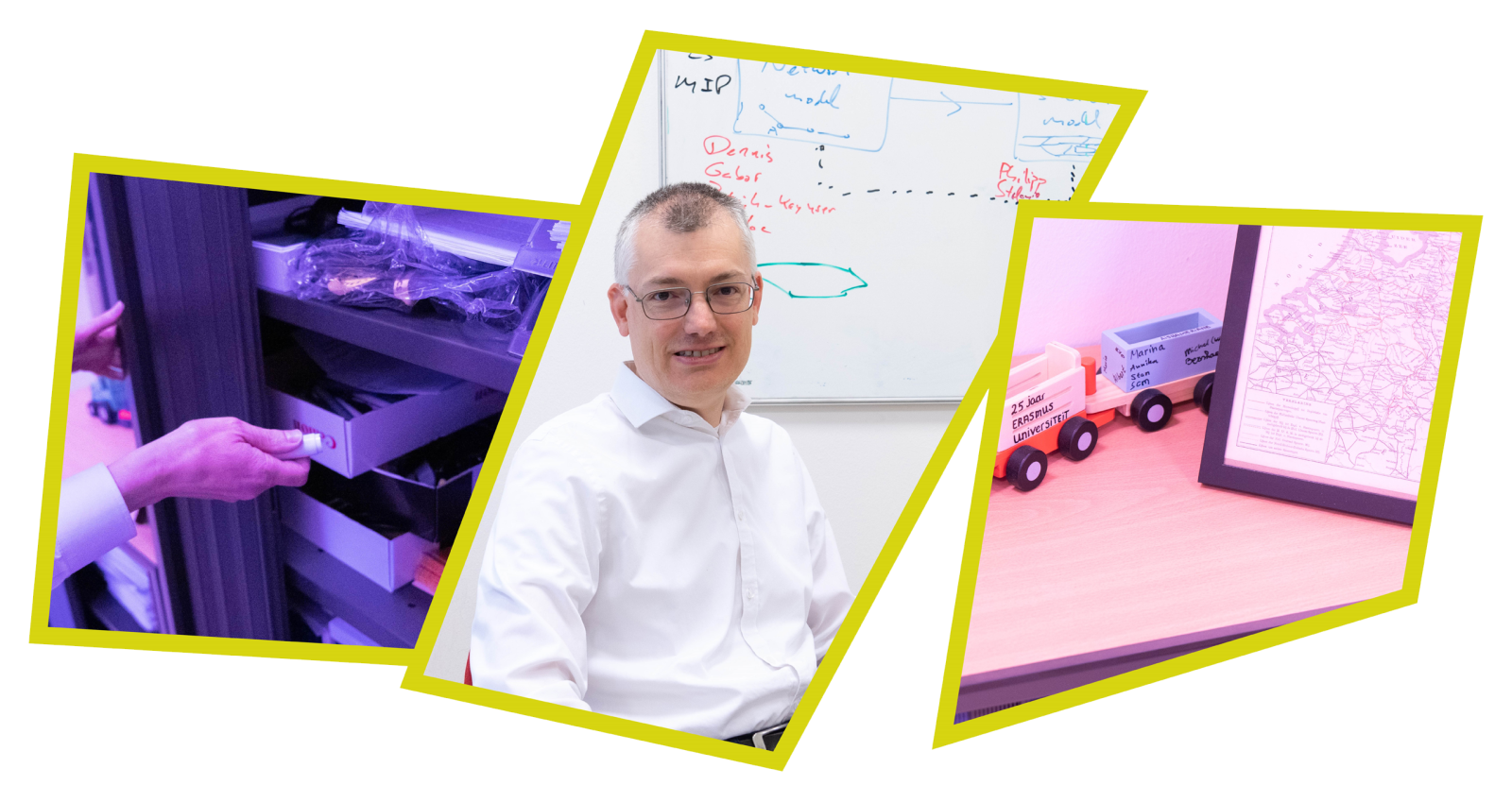
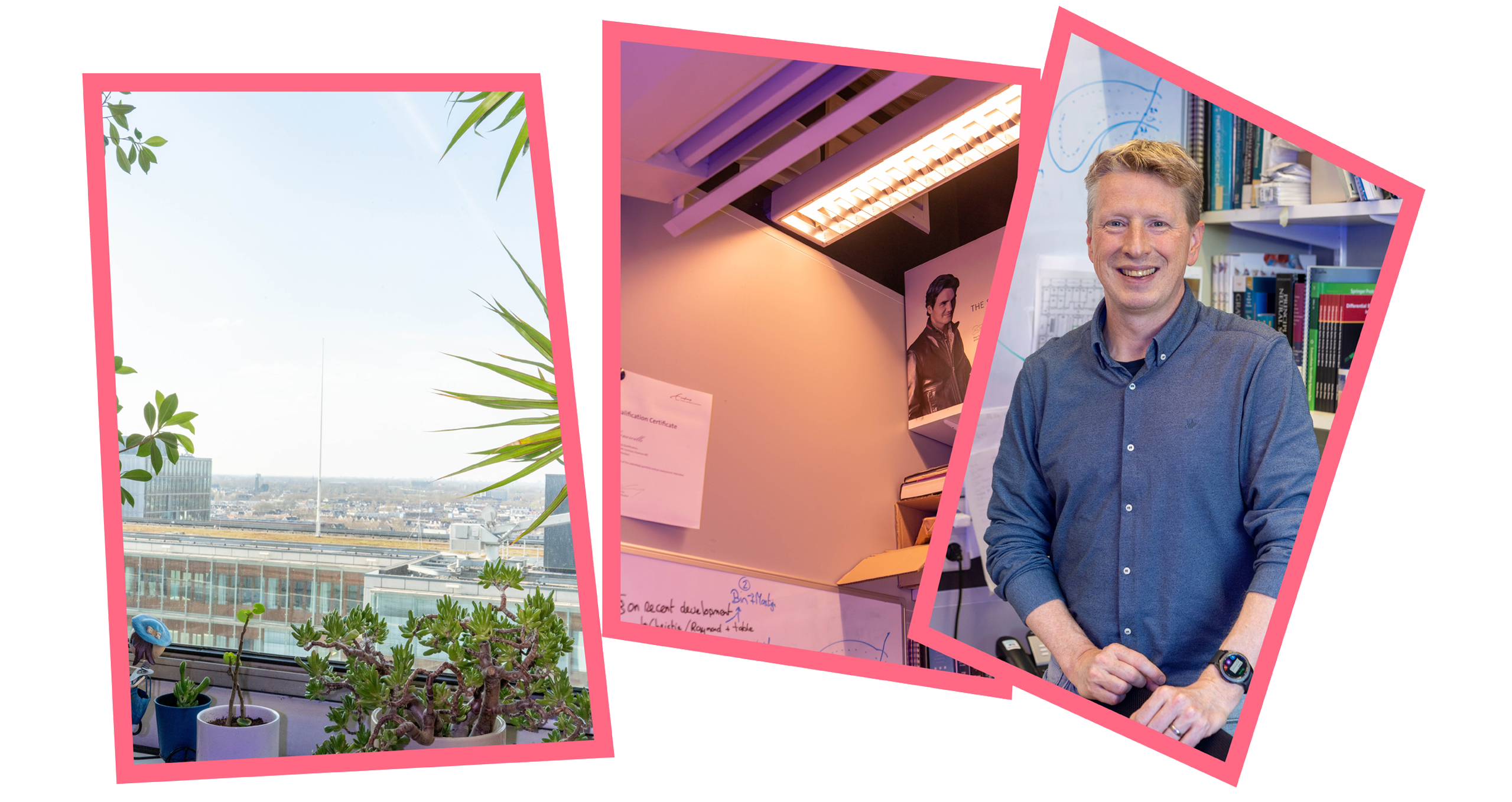
Image by: Hilde Speet
Dennis Huisman is a part-time professor of Public Transport Optimisation at the Erasmus School of Economics and manager of logistics processes at NS. He researches mathematical models for planning and adjusting personnel, rolling stock, and schedules in public transport. His research focuses on both strategic and operational issues, from long-term investment decisions to real-time solutions for disruptions.
The wonder
“As a child, I always travelled by public transport because my parents didn’t own a car. We regularly took the metro from Spijkenisse to Rotterdam, and a few times a year we travelled by train to Friesland to visit family. I found the vehicles beautiful, but it was especially the timetable that fascinated me: how all those buses and trains moved according to a strict schedule. It wasn’t until my studies in Econometrics that I discovered you could actually research this. That you could calculate using mathematical models how to deploy people and resources most effectively. From that moment on, I knew: this is what I want to do.”
The research
“At the start of a research project, I always ask myself: what are the biggest problems on the tracks? Disruptions will always occur, but you want to keep the damage as minimal as possible. In 2006, I set up a study as a co-promoter to prevent a snowball effect. This happens when one train breaks down and subsequently, the entire timetable falls apart.
‘With smart algorithms, you don’t necessarily find the perfect solution, but you can certainly find a very good one’
“Imagine: a train from Rotterdam to Utrecht gets stranded near Gouda. The driver gets stuck there while he should have been travelling from Utrecht to Arnhem. You want to free up another driver as quickly as possible who can travel from Utrecht to Arnhem. In our research, we developed an algorithm that cleverly looks at all personnel services and calculates a redistribution that limits the ripple effect of the disruption as much as possible.
“That is much more complicated than it sounds. The computational load of these types of problems increases exponentially as the network grows: with each additional train set, each station, and every driver you add, the computation time doubles. Even with today’s computers, these are not calculations that you can easily run. With smart algorithms, you don’t necessarily find the perfect solution, but you can certainly find a very good one, and fast enough to make a real difference.”
The eureka moment
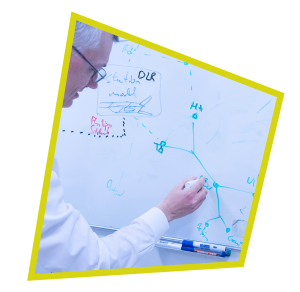
Image by: Hilde Speet
“The first time we could really apply it was during a major disruption in 2009. I was giving a lecture at the university when NS called. There was a significant incident: a derailed freight train near Vleuten. It was clear that the situation would not be resolved in a few hours. The question was whether we could use our algorithm to create new personnel services.
“I immediately went to the regional planning centre in Amsterdam. There, we explained our calculations so that the controllers could incorporate them into the system. The system wasn’t running in real time yet, and there wasn’t a nice interface, but once they had asked all their questions, the controllers understood how it worked. The next morning, a large part of the train services was running according to plan again.”
The aftermath
“We have further refined that model. It’s not the case that all our research can be used immediately. In this instance, NS has adopted it in a commercial personnel planning system. That, of course, is the most rewarding part – when what we have discovered actually works and gets used. The research makes public transport a little better.
Image by: Hilde Speet
“My later research projects also stem from concrete questions from NS or other public transport companies regarding personnel, rolling stock, or schedules, and are simultaneously fed by ideas from science. Seeing the connections between problems, technology, and novelty in mathematics is what drives me.”
Read more
De redactie
-
 Manon Dillen
Editor
Latest news
-
In memoriam Rob van der Wal
Gepubliceerd op:-
In memoriam
-
-
Lively trade in tickets for graduation ceremony: ‘Excessive prices are undesirable’
Gepubliceerd op:-
Student life
-
-
University president on powerhouses: ‘If we do nothing, we will hit a wall’
Gepubliceerd op:-
Governance
-
Comments
Comments are closed.
Ad
Read more in Eureka!
-
Did your parents know what your sex life was like when you were eighteen?
Gepubliceerd op:-
Eureka!
-
-

How a thousand women recognised a pattern that science did not see
Gepubliceerd op:-
Eureka!
-
-

How seals adapt their language to one another, and what that tells us about humans
Gepubliceerd op:-
Eureka!
-