Ad

It will be up to educational institutions to fine slow students in the future, suggests Eppo Bruins

In the future, it will be up to higher education institutions themselves to decide whether to impose fines on students who are taking too long to complete their studies, prospective minister of Education Eppo Bruins seemed to say during a hearing in parliament. And he didn’t close the door to foreign students just yet.
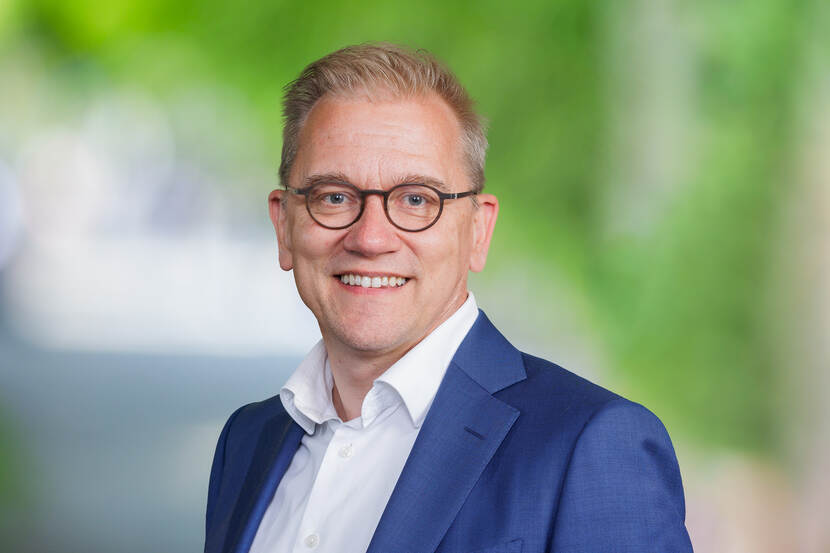
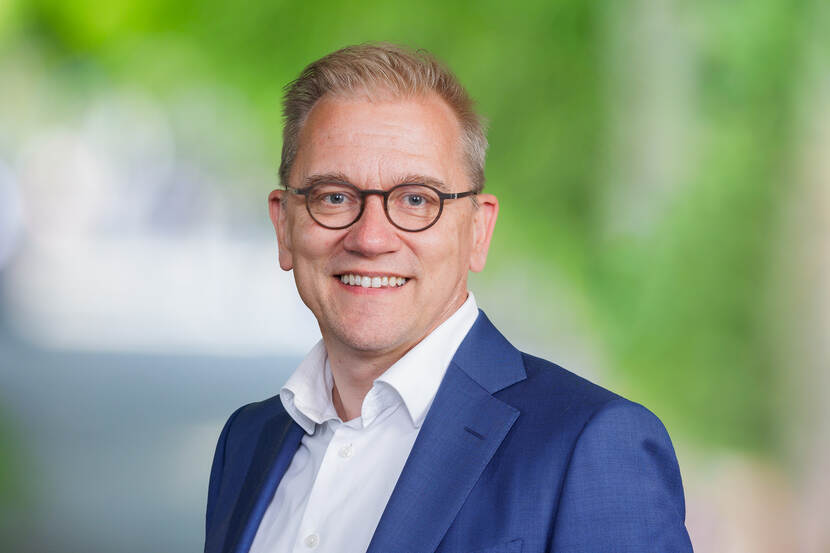
Eppo Bruins
Image by: Advisory Council on Science, Technology and Innovation
Hearings with prospective members of the government are a new tradition in the House of Representatives. Eppo Bruins, former MP for ChristenUnie and now the prospective successor to education minister Robbert Dijkgraaf on behalf of NSC, was also questioned on Thursday afternoon. He gave an interesting interpretation of the outline agreement.
In that agreement, PVV, VVD, NSC and BBB stipulate that students are to pay an additional 3.000 euros on top of their regular tuition fees if they take longer than one year extra to finish their degree. In jargon, this is referred to as the nominal duration of the programme plus one year. This means that you can take five years to complete a four-year Bachelor’s programme and two years to complete a one-year Master’s programme. After that, the tuition fees are raised considerably.
Read More
-
Even VVD and NSC youth wings speak out against slow-progress penalty
Gepubliceerd op:-
Politics
-
Fine
The new coalition partners have already made clear that this should mainly be seen as a cost-saving measure. In other words, educational institutions simply receive a lower contribution from the central government and they can recover that money from their slow students.
The question is now: do the institutions have the obligation or the option to impose this cost-saving measure on students? On Thursday, Bruins suggested the latter. “The way I read the outline agreement”, he said, the contribution for institutions will be lowered “and then it would indeed make sense for the institution to charge a higher contribution to the student if they study longer than the nominal duration of the programme plus one year.”
With the previous fine for slow students in 2012 (which was abolished after a few months), higher education institutions didn’t have a choice. The increased tuition fees had been laid down in law.
Read More
-
‘Eppo Bruins to become minister of Education’
Gepubliceerd op:-
Politics
-
Institutions responsible
As Bruins interprets things, The Hague will pass the conundrum on to the educational institutions. They will then no longer be able to hide behind the law in solving the many dilemmas caused by the fine for slow students. For instance, how do you deal with part-time students? Do you count a transition year as a study year? And most of all: do you want to cut students with learning problems or little money a break?
Bruins emphasised that institutions will have to take the reigns themselves. According to him, they have ‘the responsibility to make sure students can obtain their diploma within a reasonable time period’.
Jan Paternotte of D66 wanted to get right down to business with the prospective minister during the hearing. If we find another way to cut costs, would you be open to reconsidering the fine for slow students? Bruins suggested that exceptions aren’t out of the question, but he first wanted to talk about this with his officials.
Young scientists
The prospective minister received critical questions from the opposition about the cuts in research funding that are in the outline agreement. He made clear that, just like the fine for slow students, he has every intention of implementing these.
When asked about possible dismissals amongst young scientists if the subsidy on the sector plans disappears, Bruins answered that there simply is a limit to the number of young people that can advance within a university. He said he wanted to ensure “scientists have a fair chance of a blossoming scientific career”.
Read More
-
Researchers: Budged cuts on research funding cause vast breach of trust
Gepubliceerd op:-
Science
-
International students
What’s the first thing he wants to do as a minister? Bruins didn’t need long to think about this: “Addressing excessive internationalisation.” His predecessor, Dijkgraaf, submitted a bill that is to reduce the anglicisation of education. “I will continue these efforts”, said Bruins.
By embracing Dijkgraaf’s nuanced bill, he appears not to close the door to foreign students altogether. Having said that, the bill does leave a lot of space for tougher action, if desired.
Read More
-
New law for intake of international students: ‘Necessary, but the tone is worrisome’
Gepubliceerd op:-
Internationalisation
-
Academic freedom
Furthermore, Bruins wants more stable funding for higher education institutions to be introduced, so smaller programmes have an easier time surviving. This is a broadly shared wish in the House. He also wants to take forward Dijkgraaf’s fan idea. He thinks vocational education is important: “We need skilled professionals and that’s what I plan to work on.”
As far as the pro-Palestinian protests go, Bruins said he cherishes the right to protest. Earlier in the hearing, he had stressed the following: “As minister, I will safeguard the rule of law, safeguard freedom of education, safeguard academic freedom and safeguard the freedom of press. That’s my stance and I won’t budge an inch.”
Read More
-
Dijkgraaf doesn’t want to say ‘higher’ or ‘lower’ education anymore
Gepubliceerd op:-
Education
-
De redactie
Latest news
-
TU Delft may not favour women in admissions to courses
Gepubliceerd op:-
Education
-
-

Hate campaigns and political pressure: KNAW wants legal protection for academic freedom
Gepubliceerd op:-
Science
-
-
Signing up for a Dutch course ‘feels like a race’, no more places available for now
Gepubliceerd op:-
Internationalisation
-

Comments
Comments are closed.
Ad
Read more in Education
-
TU Delft may not favour women in admissions to courses
Gepubliceerd op:-
Education
-
-
RTL: More than half of master’s theses contain AI-generated text
Gepubliceerd op:-
Artificial Intelligence
-
Education
-
-
Education pioneer Etienne Augé: ‘Technology should give us more time for people’
Gepubliceerd op:-
Education
-