The roof of the car park is home to a rare fern with tongue-shaped fronds

What may seem like a weed at first is actually the rare hart’s-tongue fern. The car-park roof appears to be the ideal habitat for this rather discerning plant.
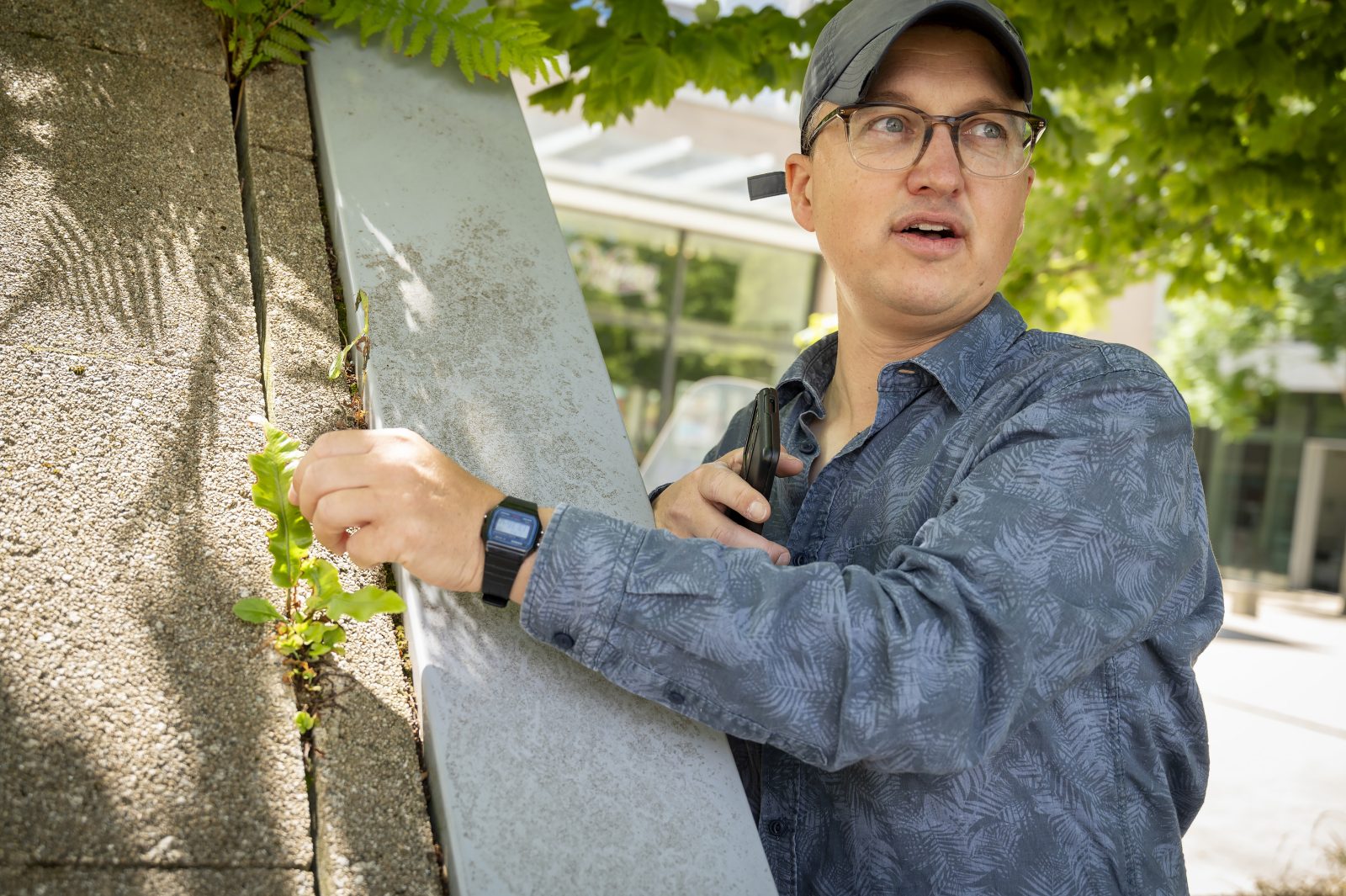
Image by: Ronald van den Heerik
A tiny seed – or ‘spore’, in the case of ferns – is picked up by a gust of wind and blown across campus. Its chances of surviving the journey in the concrete landscape are very slim. But this one lands in just the right place: the shady crevice of a roof above one of the entrances to the car park. Rainwater flows down the slanted roof into the crevices, allowing the spore to grow into a hart’s-tongue fern.
Read more
The species is really quite rare, says ecologist Garry Bakker from the Rotterdam Urban Ecology Unit (Bureau Stadsnatuur). The fern is a picky plant: it needs a moist, shady and calcium-rich environment. Ordinarily, you would find them on the sides of quays and poorly maintained walls. But this slanted, paved roof beneath a shady tree offers the same conditions. Bakker explains: “Think of it as a quay wall, but on its side.”

Image by: Ronald van den Heerik
The hart’s-tongue fern is not alone: a ‘male fern’ is growing close by, and their resemblance might give the impression that they are both ordinary ferns. But close examination reveals a clear difference: the male fern has ‘pinnate’ or serrated leaves, while the hart’s-tongue fern has strap-like leaves without indentations. Male ferns are also much easier to find: they grow on almost every Dutch forest floor.
Plants that grow in the crevices between bricks and stones often face a painful fate: the weeding sickle. But Bakker hopes that a better future awaits the hart’s tongue. “It’s natural vegetation”, he says. “Weeds is a verdict.”
De redactie

Latest news
-

Letschert gives nothing away in first parliamentary debate
Gepubliceerd op:-
Education
-
Politics
-
-
Away with the ‘profkip’, says The Young Academy
Gepubliceerd op:-
Science
-
-

House of Representatives wants basic grant for university master after HBO
Gepubliceerd op:-
Money
-
Politics
-


Comments
Comments are closed.
Read more in Nature
-
The Tinbergen building is one enormous bat enclosure
Gepubliceerd op:-
Nature
-
-
There’s more in the university library’s ‘sea of nourishment’ than you might think
Gepubliceerd op:-
Nature
-
-
The burrow might be abandoned, but the greenery behind the exam rooms is ideal for foxes
Gepubliceerd op:-
Nature
-