Students with migrant background particularly affected in alleged DUO fraud cases

Students are being investigated for fraud with basic student grants on questionable grounds and students with a migrant background are more likely to be investigated for alleged fraud, according to research by the Higher Education Press Agency (Hoger Onderwijs Persbureau), Investico and NOSop3.
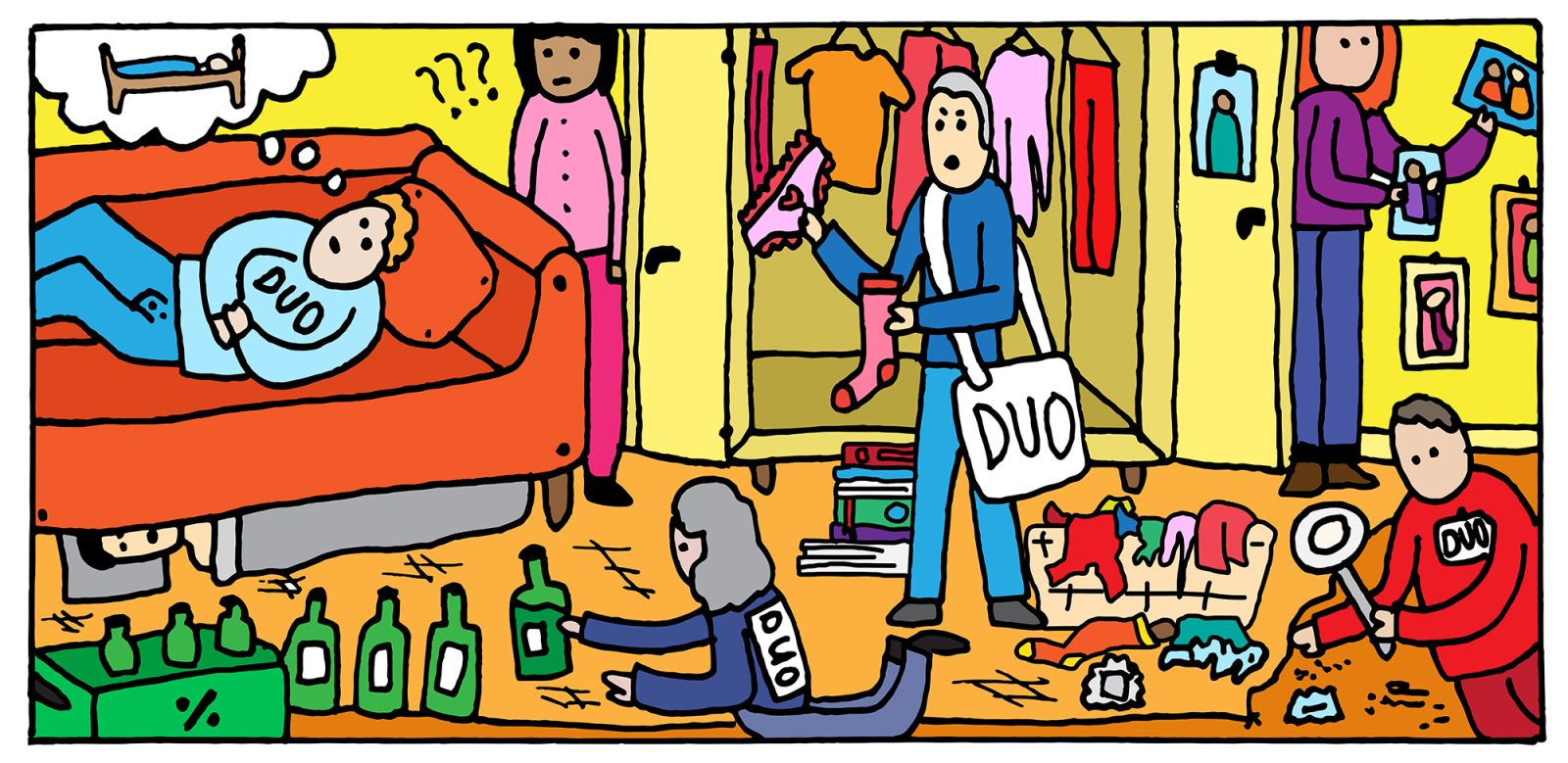
Student grant provider DUO loses one out of four court cases over alleged misuse of the basic grant for students living away from home. According to a survey conducted among lawyers, the vast majority of students in such court cases have a migrant background.
Of the 70 lawyers approached for the survey, 32 shared information. These lawyers had defended students in 376 court cases over alleged fraud with the basic student grant. According to the lawyers, in 367 (98 percent) of these cases, the student had a migrant background.
Indirect discrimination
DUO works with risk profiles and human assessments to detect misuse of the basic student grant. The method seems to be sensitive to bias. Experts say this could lead to indirect discrimination.
Moreover, DUO sometimes relies on questionable ‘neighbourhood surveys’, asking neighbours who live next door if they ever see a student there. Once DUO believes that a student has wrongly received the basic grant for students living away from home, this is hard to refute.
Minister Robbert Dijkgraaf of Education finds the findings of the survey disturbing. “I obviously take this signal very seriously”, he said in a TV interview with the Dutch Broadcasting Foundation (NOS). “And I want to thoroughly examine whether our processes are truly fair.”
Hidden discrimination
DUO does not register the ethnicity or origin of students, which, according to the minister, makes it difficult to check whether the investigations mainly affect students with a migrant background. However, he nonetheless wants to find out (‘in more detail, by looking closely at the figures’) whether DUO’s approach is not ‘discriminatory in a hidden way’.
The checks were carried out in senior secondary vocational education (MBO) in recent years. But from September, students in higher education will also be able to receive the basic student grant. The plan is to make four thousand home visits a year to students who may be misusing the basic grant for students living away from home.
The basic student grant in higher education will soon be 110 euros a month for students living with their parents and 275 euros for those living in student housing. So committing fraud would yield a student almost two thousand euros a year.
The results of the survey will be publicised today in the magazine De Groene Amsterdammer, the newspaper Trouw and on the independent news platforms of research universities and universities of applied sciences. NOS is also covering this matter in its news broadcasts.
De redactie
Latest news
-

Letschert gives nothing away in first parliamentary debate
Gepubliceerd op:-
Education
-
Politics
-
-

Away with the ‘profkip’, says The Young Academy
Gepubliceerd op:-
Science
-
-

House of Representatives wants basic grant for university master after HBO
Gepubliceerd op:-
Money
-
Politics
-



Comments
Comments are closed.
Read more in Student life
-

Large-scale student protests at universities in Iran
Gepubliceerd op:-
Student life
-
-

Medical student Daan Kluwer wins 10,000 euros to record his own jazz album
Gepubliceerd op:-
Student life
-
-

Master seeks master in love
Gepubliceerd op:-
Culture
-