Thesis supervisors wear two hats

“I’m a bit worried about this meeting.” This is how a student started our talk about the first results of her Master’s thesis. That took me by surprise, and it took me a moment to respond. “Oh, why is that?”, I asked. She told me that she had struggled with the analyses, so she had not been able to get anything done. She had asked other students who are good with statistics for help, but they had also been unable to figure it out.

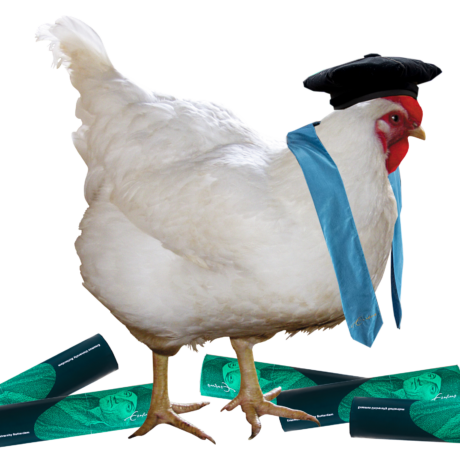
Image by: Levien Willemse, Pauline Wiersema
My first thought was: why didn’t this student ask me for help? I’m her thesis supervisor, after all. When I asked her, she answered rather awkwardly. The student looked up to me and wanted to make a good impression, so the threshold to ask for help had suddenly been very high.
Every year, I supervise several Bachelor’s and Master’s students writing their theses. Students work on a research project, contribute to data collection and use data for their own research question. I try to guide students as best I can with a step-by-step plan.
First, we write a research proposal; a process preceded by numerous discussions and decisions. Once the research proposal has been presented and approved within the research group, we submit a data request. Then the analyses begin, we obtain results and the student writes the thesis, with several feedback moments during the process. Finally, I assess the work as the supervisor in consultation with an independent colleague acting as the second reader. And that is where the problem lies.
We wear two hats throughout the whole thesis process. Our role as thesis supervisors is mainly a coaching or guiding one, but we also have the role of assessor, in which we evaluate the student’s performance and work.
Could separating the supervisor and assessor roles be the solution, perhaps? I can imagine that there would be much less of a dependency relationship between the supervisor and the student. This could contribute to a safer learning climate, in which students are less reluctant to ask questions. The supervisor would have no part in the final grade. Conversely, the assessor would not really know what the student’s own input has been, how the student has dealt with feedback and what the student’s professional growth has been. There are both advantages and disadvantages to separating the two roles.
Supervising, assessing or both? Both for the time being, but it is good that we continue to critically examine how we work. It is a complex issue that I need to think about for a while.
Everything worked out well with the student mentioned above, thankfully. With a little help, she performed the analyses very quickly and got an excellent grade for her thesis.
Hanan El Marroun is professor of Biological Psychology.
Read more
-

Sitting is not the new smoking
Gepubliceerd op:-
Column
-
De redactie
-
 Hanan El Marroun
Author
Latest news
-

Letschert gives nothing away in first parliamentary debate
Gepubliceerd op:-
Education
-
Politics
-
-
Away with the ‘profkip’, says The Young Academy
Gepubliceerd op:-
Science
-
-

House of Representatives wants basic grant for university master after HBO
Gepubliceerd op:-
Money
-
Politics
-


Comments
Comments are closed.
Read more in Column
-

Minister Letschert and the academic tower
Gepubliceerd op:-
Column
-
-

Spinach seed wounds
Gepubliceerd op:-
Column
-
-

Leftover dame blanche
Gepubliceerd op:-
Column
-