ChatGPT teaches us not to think

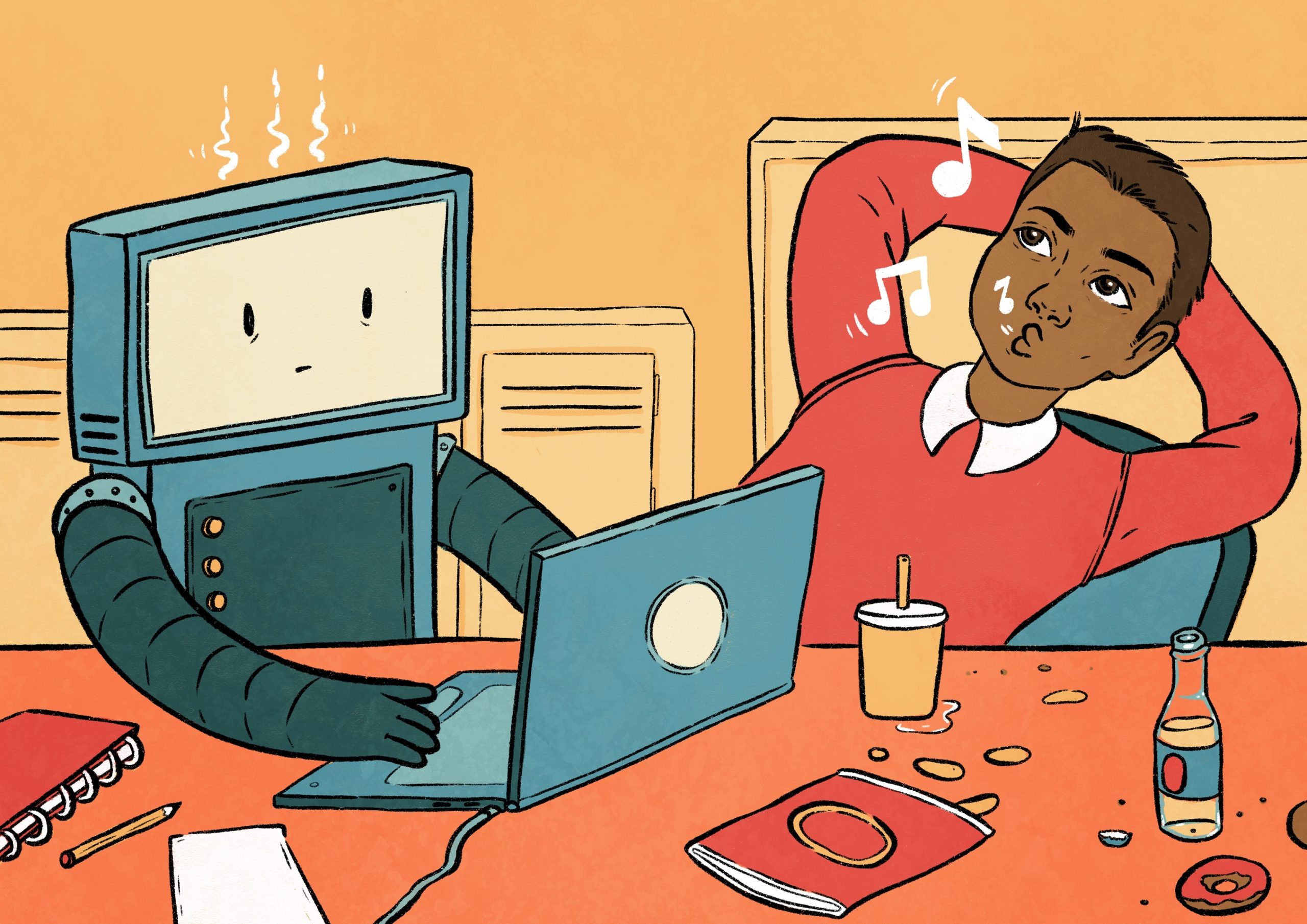
Writing is thinking. It organises your thoughts, enables you to debate with others and to surprise yourself. Writing is always a confrontation with yourself: when you see your thoughts set out in black and white before your eyes and have to rethink what you actually think about them. Writing is not easy, because thinking is not easy.

Image by: Levien Willemse, Pauline Wiersema
That may also be the reason that a blank sheet of paper – or usually a blank screen – can be so confronting: it forces you to think for yourself. Writing is often difficult not only for university staff, but also for students. It is a skill little taught in university courses. So it is hardly surprising that students look for tools.
Read more
-
Two students of ESSB are suspected of fraud with ChatGPT
Gepubliceerd op:-
Education
-
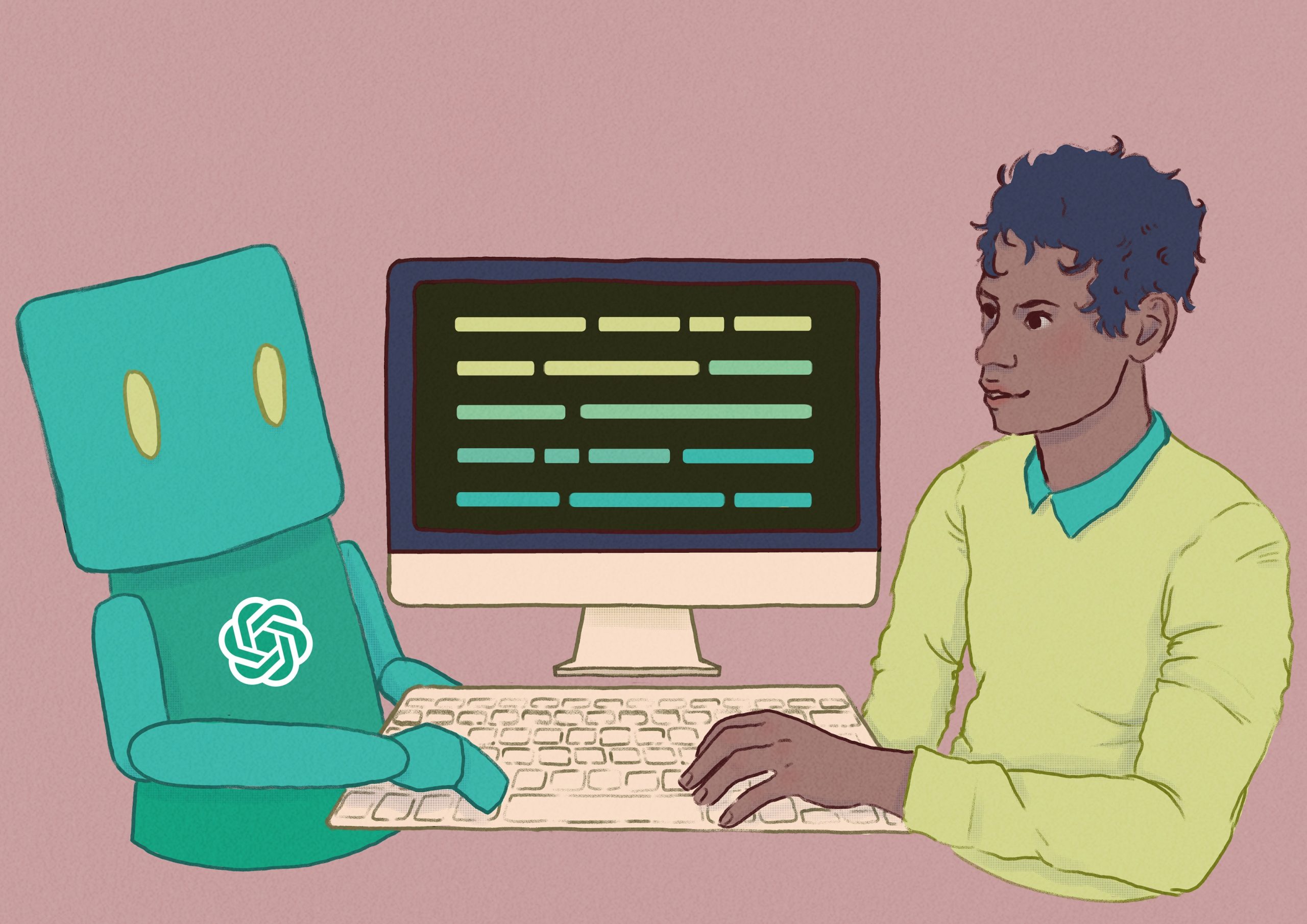
Then ChatGPT suddenly appeared. Not because lecturers asked for it, or thought it was a useful resource for writing assignments. Rather because a few years ago, in Silicon Valley, international tech companies started a new programme, which is now starting to become commercially interesting – and is therefore being ‘rolled out’ worldwide. The chatbots appear to meet a need: they are widely used, including by students. A wonderful tool for creating customised texts. Yet there is also something awkward about it: every time a university student (or employee) uses a chatbot, they are helping to further develop the algorithm behind it. Education in the service of commerce, rather than the other way around.
The introduction of new technology is often accompanied by big promises. I remember the arrival of social media like Facebook and Twitter. They would supposedly promote the free exchange of knowledge and views, bring people together across the world, and create solidarity and a sense of community. The reality turned out differently: many people see social media as a cause of polarisation. They keep people trapped in bubbles of their own right and lead to a culture of cancelling dissenters. Nowadays, the thought of Twitter being a vehicle for solidarity and community is just comical. These experiences make me somewhat suspicious of people who speak highly of the unprecedented potential of chatbots.
Read more
-
In this minor, students have to write an essay using ChatGPT
Gepubliceerd op:-
Education
-
Chatbots are particularly good at arithmetic, which is how they create a new text, based on pieces that have been written – and conceived – before. They don’t think for themselves. It says something about education if a chatbot could write a thesis, if a non-thinking ICT programme could do a better job of completing an academic assignment. Fortunately, that is not the case. However, this technology does hold up a mirror to us: do all programmes include enough opportunity to teach students to think critically? Are we demonstrating convincingly enough why thinking for ourselves is better and more interesting than resorting to a chatbot? And how can we use chatbots meaningfully in education? For me, thinking doesn’t start with words collected by chatbots, it starts with a blank screen. Wading through text and wrestling with yourself, a chatbot can’t replace that.
Ronald van Raak is professor of Erasmian values.
Read more
-

The new student grant system is a half-baked scheme
Gepubliceerd op:-
Column
-
De redactie
Latest news
-

Letschert gives nothing away in first parliamentary debate
Gepubliceerd op:-
Education
-
Politics
-
-

Away with the ‘profkip’, says The Young Academy
Gepubliceerd op:-
Science
-
-

House of Representatives wants basic grant for university master after HBO
Gepubliceerd op:-
Money
-
Politics
-



Comments
Comments are closed.
Read more in Column
-

Minister Letschert and the academic tower
Gepubliceerd op:-
Column
-
-

Spinach seed wounds
Gepubliceerd op:-
Column
-
-

Leftover dame blanche
Gepubliceerd op:-
Column
-