How personal research and in-depth conversations contribute to solutions for social issues

3 parallel sessions, 24 panelists, over 40 audience members, and a poet powered the first ever Connected Learning Symposium, organised by Learning for Equality and Erasmus Verbindt. The symposium was divided into three parallel sessions that covered issues of urban segregation, institutional inclusion or exclusion, and the challenges of socially oriented internships.
The panelists were selected through an open call to all former and current EUR students who had conducted research or produced an assignment on topics dealing with inequality. Whether the discussion focused on discriminatory e-tolls in Johannesburg or the sociopolitical implications of Google Maps in Santiago de Chile, all 24 panelists aimed to ‘learn from and with each other and contribute to the solution-making process of these pressing social issues’, Lis Camelia, one of the organisers of the event, explains.
Getting personal
Alex Huang, third year MISOC student and panelist at the Learning in Action session, was particularly appreciative of the personal nature of the symposium. “In research, we are always taught to not be too personal but many of the topics presented by the students here were exactly that, very personal. That’s what made them good, you could see the passion.”
Alex goes on to acknowledge that such in-depth conversations about inequality, intertwined with personal experiences, are ‘very rare’ on campus. “Students were able to share what they felt truly passionate about without filtering out things or being restricted by university norms and culture. Many felt a feeling of community here in the symposium.”
Minh agrees. He is a third year IBCoM student from Vietnam who has experienced an ‘aggravating’ amount of racism in the Netherlands, especially after the Covid-19 pandemic. He stresses that digging “deeper and actually talking to people to get to know their individual and personal experiences allows you to get a completely new story and perspective. That’s why it is great to see other students focused on battling inequalities, such as racism.”
Foucauldian photographs
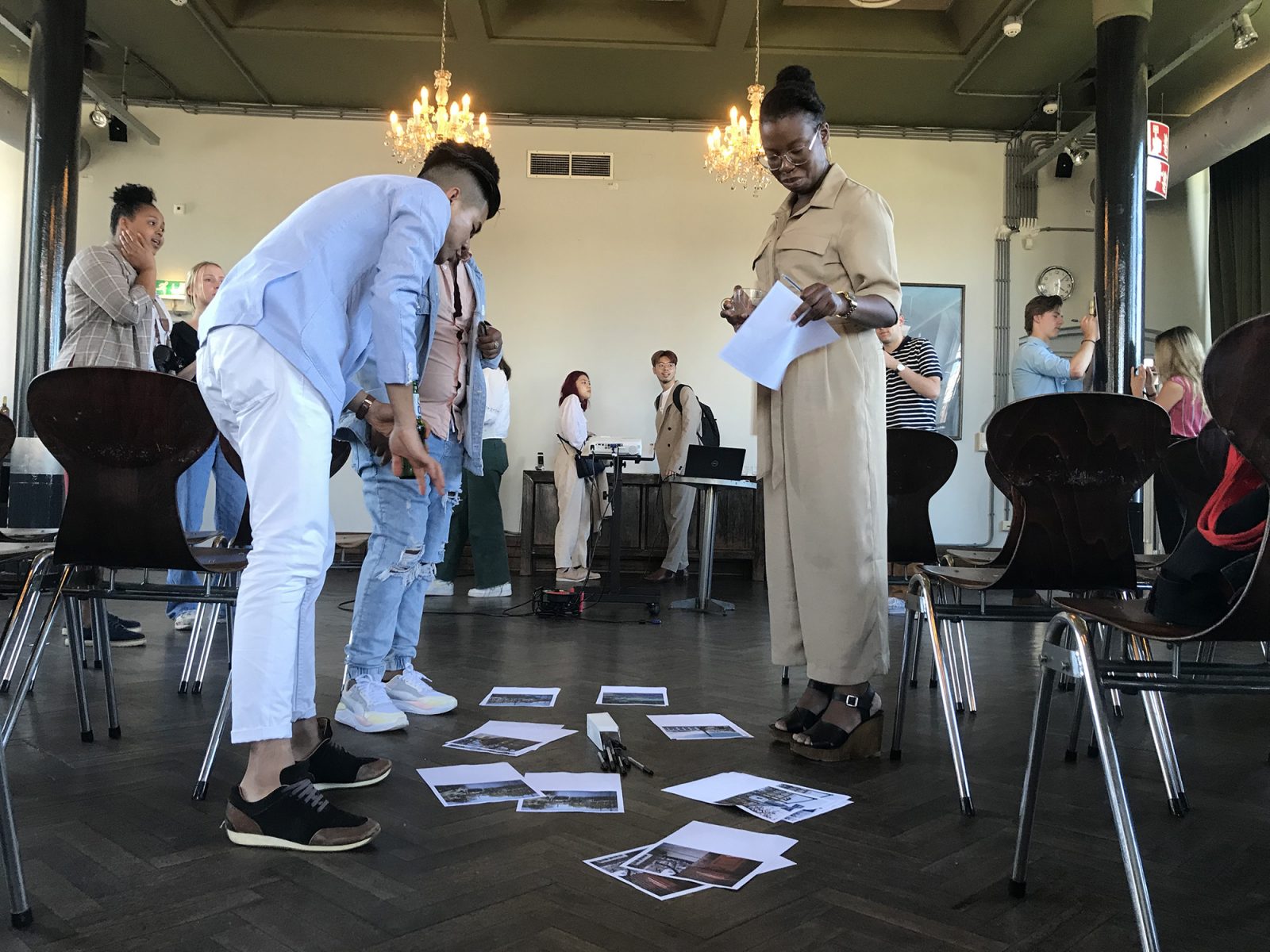
After a spoken word intervention by mixed-medium poet Kwinnie Le, the audience members were asked to select one of the scattered photographs in De Machinist’s wooden floor depicting the streets of Rotterdam. Thoughts and notes were written down behind each picture and those with the same image had to find each other in the room to discuss it. “That’s very Foucauldian”, “The panopticon is now ever-present in our smartphones”, “People don’t sit around their neighbourhoods anymore”, “Should I move to San Francisco?”, the participants reflect as they observe a picture of a surveillance camera signpost in Watergeusplein.
Students, panelists, and professors alike joined in the conversation and expanded on the meaning of inequality as they moved around the different photographs and posters of the presented topics. Borrel drinks were served and the asymmetry between the attendees decreased. Alas, a taste of equality has been reached in the De Machinist’s second floor.
De redactie
Latest news
-
Letschert gives nothing away in first parliamentary debate
Gepubliceerd op:-
Education
-
Politics
-
-
Away with the ‘profkip’, says The Young Academy
Gepubliceerd op:-
Science
-
-

House of Representatives wants basic grant for university master after HBO
Gepubliceerd op:-
Money
-
Politics
-

Comments
Comments are closed.
Read more in Student life
-
Large-scale student protests at universities in Iran
Gepubliceerd op:-
Student life
-
-
Medical student Daan Kluwer wins 10,000 euros to record his own jazz album
Gepubliceerd op:-
Student life
-
-

Master seeks master in love
Gepubliceerd op:-
Culture
-