Minister wants external review of international partnerships for knowledge security

Higher education has to ‘clean up its act’ when it comes to partnerships with countries that restrict basic freedoms. Universities will be subjected to an external review before the end of this year, Minister Dijkgraaf announced.
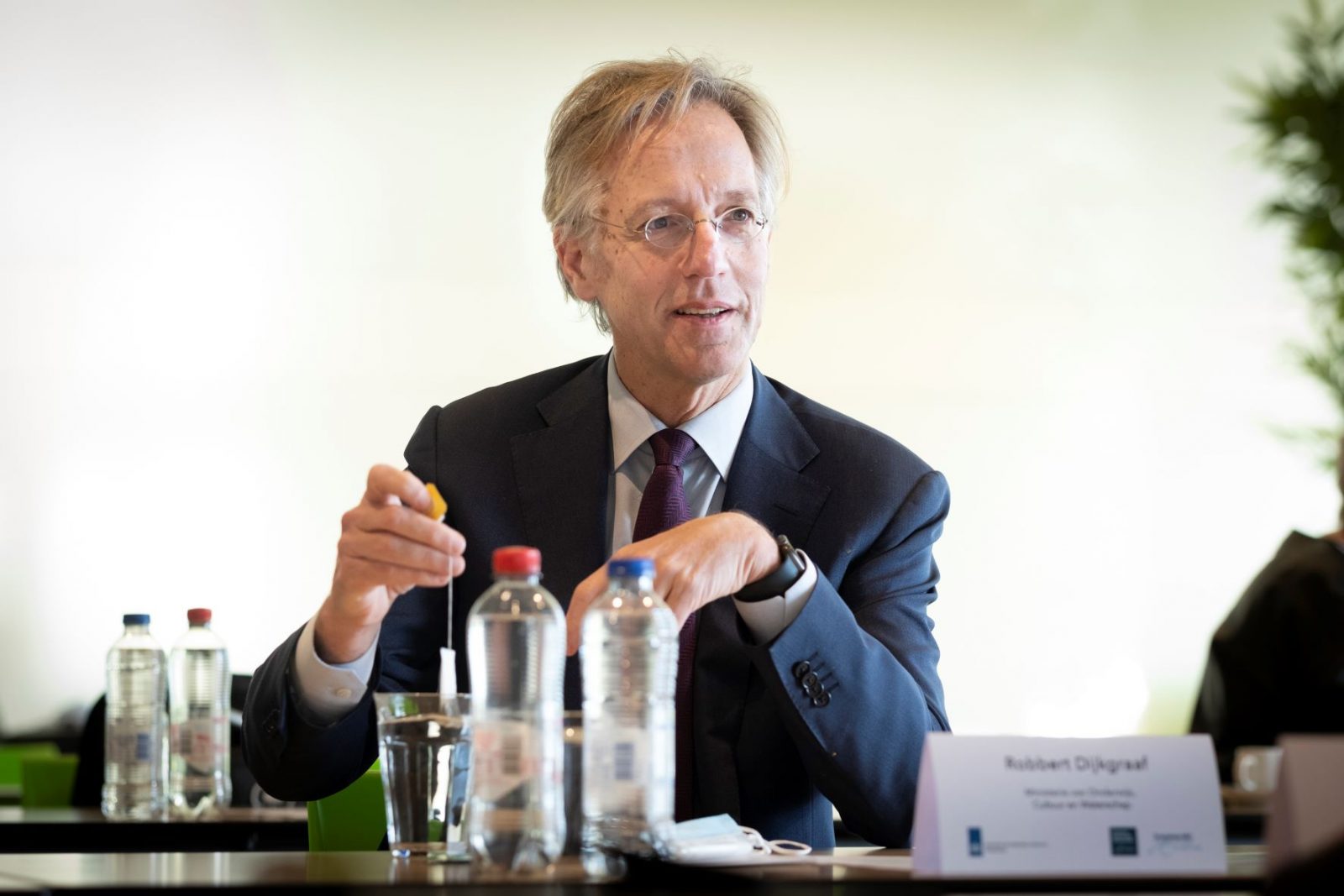
Image by: Levien Willemse
“It’s clear that we have been somewhat naive in past years”, Dijkgraaf said in a debate in the House of Representatives on knowledge security. The debate followed new revelations about Dutch knowledge and expertise that is benefitting the Chinese armed forces.
The minister believes that the institutions share ‘the growing sense of urgency’. But he also had to conclude ‘that we’re simply not there yet’. At the behest of Parliament, he will be tightening the reigns further.
Lees meer
-
Research with countries that are not free: experts sound the alarm
Gepubliceerd op:-
Science
-
Look over their shoulders
In February, the minister ordered university supervisory boards to monitor whether binding agreements about knowledge security were actually being complied with, but he is changing course. He wants to lay down the institutions’ compliance and the monitoring thereof in an administrative agreement.
Dijkgraaf: “Someone has to be looking over their shoulders in this process, and that’s why I want to set up an external audit.” This is not only for the benefit of the universities. “That external viewpoint will certainly also apply to the universities of applied sciences”, the Minister explicitly said.
Lees meer
-

Controversial DNA testing? Address the ethical issues
Gepubliceerd op:-
Science
-
National security
D66 MP Van der Laan wants to prevent knowledge leaks to countries that restrict basic freedom, but also called the debate on the measures ‘a balancing act’ between autonomy and academic freedom, on the one hand, and national security, on the other.
The VVD saw it as less complicated and pressed the Minister to take a stand. Dijkgraaf: “I think that it is really very simple. There can’t be any form of academic freedom or right that is so sacred that it endangers our national security.”
Negative advice
The institutions can already make use of several different aids. For example, they can consult a guideline for international partnerships. But Parliament thinks this is too open-ended.
In addition, since the beginning of this year, institutions and researchers can appeal to a knowledge security helpdesk, which includes involvement of the intelligence services. Over the last four months, 50 notifications have been received, and in a number of cases this has also led to negative advice, the Minister said.
Lees meer
-

New knowledge security service desk: for all your dilemmas
Gepubliceerd op:-
Science
-
Assessment
An ‘assessment framework’ will also be set up. According to Dijkgraaf, this is ‘a far-reaching measure’ which will require third-country nationals who want to access a Dutch knowledge institution in a high-risk field to first pass a test. “We are working hard to find out exactly what these domains are. We have to be very thorough in this”, he said. He hopes to have the framework completed before the end of the year.
This package of measures ‘is probably the last thing’ that Dijkgraaf can ask the institutions and services to do at this time. “We’re going as fast as we can, but not faster because we don’t want to make any mistakes.”
De redactie
Latest news
-
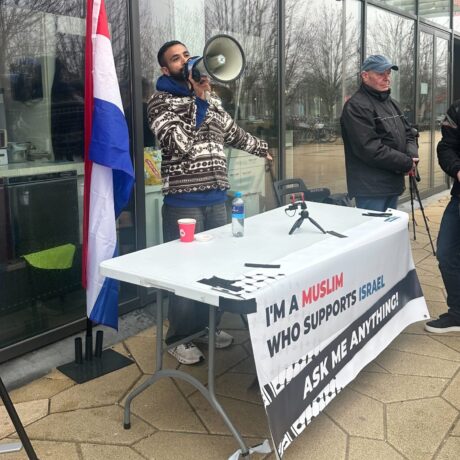
Pro-Israel demonstration on campus: ‘The text ‘I am a Muslim who supports Israel’ is rather provocative’
Gepubliceerd op:-
Campus
-
Protest
-
-

TU Delft passed columnist’s name to police
Gepubliceerd op:-
Protest
-
-

NOS: Crisis of trust and culture of fear in Erasmus MC intensive care unit
Gepubliceerd op:-
Safety
-

Comments
Comments are closed.
Read more in Science
-
Away with the ‘profkip’, says The Young Academy
Gepubliceerd op:-
Science
-
-

Two Vici grants for researchers ESE and ESPhil
Gepubliceerd op:-
Science
-
-

Participants in dialogue on academic freedom want actions to match words
Gepubliceerd op:-
Science
-