Is Erasmus’ skull to be designated world heritage?

In the visitor section of the Erasmus Collection at the Rotterdam City Library, Erasmus’ skull beckons researchers. Erasmus’ head was small, which might seem odd for such a great philosopher.

Image by: Levien Willemse, Pauline Wiersema
In 1929, the remains of the philosopher were dug up in Basel, where he had been buried in 1536. Due to the fact that work was being done in the church, his remains had to be temporarily kept elsewhere. When the skull was examined, it was found to contain traces of syphilis, a sexually transmitted disease. This finding was not in line with our image of Rotterdam’s own hero, so it was concluded that the head couldn’t be his. After that, the skull disappeared. No one is quite sure these days how and why this happened.
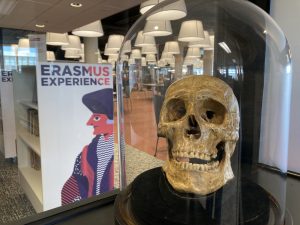
Image by: Rotterdam Library
A plaster cast was made of the lost skull, which is now displayed in the Rotterdam City Library as part of the Erasmus Collection, which has been nominated for inclusion in UNESCO’s World Heritage list. The Rotterdam City Library holds the most significant Erasmus collection in the world: more than three thousand old books by and about the scholar, written before 1900. The collection includes very rare copies and special documents, such as letters written by Erasmus himself, dozens of first editions and illustrated copies of In Praise of Folly. This collection is kept in a climate-controlled depot. The historical collection was established in 1604, and new items are added to it every year.
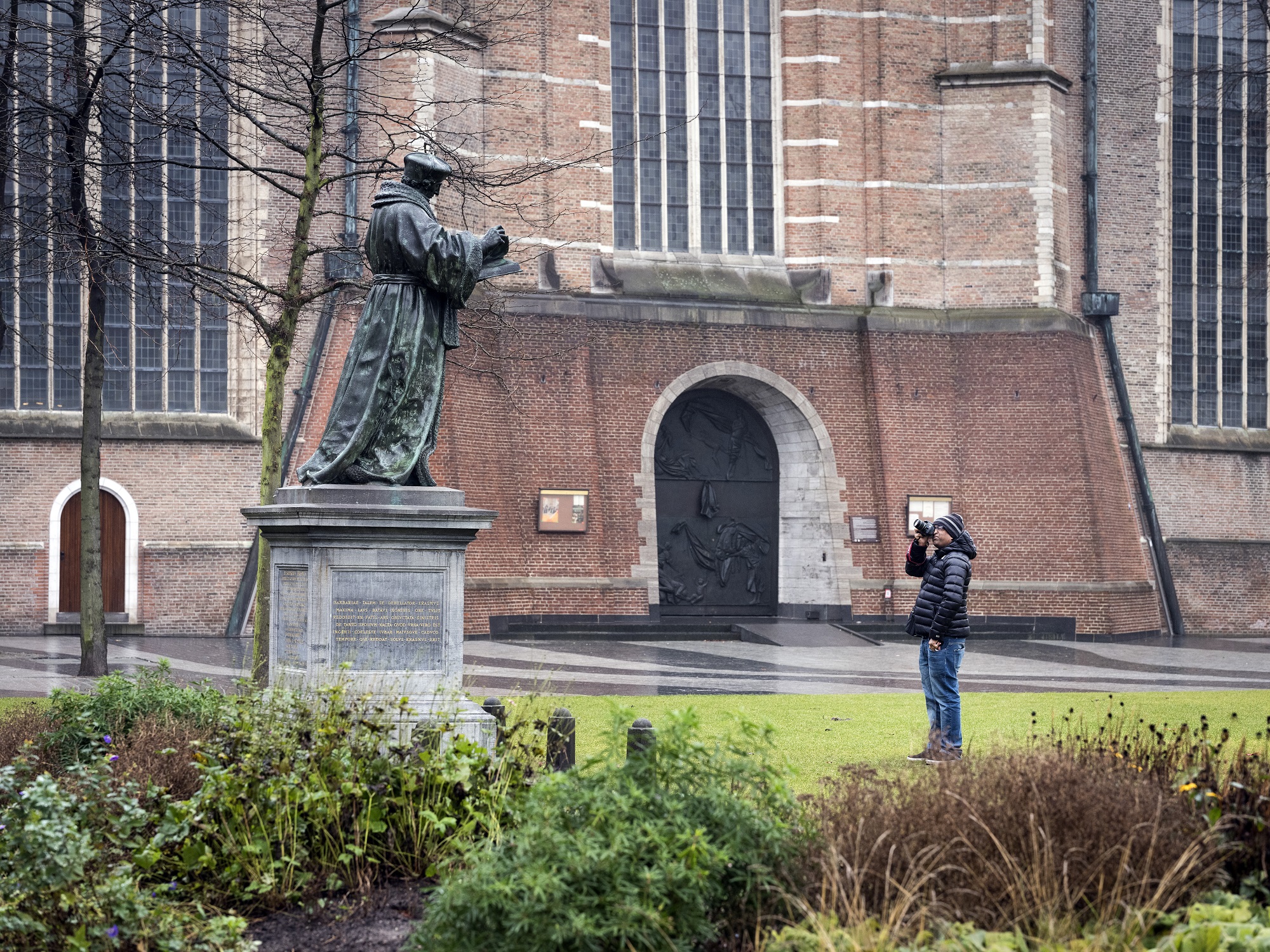
World heritage in the heart of Rotterdam – who could have thought it? A treasure trove of knowledge, a hidden gem which deserves to be seen. The people behind the Erasmus Collection closely collaborate with the newly established Erasmus of Rotterdam Research Centre, where I, along with several colleagues, conduct research on Erasmus’ life and oeuvre and on Erasmian values. We conduct research on the processes whereby the city of Rotterdam and Rotterdam institutions such as the university have appropriated Erasmus. Sanne Steen recently told EM about a failed attempt to get the famous statue of Erasmus that sits in front of the Laurenskerk Church transferred to the Woudestein Campus.
Read more
-
University tried to get famous Erasmus statue to campus
Gepubliceerd op:-
Campus
-
The historical collection, too, exemplifies how the city of Rotterdam has sought to appropriate the great philosopher. In addition to many books, the collection comprises all sorts of objects, including the skull – well, a plaster cast of the skull, anyway. The abnormalities that can be observed in the skull are said to point to syphilis, but the same abnormalities could also be attributed to the plague, to which many more people fell victim during Erasmus’ life and times. In 1974 a coin showing Erasmus was found, which demonstrated that the skull was his, after all.
If you’d like to see the collection for yourself, and possibly consult it for research purposes, you can apply for permission to do so.
Read more
-

The statue of Erasmus will never turn the page
Gepubliceerd op:-
Column
-
De redactie
Latest news
-

Letschert gives nothing away in first parliamentary debate
Gepubliceerd op:-
Education
-
Politics
-
-

Away with the ‘profkip’, says The Young Academy
Gepubliceerd op:-
Science
-
-

House of Representatives wants basic grant for university master after HBO
Gepubliceerd op:-
Money
-
Politics
-


Comments
Comments are closed.
Read more in Column
-

Minister Letschert and the academic tower
Gepubliceerd op:-
Column
-
-

Spinach seed wounds
Gepubliceerd op:-
Column
-
-

Leftover dame blanche
Gepubliceerd op:-
Column
-