Ad

‘EUR gets it wrong with vegan moralism’
Ellen van Schoten from the Executive Board wants to see Erasmus University fully vegan in 2030. Only in 2030, so that everyone has time to get used to the idea. In a response to this proposal, Ginie Servant-Miklos and Yogi Hendlin say there is no time to get used to the idea. Veganism is needed NOW to mitigate the unfolding climate crisis.
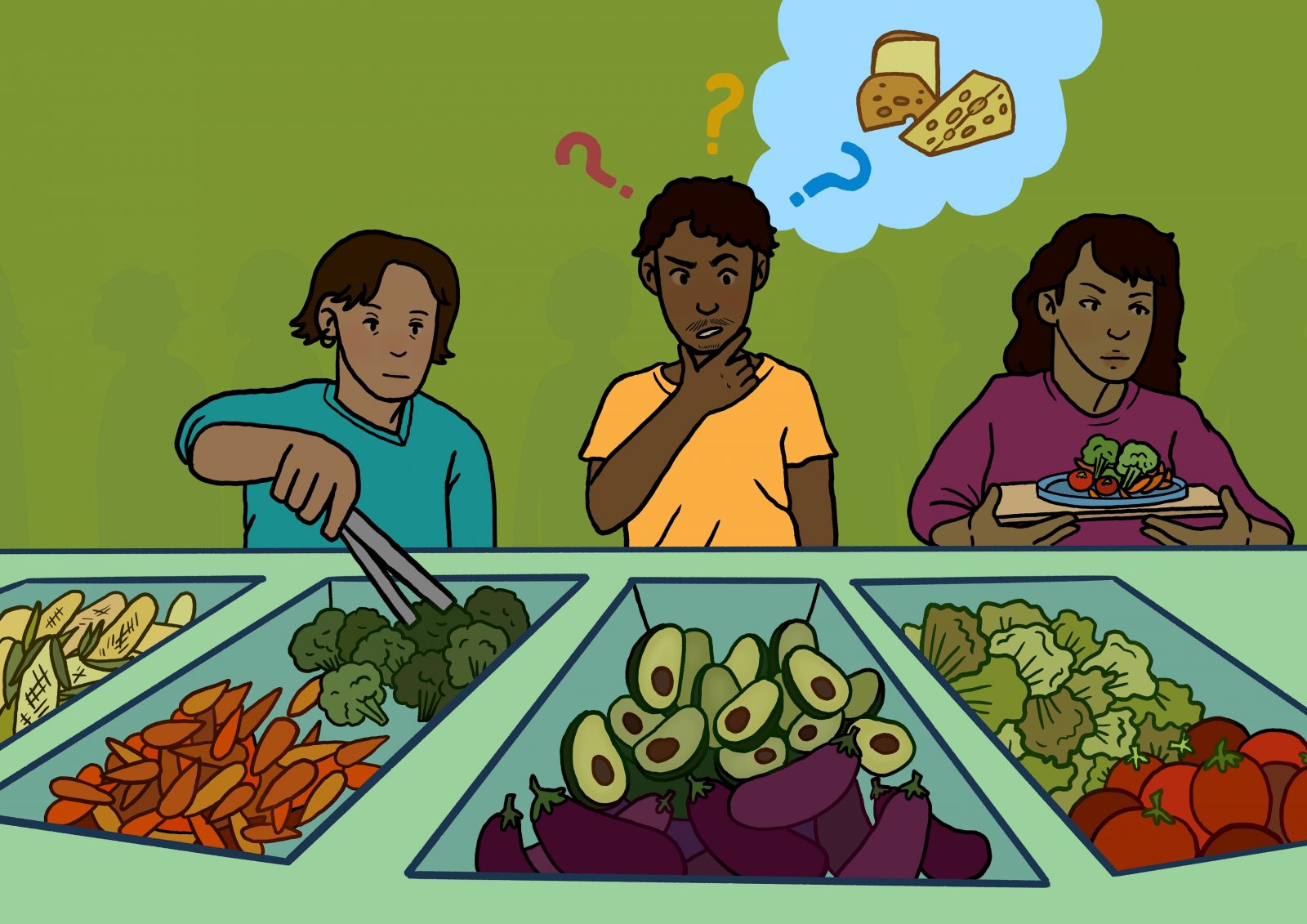
Image by: Migle Alonderyte
More about veganism on campus
- University board wants campus to be completely vegan by 2030
- ‘A vegan campus by 2030 is too little, too late’
- Fully vegan campus ‘consistent with the university’s values’
So there I am with my cheese sandwich, a criminal helping to destroy the planet. At least, that’s the message. And that really gets my goat. Because what really annoys me is the moralism behind these plans. A member of the Executive Board is essentially asking staff and students to become vegan. Really, is it immoral to eat a cheese sandwich, because it contributes to global warming? Aren’t we allowed to make our own decisions? Are students, staff and professors all infants who can’t form their own opinion about this?
Ellen van Schoten notes that this is an important subject among students, and that she’s received petitions. A quick google tells us that according to the Netherlands Association for Veganism, around 1 percent of the Dutch population is vegan. That percentage may well be higher on campus, but most people aren’t planning to become vegan. Are we going to base the food offered on campus on the opinion of a few percent who are firmly convinced of the moral correctness of their position, excluding options that are considered acceptable by the vast majority?
Another reason why I can’t see this policy as anything other than repulsive moralism is the lack of impact on global warming. The motivation for the proposed policy is that 8.5 percent of all the emissions produced by the university are caused by the catering. Wouldn’t it be more logical to look at the other 91.5 percent first? Perhaps there are areas where emissions can be much more effectively reduced, such as heating, energy generation and transport?

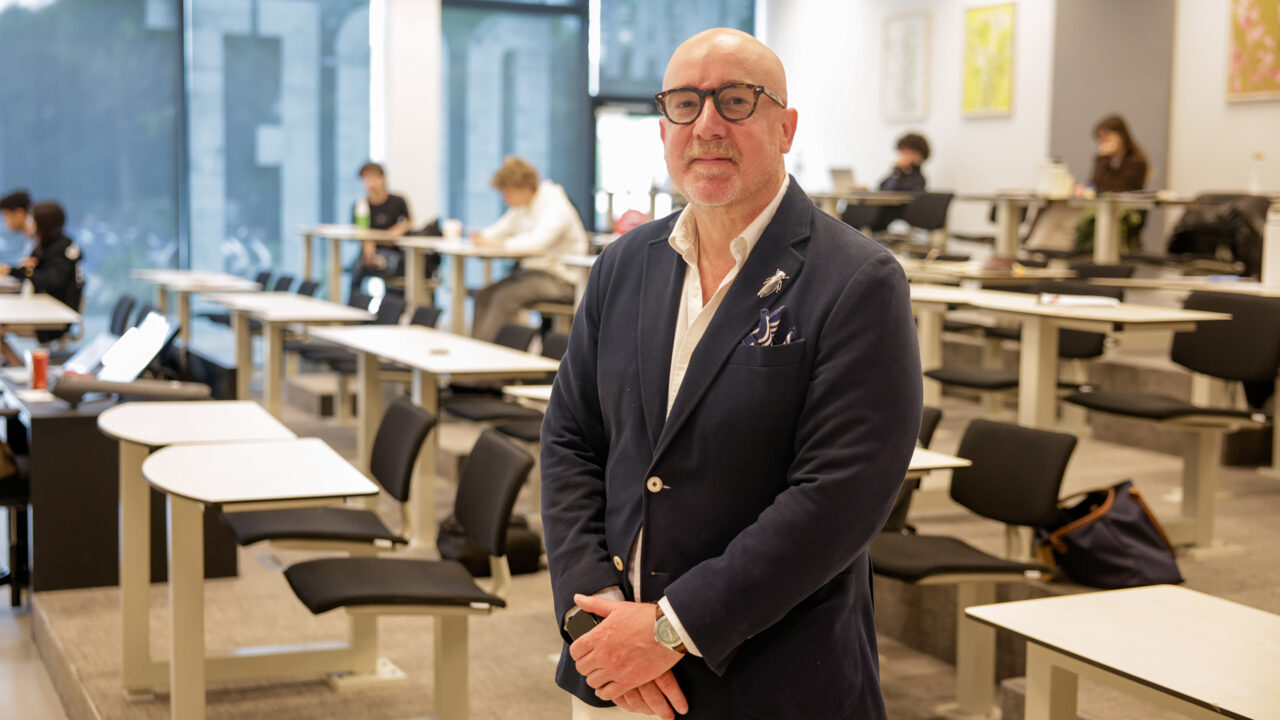
Arjan Non.
Image by: Own photo
Now you can obviously say that those other 91.5 percent will be addressed in time, and that we also need to look critically at the catering. But because many students and staff will seek options available outside a vegan campus, the impact on carbon emissions will be negligible. Furthermore, the climate benefits of a vegan diet over a vegetarian diet are minimal, while the options are considerably limited.
Perhaps the climate benefits will be greater if the food offered is vegetarian (perhaps supplemented with less climate-aggravating meat options, such as fish and chicken), because people will then be less inclined to turn to options off campus. The traditional cheese sarnie that I’m sure Erasmus sometimes enjoyed really isn’t the main cause of global warming. So why choose vegan?
‘Maybe a realistic goal if everyone has a professor’s salary, but not everyone has 40,000 to spend on an electric car’
A third point of irritation is that a social problem is being turned into an individual problem. With the logical question: where will it end? The alarmist contribution of Servant-Miklos and Yogi Hendlin is illustrative. In three years’ time, they want to ban cars running on fossil fuel from parking on campus. Maybe a realistic goal if everyone has a professor’s salary, but not everyone has 40,000 to spend on an electric car.
And because electric cars also use a lot of energy and resources, the logical next step can only be to ban cars from the campus. Is it difficult to get home by public transport? Bad luck, you’ll need to move house. And couldn’t we work from home more often? That would mean fewer buildings needing to be heated. And while we’re at it: coffee is worse for the environment than tea, so let’s get rid of the coffee maker. And a chocolate letter as Saint Nicholas gift? I obviously don’t need to tell you that cocoa creates huge carbon emissions.
By considering global warming as a behavioural problem, we never do enough, and the university will judge people by the criteria that it establishes. The new rules for taking the train for business travel are another example of this. These rules pass the problem on to the individual academic, because taking the train is more expensive than flying. This essentially reduces the available travel budget for conferences. Requiring green behaviour without considering the consequences doesn’t help increase support.
Finally, a word about the impact. Although I think that the environmental benefits of making buildings more sustainable is greater than that of a vegan campus, I understand that individual behavioural change is desirable. I limit my meat consumption to dinner on around two days a week. I used to eat meat for lunch and dinner every day. What changed my behaviour were good books like the one by Simon Fairlie and simply listening to vegetarian friends and acquaintances. Who don’t judge but explain. I feel that such an approach is much more effective and better reflects Erasmian values than enforcing veganism and pointing the finger, regardless of the actual impact and the opinion of students and staff.
Read more
-

University board wants campus to be completely vegan by 2030
Gepubliceerd op:-
Sustainability
-
De redactie
Latest news
-
Porn in the Pavilion: vanilla sex is the favourite among viewers
Gepubliceerd op:-
Lecture
-
Science
-
-
Education pioneer Etienne Augé: ‘Technology should give us more time for people’
Gepubliceerd op:-
Education
-
-

Taking a quick peek inside the revamped Tinbergen
Gepubliceerd op:-
Campus
-

Comments
1 reactie
Comments are closed.
Ad
Read more in Opinion
-

Sheer nerve
Gepubliceerd op:-
Editorial
-
-

Tea, theory and a healthy dose of procrastination
Gepubliceerd op:-
Column
-
-
The drama of Jason Arday
Gepubliceerd op:-
Column
-


Yogi Hendlin op 7 April 2022 om 22:31
Interesting that labor economist has so little knowledge about social norm change. The world-may-burn attitude is so past century.