One in five EUR-PhD students were offered a ‘dubious contract’ last year

Of the 58 vacancies for PhD students offered by the Erasmus University last year, eleven offered a ‘dubious contract’: shorter than four years or a part-time job. This is evident from the employment conditions monitor of the Netherlands PhD Network.

Image by: Ronald van den Heerik
More about PhD students
- Diversity Officer asks Minister to grant PhD students an additional year to complete their theses
- PhD students in dire straits demand university measures
- PhD students feeling the squeeze: ‘It’s quite solitary as it is – and Covid has only made it worse’
There has still been no drop in the proportion of PhD students being offered a ‘dubious contract’, as the result of which they’ll have to complete their PhD in less time than the four years full-time that it actually takes.
PhD positions at Dutch universities are supposed to be full-time for four years, as agreed in the collective labour agreement of July 2018. The proportion of PhD student contracts not meeting this requirement has fluctuated between 10 and 15 percent in recent years.
Improvement
Things were no different in 2019, according to the new monitor of terms and conditions of employment, as published by PNN. More than twelve percent of PhD students were offered a ‘dubious contract’ last year: they have to settle for a contract of less than four years or a part-time appointment.
But there are large differences between universities, according to PNN. At TU Eindhoven, for example, only 1.5 percent of the contracts offered are of a dubious nature. There is room for improvement at the Vrije Universiteit Amsterdam (20.3 percent), the University of Groningen (20.2 percent) and the Erasmus University Rotterdam (19 percent).
Vague vacancies
Moreover, the vast majority of vacancy announcements for PhD positions are still far too vague when it comes to terms of employment, according to the PNN monitor. The network examined 1872 vacancy texts. Not all of them mention the duration of the appointment, the salary or whether the PhD student is expected to teach.
Some universities score better than others on this criterion too. At TU Delft, more than 98 percent of the vacancy texts are sufficiently transparent. At the other end of the spectrum are Radboud University Nijmegen, Vrije Universiteit Amsterdam and Wageningen University & Research, where no more than 15 percent of vacancy texts provide sufficient information.
Rankings
This is the first PNN monitor to reveal differences between institutions. “Universities love rankings,” says network chairperson Lucille Mattijssen. “When they score at or near the top, they shout it from the rooftops. But perhaps more importantly: no one wants to be ranked at the bottom.”
The problem with dubious contracts was certainly present in years past, Mattijssen explains. “But no one really seemed to care. Now you can plainly see which universities are playing by the rules. Hopefully the others will take notice and mend their ways.”
One in five vacancies for PhD students at Erasmus University refers to a ‘dubious contract’. According to a university spokesperson, the PNN report offers points of departure for improvement. “It is very good that the PNN is looking at these vacancies. This research encourages us to check the contracts. We’re going to see how we can improve them.”
De redactie
-
 Tim Ficheroux
Desk editor
Latest news
-

Letschert gives nothing away in first parliamentary debate
Gepubliceerd op:-
Education
-
Politics
-
-
Away with the ‘profkip’, says The Young Academy
Gepubliceerd op:-
Science
-
-

House of Representatives wants basic grant for university master after HBO
Gepubliceerd op:-
Money
-
Politics
-


Comments
Comments are closed.
Read more in Staff
-
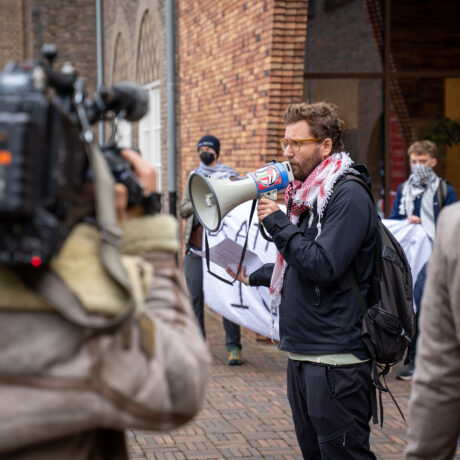
Anti-Israeli Pettit not allowed to work at Brussels university
Gepubliceerd op:-
Staff
-
-

Pay rise for interns, clinical rotations and staff at UMCs
Gepubliceerd op:-
Staff
-
-
Pension fund ABP dumped US government bonds
Gepubliceerd op:-
Staff
-