Tens of millions of euros allocated to coronavirus research


The Netherlands has allocated several tens of millions of euros to urgent coronavirus research. On top of that, universities are establishing their own crowd-funding platforms.

Image by: Rob van Esch
Not much is known about the new coronavirus. The number of infections is still rising, but medications or vaccines are non-existent. While we wait for them to be developed, many people’s lives are being thrown into turmoil.
For this reason, Hugo de Jonge, the Minister for Health, wrote that the Ministry of Health and ZonMW, an organisation that funds medical research, will jointly make €20 million available for research on urgent coronavirus-related questions. Such as: how are children infected? Are there any existing vaccines that might be able to be used?
Questions to be answered
For their part, the Ministry of Education, Culture and Science and research funder NWO are also allocating funds to researchers. Together they have earmarked €15 million for research purposes, first to allow scientists to conduct urgent research on how to stop the pandemic, and secondly, to answer certain sociological questions. How have the Dutch people adapted their behaviour to the new virus? And what impact does social isolation have on people?
Organisations that conduct applied research (TO2) are also contributing to the scientific effort. TNO will allocate up to €2 million to solve coronavirus-related problems, Wageningen Research is performing coronavirus testing, while Deltares is examining if and how soil and water contribute to the survival and spread of the virus.
Not fast enough
However, certain researchers cannot wait for their government funding to arrive. For instance, the Leiden Academic Medical Centre (LUMC) is already working very hard on potential virus inhibitors, medications and vaccines. The tests performed at the Centre are very expensive, and LUMC doesn’t have any designated funds that can be allocated to said tests.
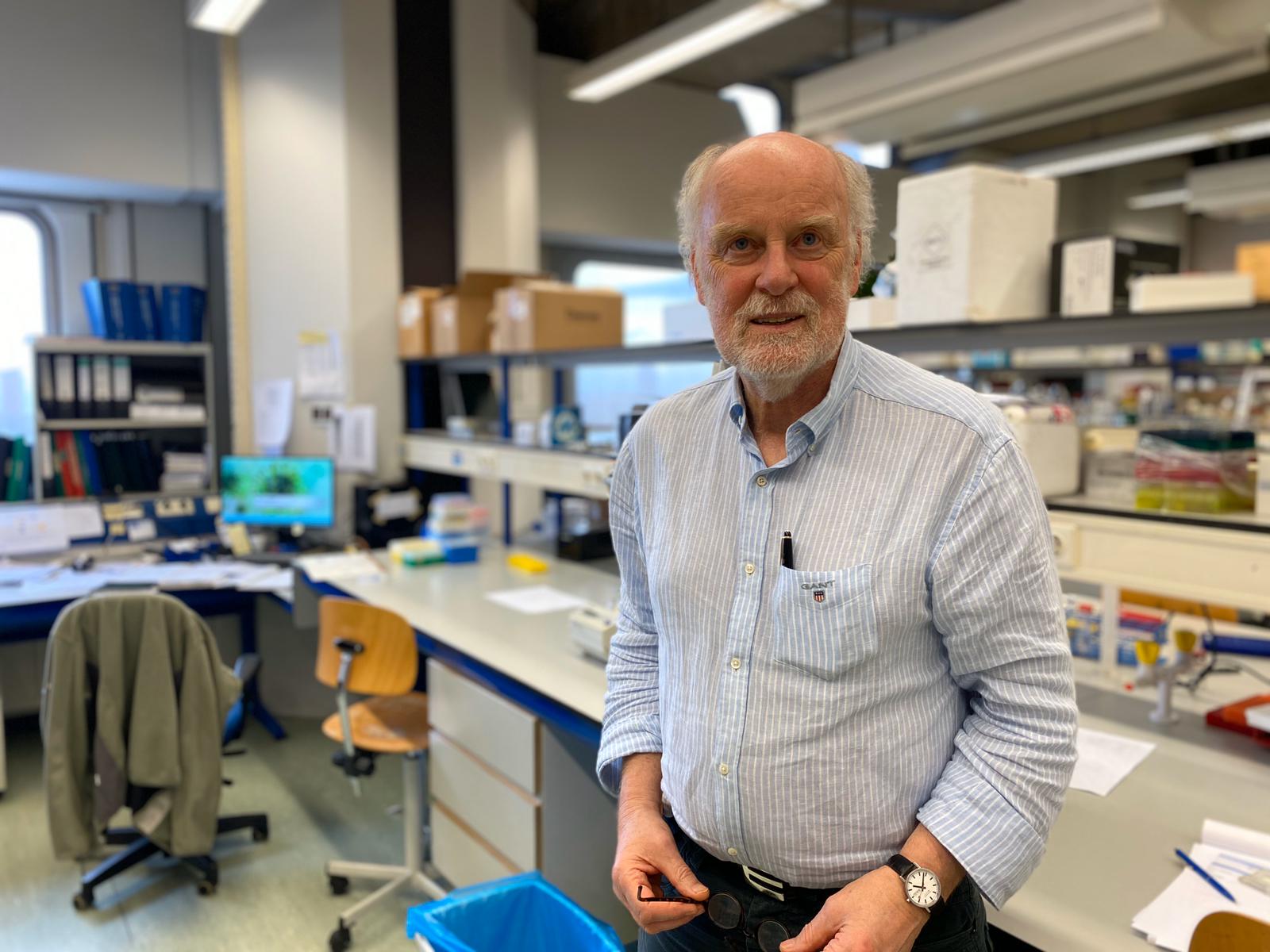
“We’re witnessing an outbreak of a deadly virus,” says Professor of Molecular Virology Eric Snijder, “But I’m spending many hours a day writing grant applications.”
This being the case, Leiden University has established a crowd-funding platform that will hopefully help it quickly to obtain €2 million for its coronavirus research.
#wakeuptocorona
In order to keep the pressure on, the university came up with a social media challenge. Donors are asked to share a picture of themselves in which they wear their pyjamas and create a heart shape with their hands. They are also asked to use the hashtag #wakeuptocorona.
Leiden University Rector Carel Stolker expressed his support for the project in a video shot at his own home, in which he called on people to donate. “It’s incredibly important, but I don’t need to tell you that.” So far LUMC has raised nearly €160,000.
Antibodies
Erasmus MC, too, has established a crowd-funding platform. The funds raised through this platform will be used towards projects such as research on antibodies in blood plasma. People who have recovered from the coronavirus often have antibodies left in their blood. Such antibodies may be able to be used in medications administered to patients who have been hospitalised for coronavirus-related symptoms.
The Erasmus MC Foundation, the academic medical centre’s support fund, which mainly raises money for scientific research, hopes to raise €250,000 for coronavirus research. So far it has raised over €63,000.
Lees meer
-
Unique discovery in Erasmus MC: antibody against corona
Gepubliceerd op:-
Campus
-
Europe
Other European countries are investing in coronavirus research as well. For instance, according to the Cabinet, Germany has allocated €150 million to research projects carried out by universities with faculties of medicine. France (50 million), Spain (30 million), Austria (23 million) and Denmark (6.7 million) have also earmarked significant amounts for research purposes. The United Kingdom has allocated £85 million.
De redactie
-
 Tim Ficheroux
Desk editor
Latest news
-
TU Delft passed columnist’s name to police
Gepubliceerd op:-
Protest
-
-

NOS: Crisis of trust and culture of fear in Erasmus MC intensive care unit
Gepubliceerd op:-
Safety
-
-

Psychological support and financial assistance for Iranian students in the Netherlands
Gepubliceerd op:-
Student life
-

Comments
Comments are closed.
Read more in Science
-
Away with the ‘profkip’, says The Young Academy
Gepubliceerd op:-
Science
-
-

Two Vici grants for researchers ESE and ESPhil
Gepubliceerd op:-
Science
-
-

Participants in dialogue on academic freedom want actions to match words
Gepubliceerd op:-
Science
-