New bee colony and campus garden almost ready for arrival of honey bees

Students involved in the ‘Edible EUR’ student initiative will be getting to work cultivating edible plants in the garden. They’ve had to wait a long time for their ‘little farm’. The plan has been in place for almost two years, but it was only accepted at the end of last year. “Before this we had a temporary garden next to the Sport Centre”, says Bob van der Haar, founder of Edible EUR. He’s extremely enthusiastic when it comes to ‘their’ future edible garden. “Sustainable food production is what we’re all about and fortunately, the university sees how important that is.”
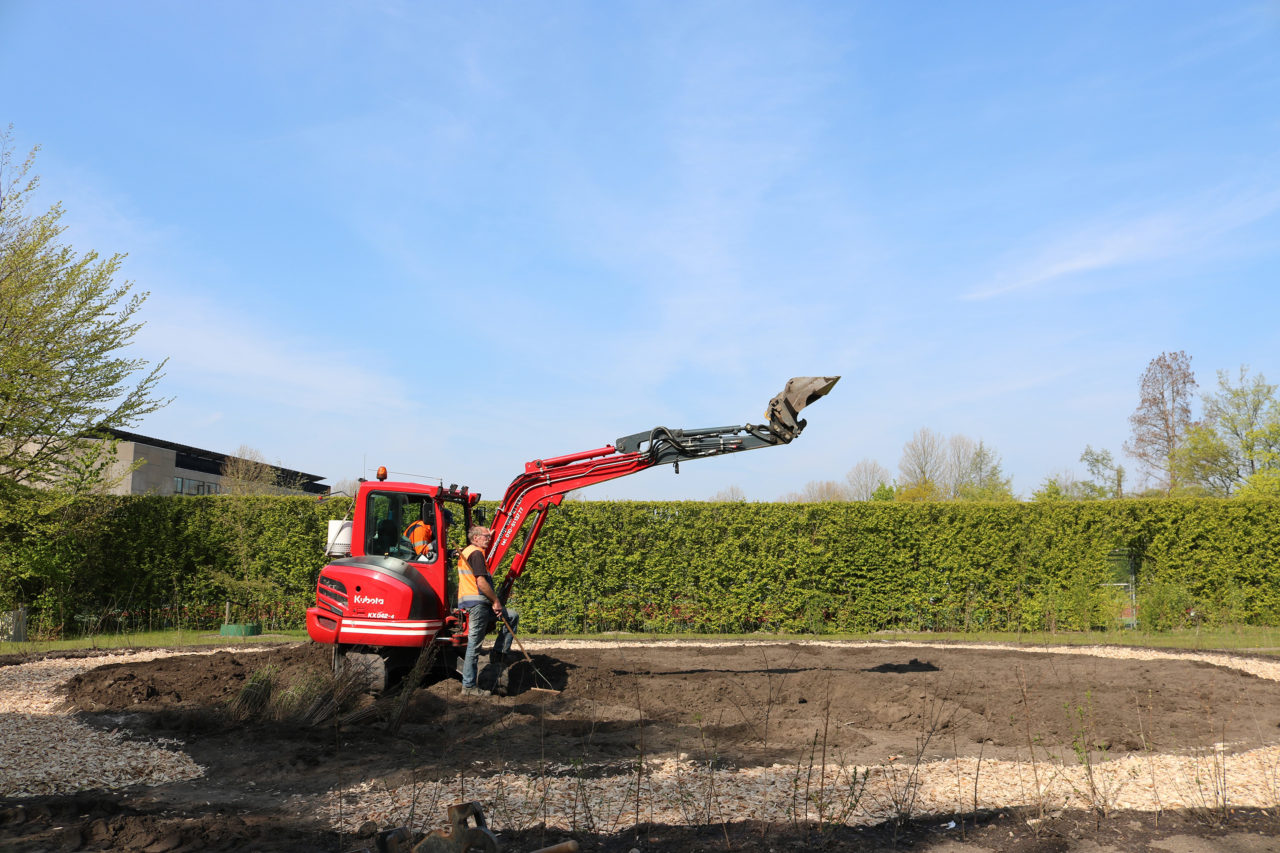
This same garden will also feature an bee yard. The bees should be able to occupy the three by four meter habitat when it’s ready by the end of this week. “We’re going to establish biodynamic beekeeping here”, explains Ter Haar. “That means our role as beekeepers isn’t about harvesting the honey, it’s purely for the continued survival of the bees themselves.”
Biodiversity
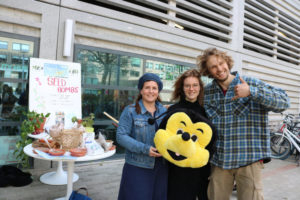
‘Bees are indispensable’ is Rinske Kreukniet’s motto. She is a Rotterdam-based beekeeper currently working with Edible EUR and the university. In this project, Kreukniet provides advice on practically everything, ranging from the design to how the bee yard should be positioned. “We’re also drafting guidelines for beekeeping.”
In addition to the bee yard, the garden will also feature bee ‘hotels’. These are areas for ‘visiting’ wild bees or insects. “All winged insects, such as butterflies and flies, are also an integral part of ecological health”, explains Ter Haar.
Waiting for the bees
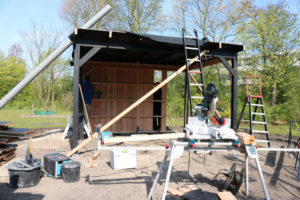
The bee yard will be ready for use this week, but the arrival of the bees depends on the season. “It’s been cold for the past little while, so I expect the first swarms will arrive in about four weeks”, says Kreukniet. “You can’t simply move an existing bee colony to another location, so we have to wait until the next queen is born.” When the new queen is born, the old queen leaves and takes around thirty-thousand bees with her. “When they start looking for a new home and swarm on a branch, for example, I can then ‘collect’ the bees using a beehive and relocate them to the new bee yard.”
De redactie
-
 Feba Sukmana
Editor
Latest news
-

Letschert gives nothing away in first parliamentary debate
Gepubliceerd op:-
Education
-
Politics
-
-
Away with the ‘profkip’, says The Young Academy
Gepubliceerd op:-
Science
-
-

House of Representatives wants basic grant for university master after HBO
Gepubliceerd op:-
Money
-
Politics
-


Comments
Comments are closed.
Read more in Campus
-
Letschert gives nothing away in first parliamentary debate
Gepubliceerd op:-
Education
-
Politics
-
-
House of Representatives wants basic grant for university master after HBO
Gepubliceerd op:-
Money
-
Politics
-
-

Company takes a huge chunk of the student finance of at least 350 internationals
Gepubliceerd op:-
Internationalisation
-