Ad

800 scholars: ‘Alarmed by Baudet’
800 academics have signed a letter that states that they are ‘alarmed’ by the recent activities and remarks of political party Forum voor Democratie (FvD) and its party leader Thierry Baudet. 68 Erasmus University scholars also signed the letter.
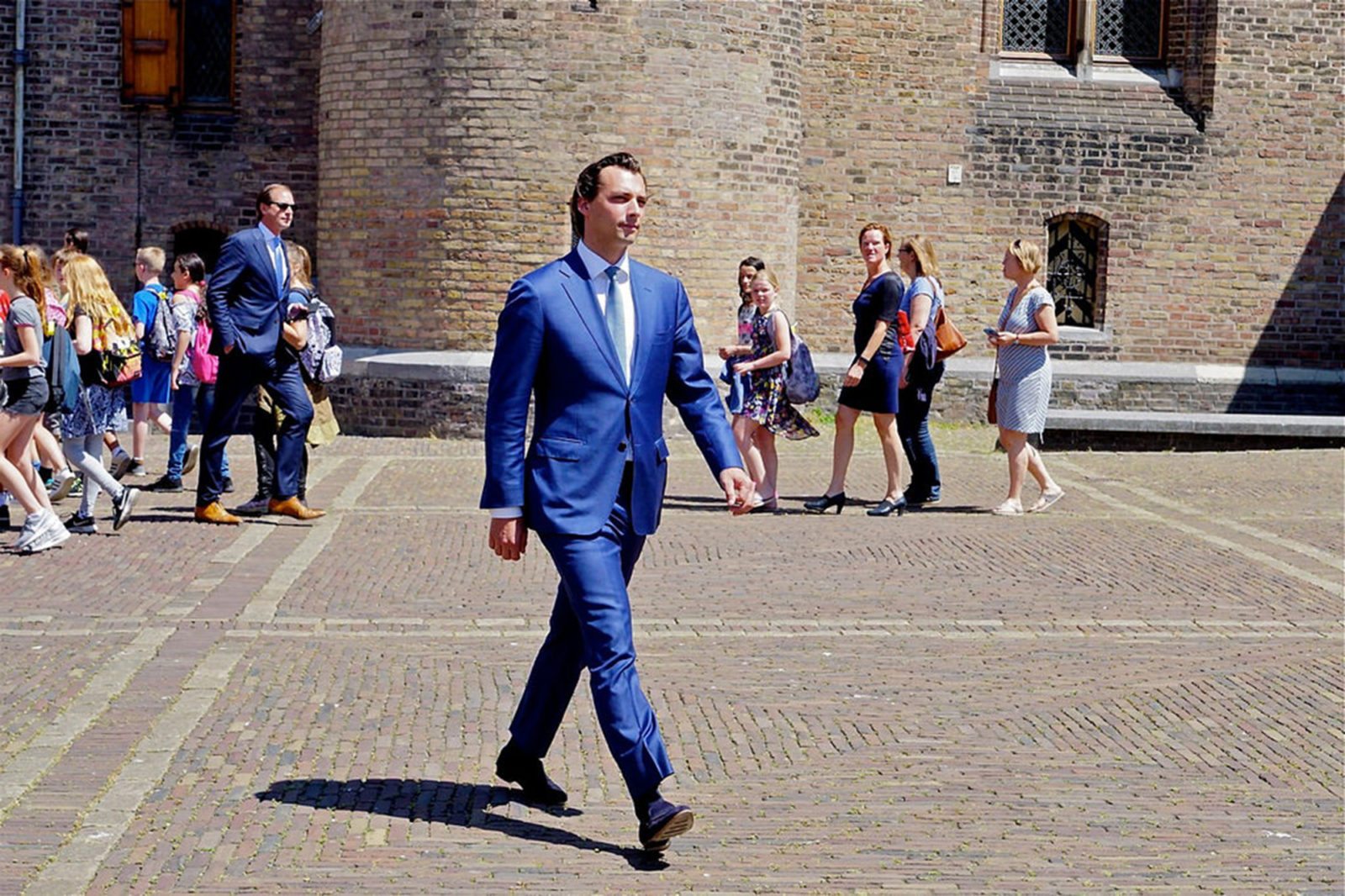
Image by: Flickr/Roel Wijnants
- Baudet: ‘We are being undermined by our universities’
- Universities and KNAW feel no need to counter Baudet’s criticism
- Executive Board responds to Baudet: ‘Academic freedom always comes first’
In the open letter, 800 scholars of Dutch universities respond to the victory speech that was given by FvD party leader Thierry Baudet after the provincial council elections of last Tuesday, and to the ‘indoctrination hotline for schools and universities’ that FvD recently set up.
Conspiratorial atmosphere
“In his post-election speech last week, Tuesday, Baudet claimed that ‘our boreal world’ was being ‘destroyed’ and ‘undermined’ by ‘our universities, our journalists, and those who receive our arts-subsidies and design our buildings’”, wrote the scholars in their open letter. “Such statements are meant to conjure up a conspiratorial atmosphere in which academics, journalists, artists and architects are not only seen as suspect. They are deemed guilty of the ‘destruction’ of our society, and portrayed as the enemy of the people.”
Alternative history
About the party’s ‘indoctrination hotline’ they write: “Given the strong interest Baudet expresses in dismissing climate science and promoting history based on national pride, it is clear that this initiative is not genuinely interested in reducing bias in academic institutions. Rather, it is interested in selectively discounting knowledge that does not fit its political and ideological aims.” They also point to a recent study by KNAW, which concluded that there is no danger of self-censorship at universities because of a lack of diversity in political perspectives.
Populist right
Furthermore, they refer to the rise of the populist right elsewhere in the world: Bolsonaro, Trump, Orban and Erdogan. “We witness how watchlists of ‘suspect’ academics, public discrediting of scientific knowledge, and political attacks on institutional funding for education and research are used as methods to close down spaces for critical debate, further marginalize minorities and women, and consolidate the power of authoritarian parties.”
The scholars want to convey a clear message: “Our society will not tolerate any political infringement on the freedom to conduct critical academic research and education.”
De redactie
-
 Tim Ficheroux
Desk editor
Latest news
-

Ten years of the GDPR: access to your personal data is still not routine at EUR
Gepubliceerd op:-
Privacy
-
-
Why Philip Hans Franses had students look in wallets at a DIY store
Gepubliceerd op:-
Eureka!
-
-
RTL: More than half of master’s theses contain AI-generated text
Gepubliceerd op:-
Artificial Intelligence
-
Education
-

Comments
Comments are closed.
Ad
Read more in Politics
-

Translator: Suspended Palestinian student did not say ‘this is me’
Gepubliceerd op:-
Politics
-
-
Knowledge institutions warn against the Netherlands’ frugal approach in Europe
Gepubliceerd op:-
Internationalisation
-
Politics
-
-
Minister sees ‘major problem’ looming: will there be too few international students soon?
Gepubliceerd op:-
Internationalisation
-
Politics
-