Share of female PhD candidates is decreasing in the Netherlands, but not in Rotterdam

The network representing PhD candidates in the Netherlands, Promovendi Netwerk Nederland (PNN), has expressed its disappointment after the Minister for Education, Ingrid van Engelshoven, refused to investigate why women are awarded fewer PhDs than men. The Minister will not consider a further analysis until the 2018 figures prove that this trend looks set to continue. PNN feels it will be too late then.
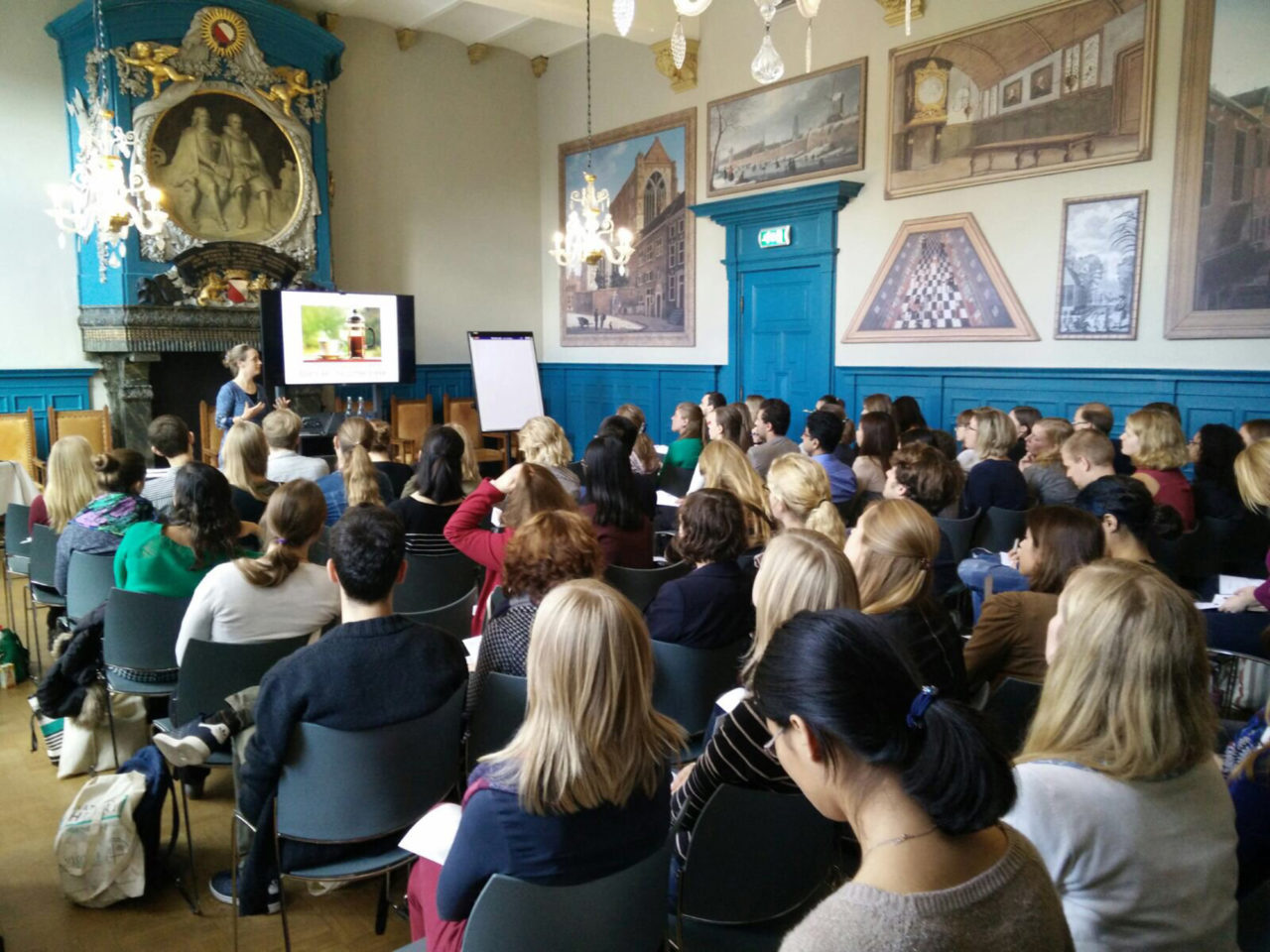
Image by: Promovendi Netwerk Nederland
Women in Science
- ‘EUR will not achieve target regarding female professors’
- Outgoing Diversity Officer: ‘The university often isn’t a safe place to work at’
- #MeTooAcademia: ‘Sexual intimidation occurs at universities, as well’
Even though the percentage of women at all levels of the academic career ladder is rising, the opposite is true for PhD students, the Women Professors’ Monitor recently showed. Between 2011 and 2017, the percentage of female PhD students dropped by nearly two percent points, from 44.2% to 42.7%. It should be noted that this trend cannot be observed at all Dutch universities. For instance, at Erasmus University, the share of female PhD candidates actually rose from 46.9% to 53.7%.
'Worrisome'
The Dutch Labour Party, PvdA, raised some questions in the Dutch Lower House in which it expressed its belief that this is an alarming trend that calls for further analysis. The Minister, Ingrid van Engelshoven, emphasised in her reply to the questions that the number of women writing PhD dissertations is still rising in absolute numbers.
However, she did concede in her reply that if the percentage of female PhD students continues to drop, this will indeed constitute a worrisome trend. “The road to the pinnacle of academia must be paved evenly at all levels. If not, we will not achieve a proportionate distribution of male and female academics.” She wishes to use the 2018 figures to determine whether the situation merits a further investigation.
Bad sign
“She is wasting valuable time,” says Anne de Vries, the President of PNN. She believes there is ample reason to start looking into the causes of the declining number of female PhD candidates at once. “The percentage of women has been dropping for six consecutive years now. If you seek to achieve equal gender representation, that is not a good sign.”
De Vries admits there are many possible reasons for the decrease, and not all of them are necessarily worrisome. “Perhaps we now have more foreign PhD students, and perhaps there are more men among these foreign students than women. If that is the case, it says more about the academic culture of certain other countries than about the Netherlands. Or perhaps more money was allocated to the recruitment of PhD students in STEM subjects, which tend to attract more men.”
However, if the decrease in the percentage of female PhD students was caused by other factors, that would constitute an alarming trend. For instance, it would be worrisome if being a scientist has become less attractive to women. “Or worse, if women are less likely than men to be accepted as a PhD student. That is a cause that must be ruled out, and right now, we can’t do that.”
De redactie
Latest news
-

Student with dyscalculia denied dispensation for statistics exams
Gepubliceerd op:-
Education
-
-

In Memoriam emeritus professor Hans Gortemaker
Gepubliceerd op:-
In memoriam
-
-

Number of suicides among young people increases
Gepubliceerd op:-
Mental health
-



Comments
Comments are closed.
Read more in diversity
-
Men more likely than women to hold prestigious positions at universities
Gepubliceerd op:-
Diversity
-
-

How Tante Sjaan fought for the position of women at the EUR fifty years ago
Gepubliceerd op:-
Diversity
-
-

Harvard changes name of diversity department
Gepubliceerd op:-
Diversity
-