Ad

What Desiderius Erasmus means to students – and to Europe today
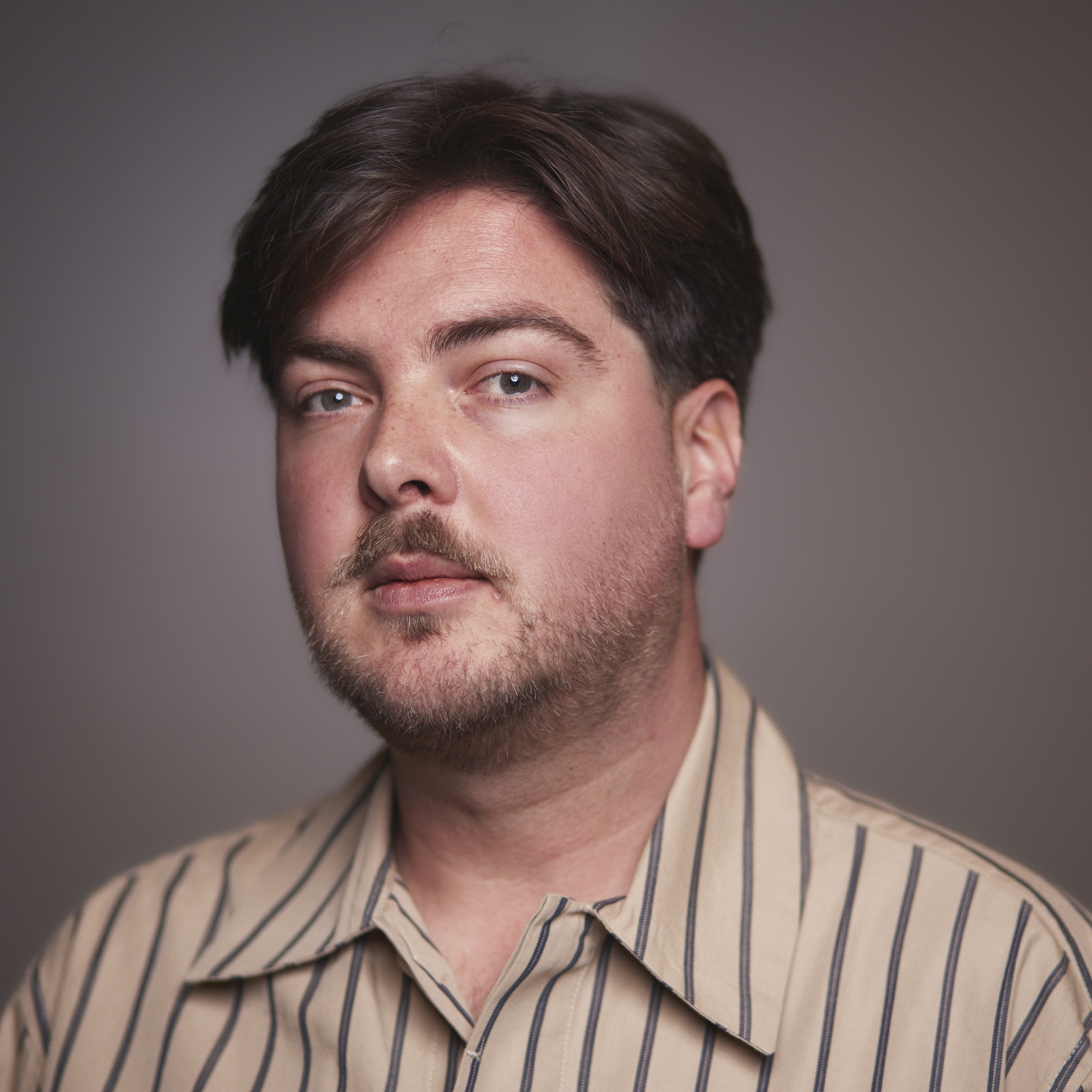
Former student Job Zomerplaag followed the trail that Rotterdam philosopher Desiderius Erasmus has left throughout Europe, 550 years after Erasmus’ birth. He wrote down the results of this quest for Erasmus Magazine, and he’ll be telling us all about his experiences during the journey in a talk entitled Met Erasmus in mijn rugzak (‘Travelling with Erasmus in my rucksack’) in the Central Library this Saturday.
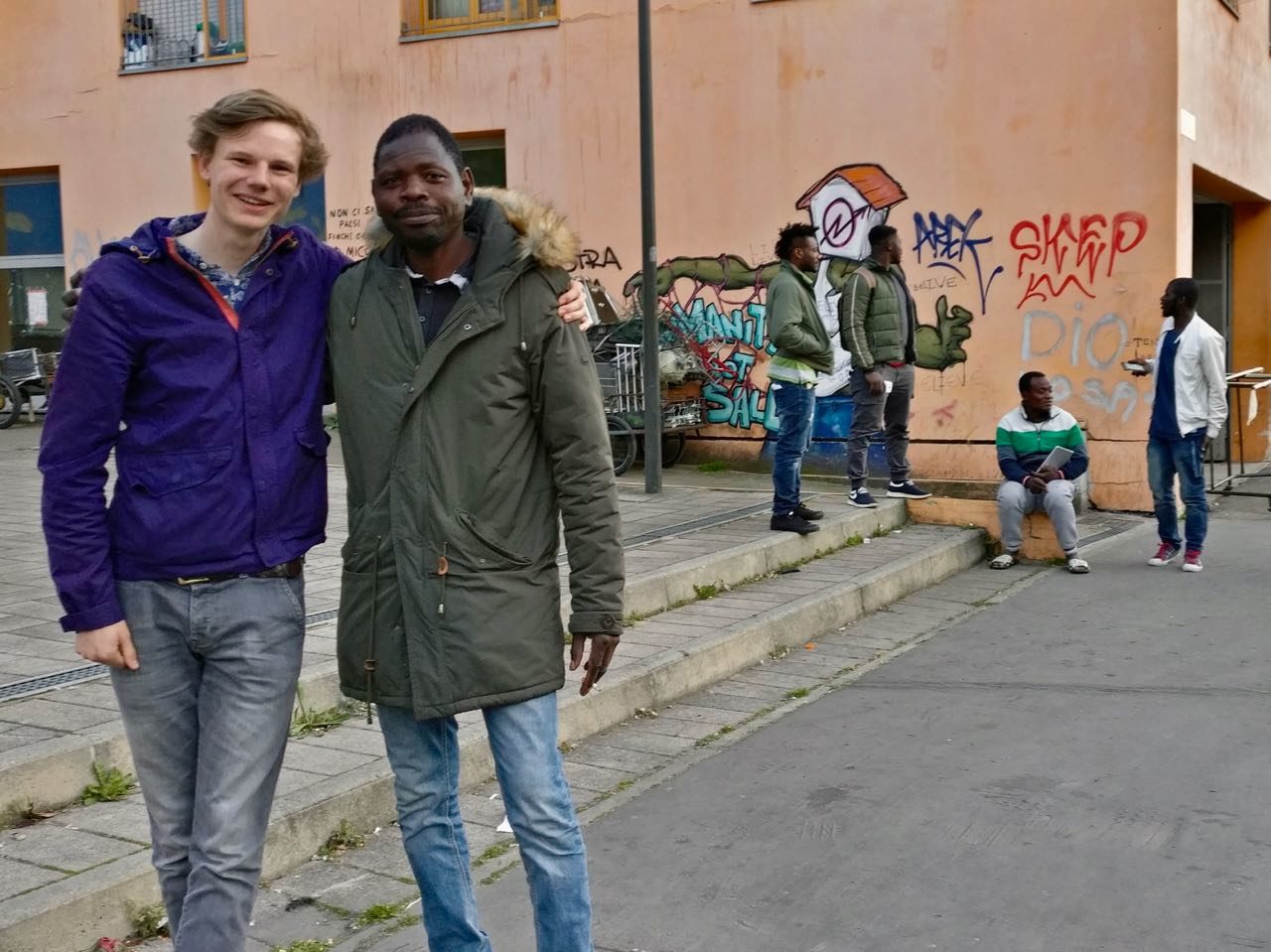
Job and Mohammed in Moi.
Image by: Job Zomerplaag
Read more
-
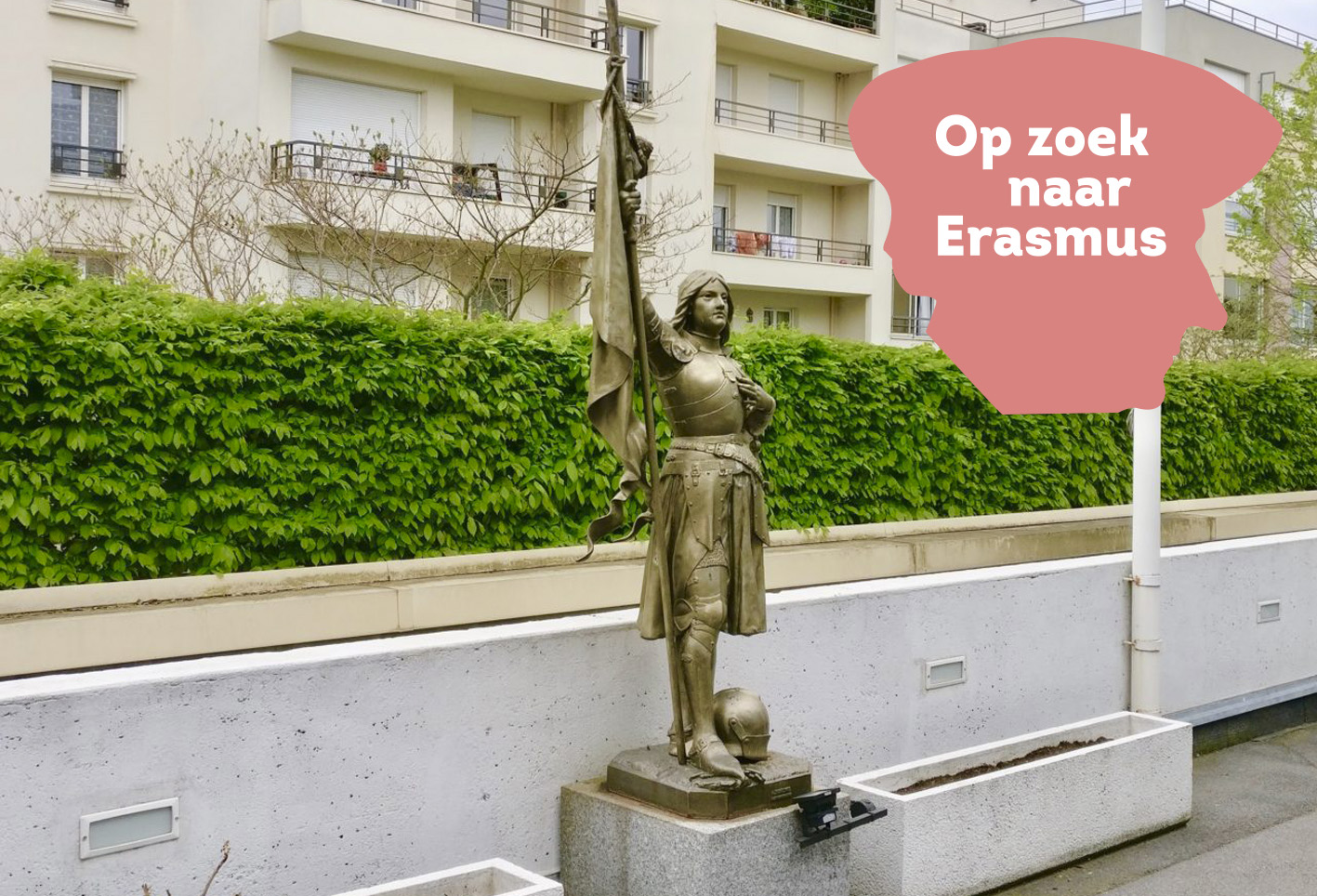
In search of Erasmus: Europe without borders
Gepubliceerd op:-
In search of Erasmus
-
It’s now been 18 months since you followed the ‘Erasmus trail’. What was the most important thing you learnt?
“I set off with the intention of searching for traces of Erasmus in Europe. And of course I found these all over the continent. I wrote an account of all my findings less than a month later, and that seemed to be the end of the story. But now, 18 months later, I’ve only just realised what an impact all this has had on me personally. Erasmus is synonymous with seeking out dialogue, looking yourself straight in the eye and broadening your horizons, and that’s what my journey taught me to do.”
Just after your trip, you said that your meetings with the president of the Front National youth movement and the refugees in Turin left the greatest impression on you. Do you still feel the same now?
“No, looking back I can see that meeting Mamma Erasmus (Sofia Corradi, Italian ‘founding mother’ of the Erasmus exchange programme, Ed.) had the biggest impact on me. Back in the 1960s, before people really started thinking about European unification and partnerships between universities, she was the one who took the initiative to set up a very simple exchange programme. More than 5 million people have gone on this exchange programme since that time, and it’s been granted a budget of more than 15 billion euros. This programme’s responsible for creating the ‘Erasmus Generation’ I talked about earlier. Besides, I feel it’s one of the EU’s most successful projects. For instance, I wouldn’t have been able to stay overnight with students all over Europe today if Sofia hadn’t set up her exchange programme.”
You’re currently doing the Erasmus Mundus programme: a two-year master programme in four different European cities. Is this the sequel to your quest for Erasmus?
“I think so, yes. And I can definitely say that my journey was one of the main reasons why I chose this particular master programme. The programme was created in the spirit of Erasmus, and my fellow students in Brussels are truly part of the Erasmus Generation. They grew up with the euro, and they’ve imbibed Erasmus’ European ideals as well. This fits in with what I encountered during my trip. People often quote Erasmus’ own words: ‘People are not born but made.’ It’s becoming increasingly clear to me that he might well be right.”
Read more
-
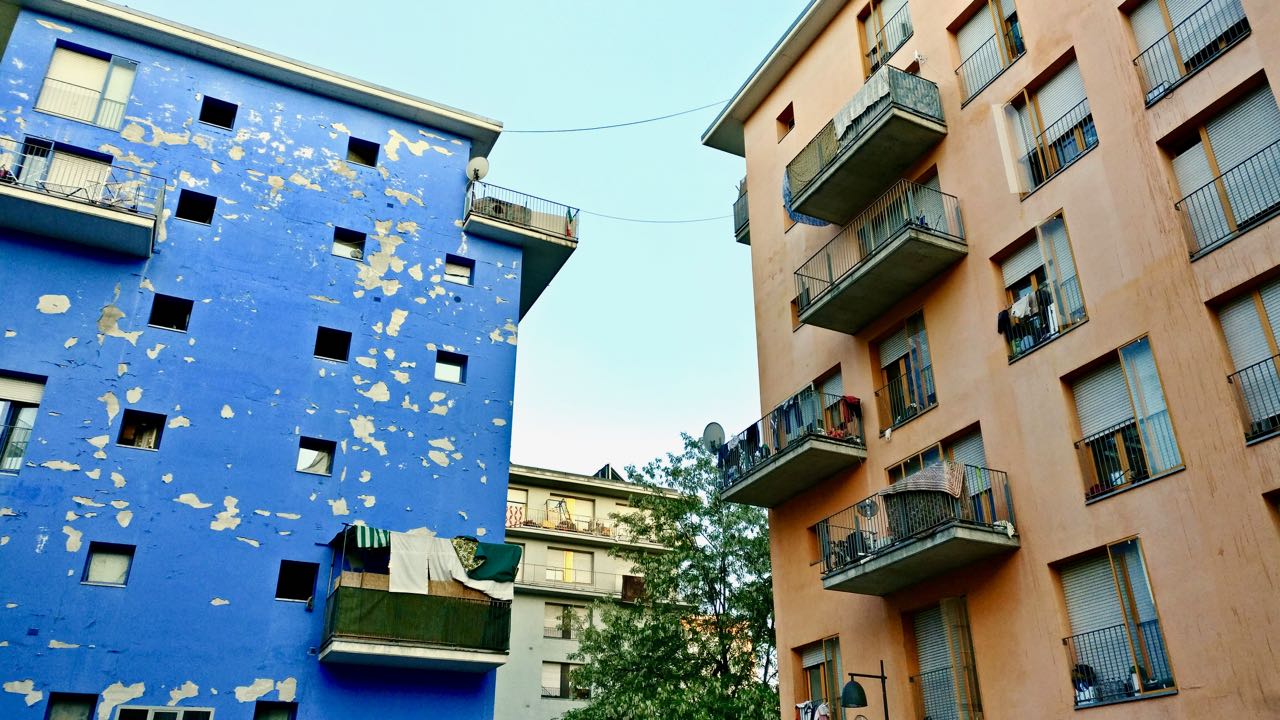
In search of Erasmus: The Republic of the Denounced
Gepubliceerd op:-
In search of Erasmus
-
Is your generation the first one to grow up with that idea?
“We’re the first generation who really feels European, but this sometimes results in opposition. I discovered this during my talks with the president of the Front National youth movement and refugees in Turin. I found out that European ideals are interpreted in a lot of different ways, and young people perceive them differently too. Being confronted with all these views was a very interesting part of my journey. I got to know all kinds of different opinions that I hadn’t encountered in my own ‘filter bubble’.”
We idolise Desiderius Erasmus in Rotterdam. Do you think this is justified?
“You come across his name everywhere here, but I mainly encountered Erasmus outside Rotterdam. One of the reasons why I decided to go on this journey is that a great many students haven’t got the faintest idea who Erasmus was and what he represented. I wanted to discover how we could benefit from his life and his ideals today.
“People are pretty fanatical about him at Erasmus University as well. I mean, look at that gentleman made up to look like Erasmus, who goes about on open days. And students walk across the Erasmus Plaza, read Erasmus Magazine and end up with a piece of paper with the name ‘Erasmus’ on it in huge lettering. But hardly anyone tells them who Erasmus actually was. I think it’d be an advantage for today’s students if they were taught to think and travel without any limitations. We don’t have to revere Erasmus as an idol or a saint, but we could definitely put him to better use as a source of inspiration to our students.”
When: Saturday 27 October 14:00-14:45
Location: Central Library, Desideriuszaal, 1st floor.
Entrance: free, register through this link.
De redactie
-
 Tim Ficheroux
Desk editor
Latest news
-
Ten years of the GDPR: access to your personal data is still not routine at EUR
Gepubliceerd op:-
Privacy
-
-
Why Philip Hans Franses had students look in wallets at a DIY store
Gepubliceerd op:-
Eureka!
-
-
RTL: More than half of master’s theses contain AI-generated text
Gepubliceerd op:-
Artificial Intelligence
-
Education
-

Comments
Comments are closed.
Ad
Read more in Culture
-
The emotions of science (and scientists) are palpable during theatre performance DOPE
Gepubliceerd op:-
Culture
-
Science
-
-
With this theatre show, cybersecurity expert Bernold Nieuwesteeg hopes to finally wake everyone up
Gepubliceerd op:-
Artificial Intelligence
-
Culture
-
-

Art workshops and dance performances play important role during inaugural lecture The art of healing
Gepubliceerd op:-
Culture
-
Science
-