Students challenge experts in the debate on refugee crisis
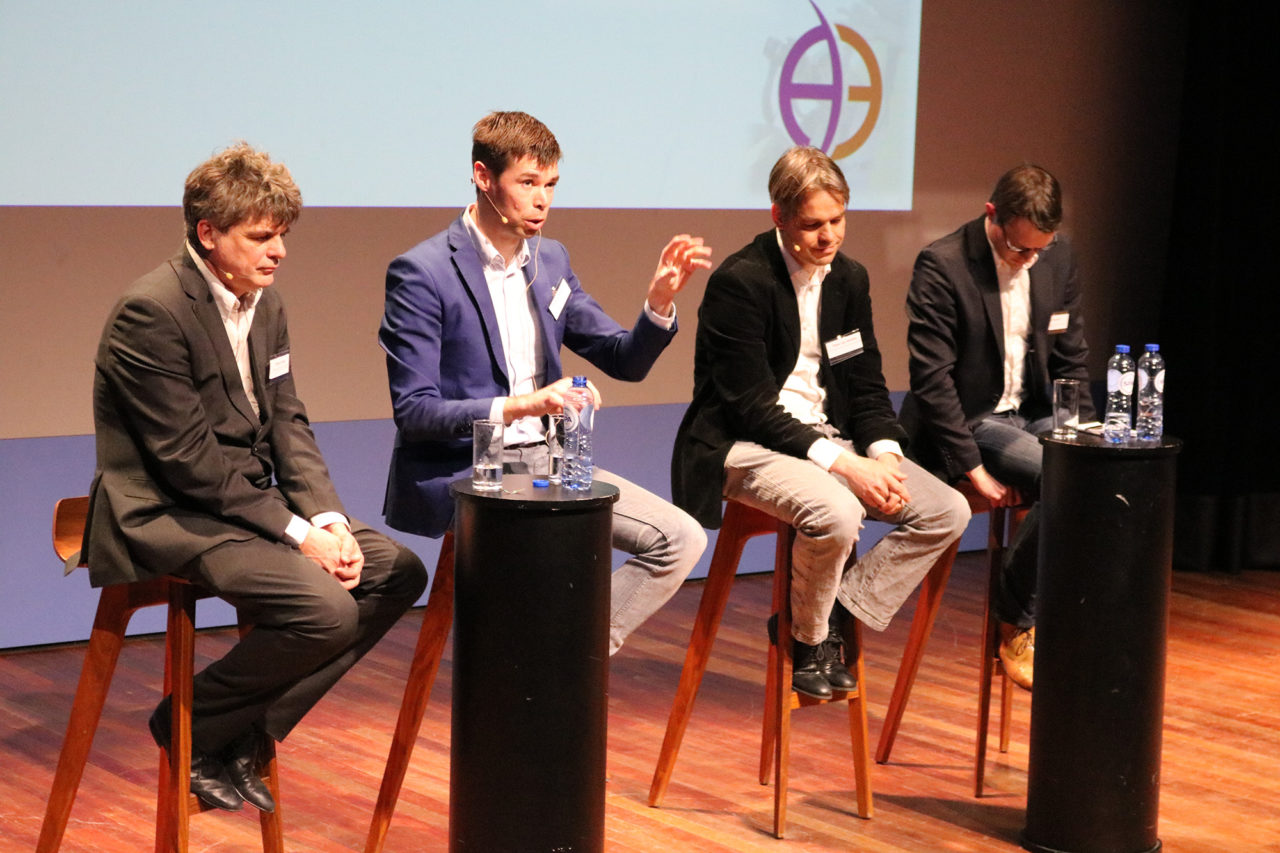
No matter how much academics love dealing with hard data, a personal story can still beat that. And so did the introduction to the debate on the refugee crisis on Wednesday. Tariq Assim, a former Iraqi refugee, shared his own story – he came to the Netherlands at the age of 9, fleeing the country torn by war. He thanked the Dutch government for giving him a chance to get education and find his calling, being an actor.
But the numbers had to follow, of course. The study conducted by Economisch Statistische Berichten showed that the majority of migrants were men (24,665), followed by so-called ‘chain migrants’ – family members of those who had already moved – women and children (12,790). People mostly came from Syria and settled in the countryside. In contrast, in Amsterdam, there is less than 0.1 percent of refugees.
Cost-benefit absurd
The pressing question is the distribution of resources, jobs and allowances. ‘’Will the Dutch be displaced from the labor market?’’, asked one of the students. The experts showed remarkable solidarity on the issue: we should accept asylum seekers as a given and evaluate policies, which are aimed to help them. ‘’Applying cost-benefit analysis to people is absurd’’, emphasized Dr. Marcel Canoy , Distinguished Lecturer at the Erasmus School of Accounting & Assurance.
One size for all
So how do we make our policies effective? A volunteer from Vluchtelingenwerk spoke up from the audience to bring up an important issue; all refugees receive standardized assistance, while some groups have very specific needs. For instance, people from Eritrea significantly differ in what they require to adjust compared to asylum seekers from Syria.
Dr. Pieter van Winden from the Ministry of Social Affairs and Employment reinforced the argument. He emphasized that refugees ‘should not be treated as a homogenous group’. In this case, social researchers may come to rescue.
Practical solutions
Both Dr. Hans Koster from VU Amsterdam and Maikel Volkerink from the Dutch central bank underscored the importance of empirical studies. What kinds of people are coming in? Now high on the agenda is creating a set of ‘typical’ refugee profiles to make finding accommodation and employment more efficient.
The 90’s crisis showed that many asylum seekers are here to stay. Students raised the issue of targeting the migrant children. If anything, there was no debate about this point – they should be placed in schools immediately, side by side with Dutch kids. ‘’That’s the best way to learn Dutch’’, reminded Tariq.
Latest news
-
Student on the ballot: Mina goes for climate targets and affordable housing
Gepubliceerd op:-
Politics
-
-
Walking from A to B without being filmed is no longer possible on campus Woudestein
Gepubliceerd op:-
Security
-
-
A maximum number of PhD candidates per professor? That is not going to happen
Gepubliceerd op:-
Column
-
Comments
Comments are closed.
Read more in Student life
-

Psychological support and financial assistance for Iranian students in the Netherlands
Gepubliceerd op:-
Student life
-
-
Large-scale student protests at universities in Iran
Gepubliceerd op:-
Student life
-
-
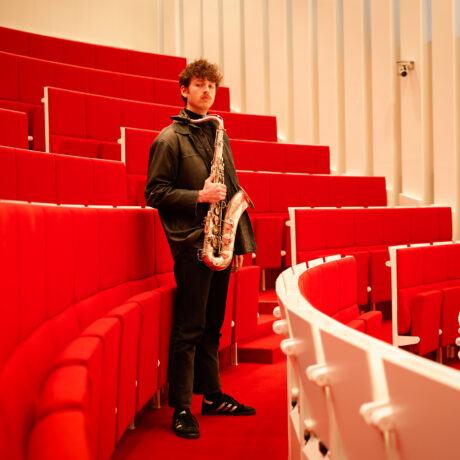
Medical student Daan Kluwer wins 10,000 euros to record his own jazz album
Gepubliceerd op:-
Student life
-