Beatrice de Graaf: ‘We must not lose sight of Bildung’
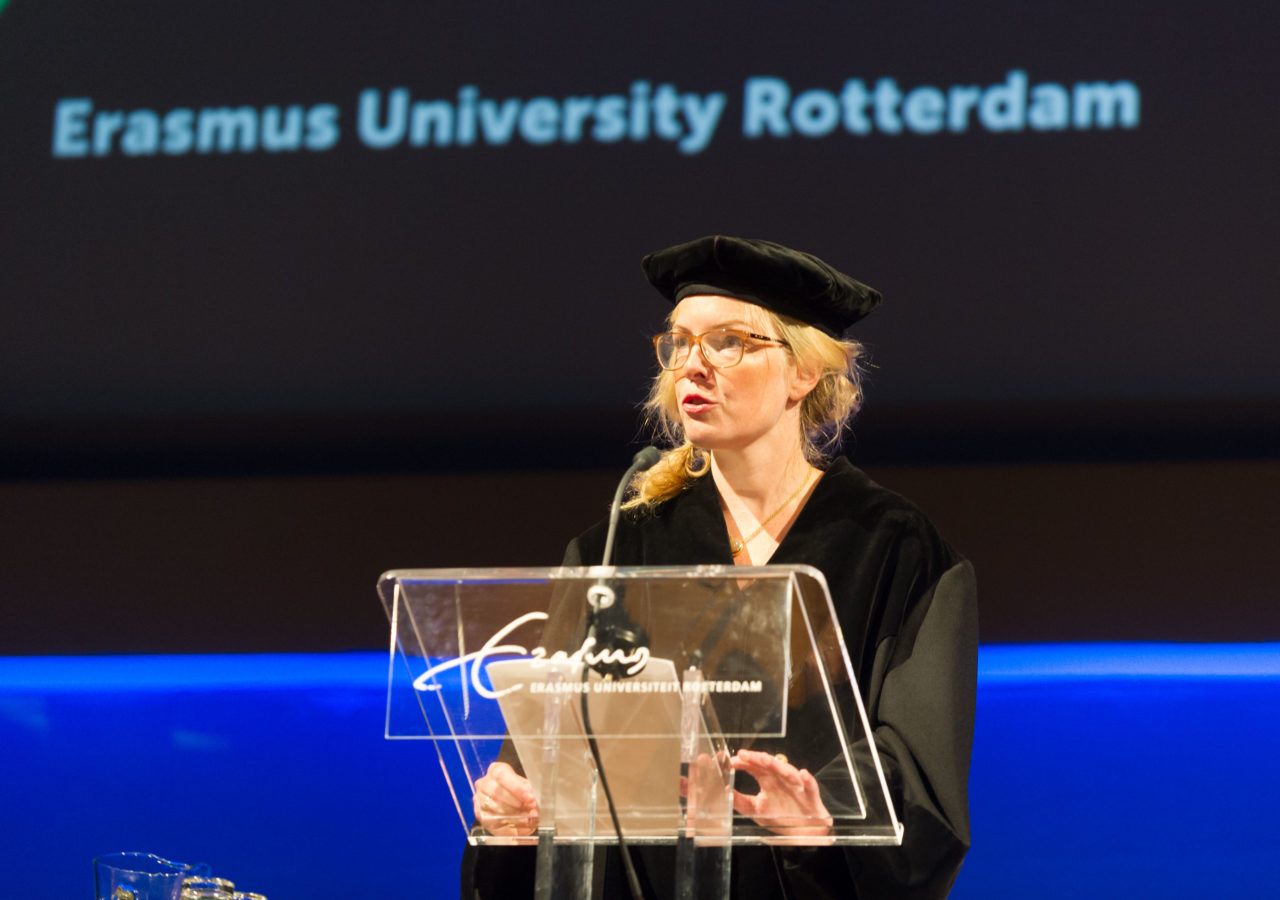
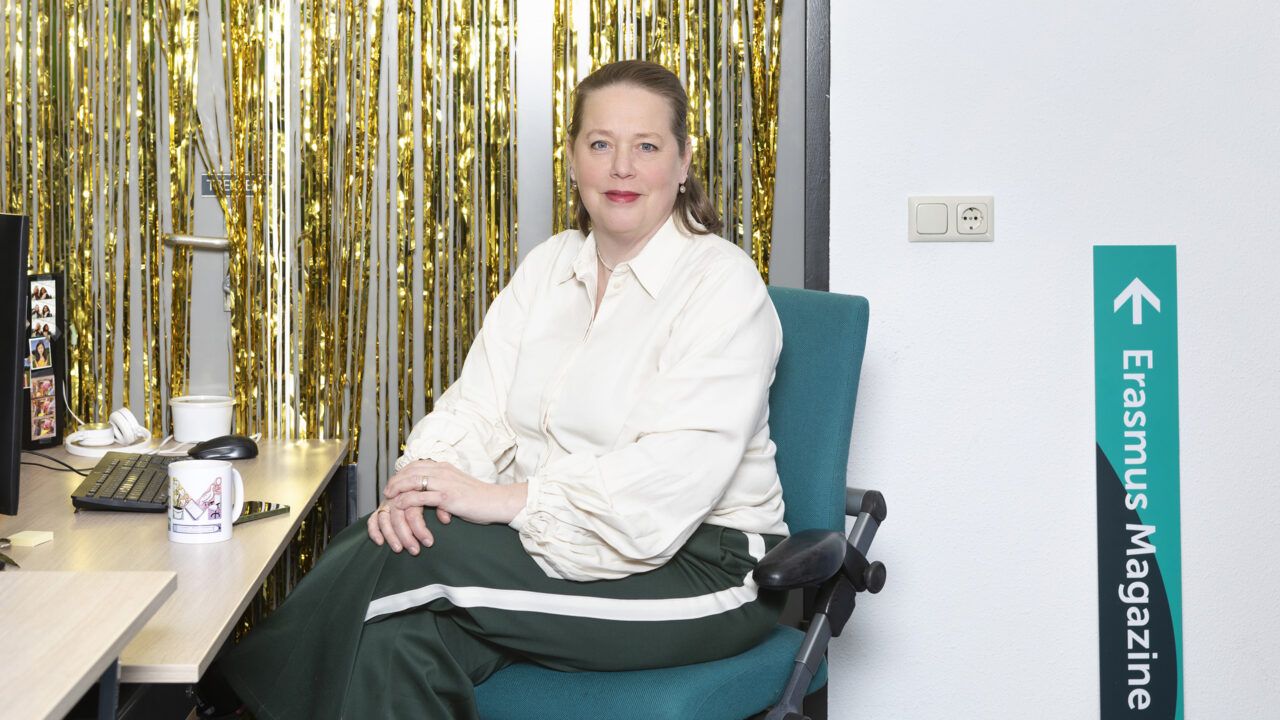
Image by: Michelle Muus
We must safeguard the Bildung model as the University’s strategy and shield it from the dubious aspects of a more economic approach to science. That is the most important message that guest speaker, Beatrice de Graaf, passed on to those present at the Opening of the Academic Year on Monday afternoon.
De Graaf, historian and co-chair of the Dutch National Research Agenda, summarised two possible stories about the University during her lecture. On the one hand there is a utilitarian approach, where science is judged on ‘social usefulness’. “Science and scientists are here to make money and to increase GDP. Or, in a more benevolent version of the same tale, they are expected to solve the problems of humankind: produce more and healthier food, cure cancer, fight climate change, increase sustainability and help to achieve the millennium development goals.”
The Bildung ideal under pressure
On the other hand we can view the University within the Humboldtian ideal of Bildung. “In this story, the university is a place where norms, values, ethics and ideals are developed, cultivated and discussed between students and teachers.” It is a story to which Jet Bussemaker, Minister of Education, Culture and Science, likes to refer.
But it is also a story that is coming increasingly under pressure, said De Graaf. “Utilitarianism in its crude economistic form is becoming the dominant discourse, in society as well as in academia. Scholars and universities are being pushed to the assembly line, pressed to produce preconceived eggs.” Both models are valuable, thinks De Graaf, and should be protected in order to preserve the diversity of the academic community.
Restoring the balance
We have to restore the balance between the two strategies, argued De Graaf. First and foremost this requires autonomy. “Academic life cannot be regulated from above. Scholars do not stand in an orderly line – not in real life, and not in history. Science is never tidy, unified or simple.” We have not yet achieved freedom for scholars.
De Graaf ended her lecture with a number of specific recommendations. For example, she believes that more money is necessary to inspire young talent and to promote diversity and surprise without presorting and to prevent the application for a research subsidy from becoming even more of a lottery. She calls for more places for doctoral candidates outside large-scale European or NWO-programmes, and recognition for both researchers and lecturers, media personalities and supporting staff.
And yes, also politicians, managers and captains of industry deserve a place at the university, ‘allowing them to contribute to lectures or to enjoy a research internship within research groups or laboratories – in order to demonstrate the value of the Bildung model from within’.
Latest news
-
U-council: proposal for house rules restricts right to protest
Gepubliceerd op:-
Protest
-
-
Student on the ballot: Finn wants a safer nightlife and affordable student rooms
Gepubliceerd op:-
Campus
-
-
University Council and Erasmus Magazine must keep each other on their toes
Gepubliceerd op:-
Editorial
-

Comments
Comments are closed.
Read more in Research
-
How investment treaties undermine the voices of local communities
Gepubliceerd op:-
The PhD Defence
-
-
Why it is hard to find a connection between the psychiatric illness and the brain
Gepubliceerd op:-
The PhD Defence
-
-
Investigation into DUO fraud hunt nominated for ‘Loep’
Gepubliceerd op:-
Research
-