Ad

Eva Illouz deserves an open mind, just like all Israeli academics
Suddenly she was major news: the French-Israeli sociologist Eva Illouz. She was due to give a lecture at EUR, but the invitation was withdrawn because the organisers – the sociologists of the Love Lab – did not feel ‘comfortable’ with it. Illouz is affiliated with the Hebrew University of Jerusalem, one of the Israeli institutions that EUR has placed on a blacklist. There was ‘hesitation’ about her visit and after ‘intensive internal discussion’ it was decided to cancel the lecture.

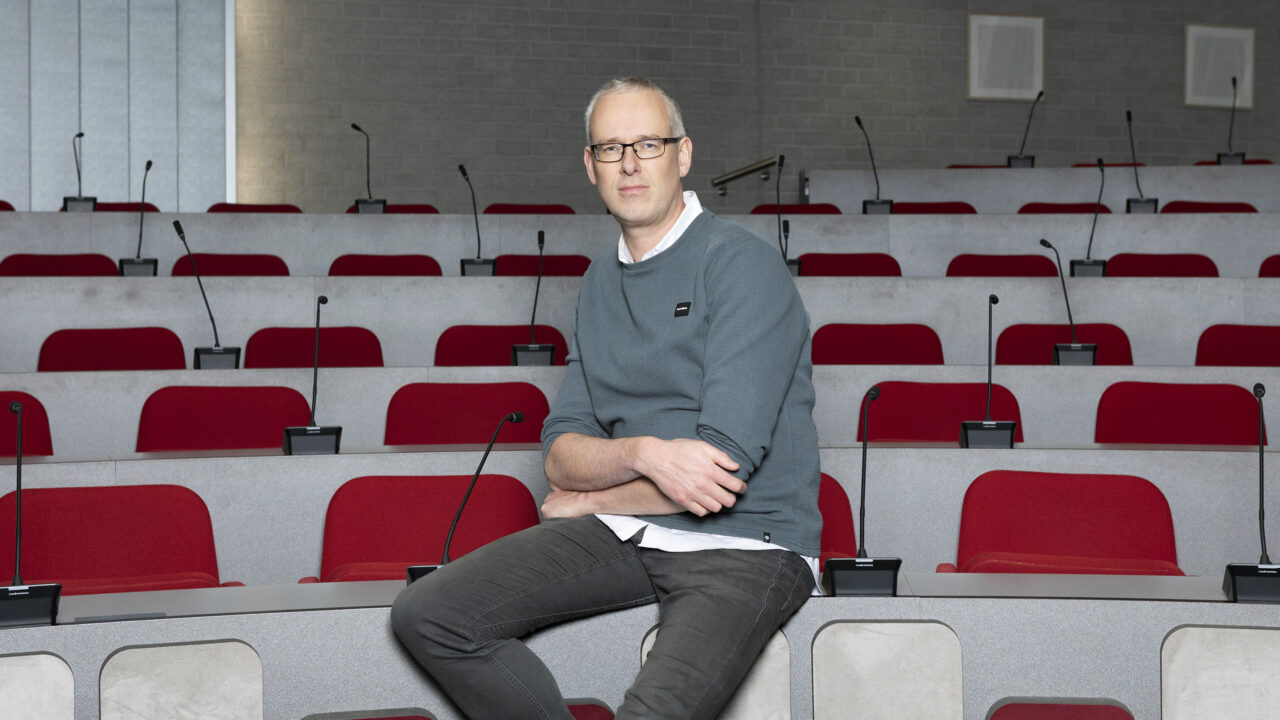
Image by: Pauline Wiersema, Levien Willemse
How the press learned of this is unclear, but that it would happen is hardly surprising. You are a world-famous sociologist, or you are not. First tip for avoiding negative publicity: only cancel lectures by unknown academics who will not make it into the papers anyway.
The Executive Board was more or less forced to comment. It told NRC that it ‘in principle does not make statements’ about ‘matters between individuals’. The lecture did fall within the rules, even if it is given by someone from a university on a blacklist, but ‘a decision can be taken not to go ahead when, for example, there is no agreement within a team. A team is free to do this.’
Then something strange happened: suddenly the Executive Board took a different view; the sociologists had handled it incorrectly. What was previously allowed – withdrawing an invitation because of discomfort or doubt – is now no longer allowed. It is unclear why. The Executive Board has made apologies. Slightly odd: since when must you still allow speakers to come when you have doubts? Why must a seminar with someone you feel uncomfortable with go ahead regardless? Whose fault is this actually: that of the sociologists who cancelled Illouz, or that of the Executive Board, which apparently does not have a clear position on the matter? And on whose behalf are these apologies even being offered?
‘Complaints arise if you invite someone, but also if you do not’
Could it be that this problem was caused by the Executive Board itself? A blacklist of Israeli universities has been drawn up, and the suggestion it carries is perfectly clear: we must be extra careful in dealings with those institutions. Individual academics from these universities may still visit, but everything now comes under a magnifying glass, so discomfort and doubt almost come with the territory. There is in any case a high chance of trouble: complaints arise if you invite someone, but also if you do not, let alone if you cancel someone.
It would once have been very simple. Perhaps Illouz’ university is involved in human rights violations, but whether that is true or not: Illouz herself has nothing to do with that. How can there be discomfort in inviting her, other than fear of reactions from others? Could it be that Israeli academics are now met with extra doubt and discomfort because the blacklist has simply put them in the spotlight? Would it not be more logical – and more ethical – to throw that list in the bin and once again approach every academic with an open mind, judging them on their own words and actions?
It would also save a great deal of negative publicity.
Read more
-

The university has put an end to the dialogue on Israel
Gepubliceerd op:-
Column
-
De redactie
-
 Chris Aalberts
Columnist
Latest news
-

TU Delft may not favour women in admissions to courses
Gepubliceerd op:-
Education
-
-

Hate campaigns and political pressure: KNAW wants legal protection for academic freedom
Gepubliceerd op:-
Science
-
-

Signing up for a Dutch course ‘feels like a race’, no more places available for now
Gepubliceerd op:-
Internationalisation
-

Comments
Comments are closed.
Ad
Read more in Column
-
The sad anniversary of powerless staff and students
Gepubliceerd op:-
Column
-
-

Tea, theory and a healthy dose of procrastination
Gepubliceerd op:-
Column
-
-

The drama of Jason Arday
Gepubliceerd op:-
Column
-